Why the Same Adult Offer Performs Differently for Different Affiliates: Traffic Source, Audience Warm-Up, and Funnel Fit
12 min read · 06.07.2026 · 350 views

Contents
- An Offer Is Not a Ready-Made Profit Machine
- Traffic Source and Offer Fit Matter More Than Most Affiliates Expect
- Cold vs Warm Traffic in Affiliate Marketing
- Why Creatives Decide Who Enters Your Funnel
- Creative, Prelander, and Offer Must Tell One Consistent Story
- GEO Impact on Affiliate Performance
- Technical Setup Can Change the Entire Campaign Result
- Why Paid Rate Can Be Different for the Same Offer
- Why Retention Can Matter More Than Initial Payments
- Why You Should Not Copy Other Affiliates’ Case Studies Exactly
- How to Analyze Affiliate Offer Results Properly
- How to Find the Real Weak Point
- Common Reasons Why an Affiliate Offer Does Not Convert
- Final Takeaway: The Funnel Matters More Than the Offer Alone
- FAQ
- Why does the same affiliate offer perform differently for different affiliates?
- Why does an affiliate offer not convert even when another affiliate has a successful case study?
- What has the biggest impact on affiliate offer conversion?
- Should I copy another affiliate’s campaign exactly?
- How do I analyze why an offer stopped being profitable?
- Read more:
At some point, almost every affiliate runs into the same situation. You see another affiliate sharing a strong case study. Same offer. Similar GEO. Similar traffic source. The numbers look convincing.
You launch the offer yourself — and the result is completely different. Lower approval rate. Weak paid conversion. Poor retention. Maybe the leads are there, but the money is not. The first reaction is usually predictable: something must be wrong with the offer, the affiliate program, or the tracking. In reality, this is usually normal.
Want to start without experience?
Start with stream models: you look for people using ready-made scripts, and production companies handle the interview and training.
The same offer can perform very differently for different affiliates because an offer never works in isolation. It works inside a specific funnel, with a specific audience, creative, GEO, traffic source, payment flow, and campaign setup. In this guide, we will explain why the same affiliate offer performs differently, what causes adult offer performance differences, why leads do not convert to paid users, and how to analyze affiliate offer results without making emotional decisions.
An Offer Is Not a Ready-Made Profit Machine
One of the biggest mistakes newer affiliates make is treating an offer as if it is already a finished source of profit.
It is not.
Good at finding people? You get paid for it
You find a candidate, production companies and agencies do the rest. Payouts in USDT every Monday.
When someone says, “This offer converts well,” the statement is incomplete. A more accurate version would be:
“This offer converts well for a specific affiliate, with a specific traffic source, audience, GEO, creative, landing page, and funnel.”
Even when two affiliates run the same offer, they rarely operate under identical conditions.
Their campaigns may differ in:
- traffic quality;
- audience segments;
- ad placements;
- creatives;
- landing pages;
- prelanders;
- GEO targeting;
- device mix;
- payment flow;
- campaign timing;
- budget scale;
- tracking setup.
That is why adult offer performance differences are not unusual. They are expected.
The real question is not, “Why does this offer work for someone else?”
The right question is, “What is different in my funnel?”
Traffic Source and Offer Fit Matter More Than Most Affiliates Expect
Traffic source and offer fit are directly connected.
Not sure what to write first? The script is ready
After sign-up you get ready-made scripts and a personal manager. No recruiting experience needed.
Telegram, TikTok, SEO, native ads, push traffic, and ad networks all produce users with different levels of trust, intent, and readiness to convert.
A user coming from Google search may already know what they are looking for.
A TikTok user may have seen your message for the first time a few seconds earlier.
A Telegram user may have followed a channel, read several posts, interacted with a bot, and built trust before clicking.
Those are very different starting points.
A content-led source may generate fewer leads but produce stronger paid rate by traffic source and better subscription retention affiliate traffic.
A fast paid source may create a large number of registrations but weaker downstream performance.
This is why a source that looks weak based on lead volume may actually be more profitable in the long run.
Before replacing an offer, check whether the traffic source matches the offer mechanics.
An offer that needs trust, explanation, or recurring engagement may perform better in Telegram, SEO, or content funnels than in cold interruption-based traffic.
Cold vs Warm Traffic in Affiliate Marketing
Cold vs warm traffic affiliate marketing is one of the biggest reasons why the same offer performs differently.
Cold traffic has little or no previous connection with your content, product category, or brand message.
Warm traffic has already received some context. The user may know the topic, trust the content source, or understand what will happen after the click.
Cold traffic is not necessarily bad traffic.
It simply needs a different funnel.
A cold audience may need:
- a prelander;
- a clearer explanation;
- a more relevant creative;
- comparison content;
- a Telegram bot sequence;
- several trust-building touchpoints;
- a softer transition before the offer.
A warm audience can often move through the funnel more easily because the user already understands the category and has fewer doubts.
Audience warm-up affiliate funnel strategy can affect:
- approval rate;
- paid conversion;
- refund rate;
- chargeback risk;
- subscription retention;
- rebill performance.
When users understand the offer before they click, they are more likely to complete the funnel with realistic expectations.
Why Creatives Decide Who Enters Your Funnel
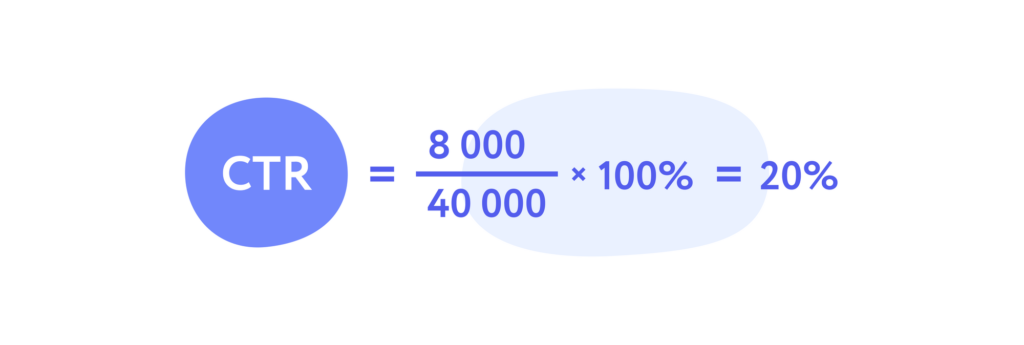
Many affiliates judge creatives only by CTR.
That is not enough.
CTR tells you whether people are curious enough to click. It does not tell you whether they are the right users for the offer.
A loud, aggressive, or overly broad creative can generate cheap traffic and high click volume. But it may attract users who have little real interest in the offer.
Those users may:
- register but never pay;
- fail the approval process;
- leave immediately;
- request refunds;
- dispute payments;
- create poor retention metrics.
A more accurate creative may get fewer clicks but attract users who are more likely to convert and remain valuable.
This is why creative to offer mismatch is such an important issue.
The creative acts as the first filter in your funnel.
It decides who enters. Different creative angles can attract completely different segments, even when the offer is the same.
One affiliate may attract a large volume of low-intent users. Another may generate fewer leads but significantly better paid conversion and long-term profit.
Creative, Prelander, and Offer Must Tell One Consistent Story
After the click, the user should see a natural continuation of what was promised in the ad.
When the creative says one thing, the prelander says something else, and the offer page presents a third message, users become confused.
This is a classic creative-to-offer mismatch.
The results are predictable:
- lower conversion;
- weaker approval rate;
- lower paid rate;
- higher refund rate;
- increased chargeback risk;
- weaker retention.
The best funnels feel consistent from the first impression to the final payment step.
The user should understand:
- what they clicked on;
- what they are being offered;
- what happens next;
- what value they receive;
- what payment or subscription conditions apply.
The clearer this journey is, the easier it is to build stable affiliate funnel performance.
GEO Impact on Affiliate Performance
GEO impact on affiliate performance is often underestimated.
Affiliates may run the same offer in different countries and assume that the main difference is CPC.
In reality, GEO changes much more than traffic cost.
Different markets may vary by:
- purchasing power;
- payment behavior;
- local payment methods;
- card acceptance;
- 3DS friction;
- language expectations;
- landing-page trust;
- device usage;
- refund behavior;
- chargeback risk.
In one country, users may comfortably pay by card.
In another, local payment options may be essential.
In one GEO, a user may complete additional payment verification without hesitation. In another, the same step may significantly reduce paid conversion.
That means an offer may not be “bad.” It may simply be a poor fit for a specific GEO, payment flow, or localization setup.
Always separate GEO data before making conclusions.
A profitable country can be hidden inside a weak overall campaign if several GEOs are mixed together.
Technical Setup Can Change the Entire Campaign Result
Not every performance issue is a marketing issue.
Sometimes the difference between two affiliates comes from technical details.
Common technical factors include:
- iOS versus Android traffic;
- mobile versus desktop behavior;
- landing-page speed;
- broken redirects;
- lost click IDs;
- incorrect sub-ID setup;
- missing postback events;
- tracking discrepancies;
- payment-page loading issues.
For example, iOS and Android users may show different payment conversion behavior. Desktop users may behave differently from mobile users during a multi-step payment flow. A slow landing page can reduce conversion before the user even sees the offer. A broken redirect can make your tracking look worse than reality.
Before blaming the affiliate program or the offer, verify that your technical chain is working correctly.
Why Paid Rate Can Be Different for the Same Offer
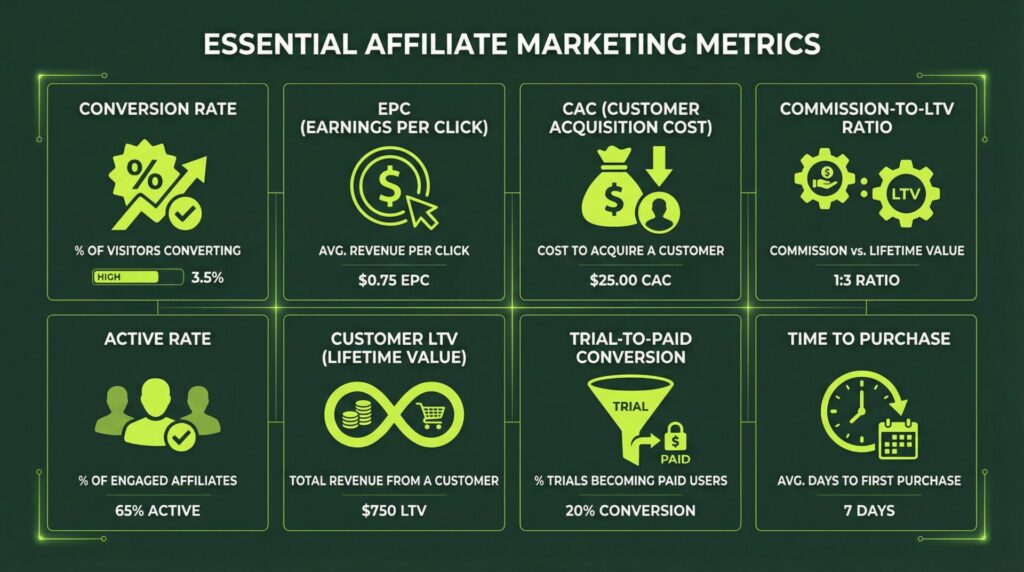
Paid rate by traffic source is one of the most sensitive indicators in affiliate marketing.
Two affiliates can generate similar lead volume but earn very different amounts because their users behave differently after registration.
Paid rate can be affected by:
- traffic quality;
- audience warm-up;
- creative relevance;
- landing-page clarity;
- local payment methods;
- GEO;
- device type;
- page speed;
- trust in the traffic source;
- payment friction;
- overall funnel alignment.
This is why lead volume alone is not a useful comparison.
The real question is: how many users move from lead to payment, and what happens after payment?
If a campaign has strong lead volume but weak paid conversion, do not assume the offer is broken.
Check where the funnel loses users.
Why Retention Can Matter More Than Initial Payments
For subscription offers, the first payment is only part of the story.
The real value often comes from retention and recurring payments.
A source that generates fewer registrations may still be more profitable if users:
- stay active longer;
- make repeat payments;
- generate fewer refunds;
- create less support friction;
- have stronger long-term value.
This is especially important for RevShare and subscription funnels.
A cheap lead that leaves immediately may be far less valuable than a more expensive user who stays active for several billing cycles.
That is why subscription retention affiliate traffic should be monitored alongside paid rate, refund rate, and net revenue.
The goal is not to buy the cheapest lead.
The goal is to acquire users who remain profitable after the first conversion.
Why You Should Not Copy Other Affiliates’ Case Studies Exactly
Most affiliate case studies look simple on the surface.
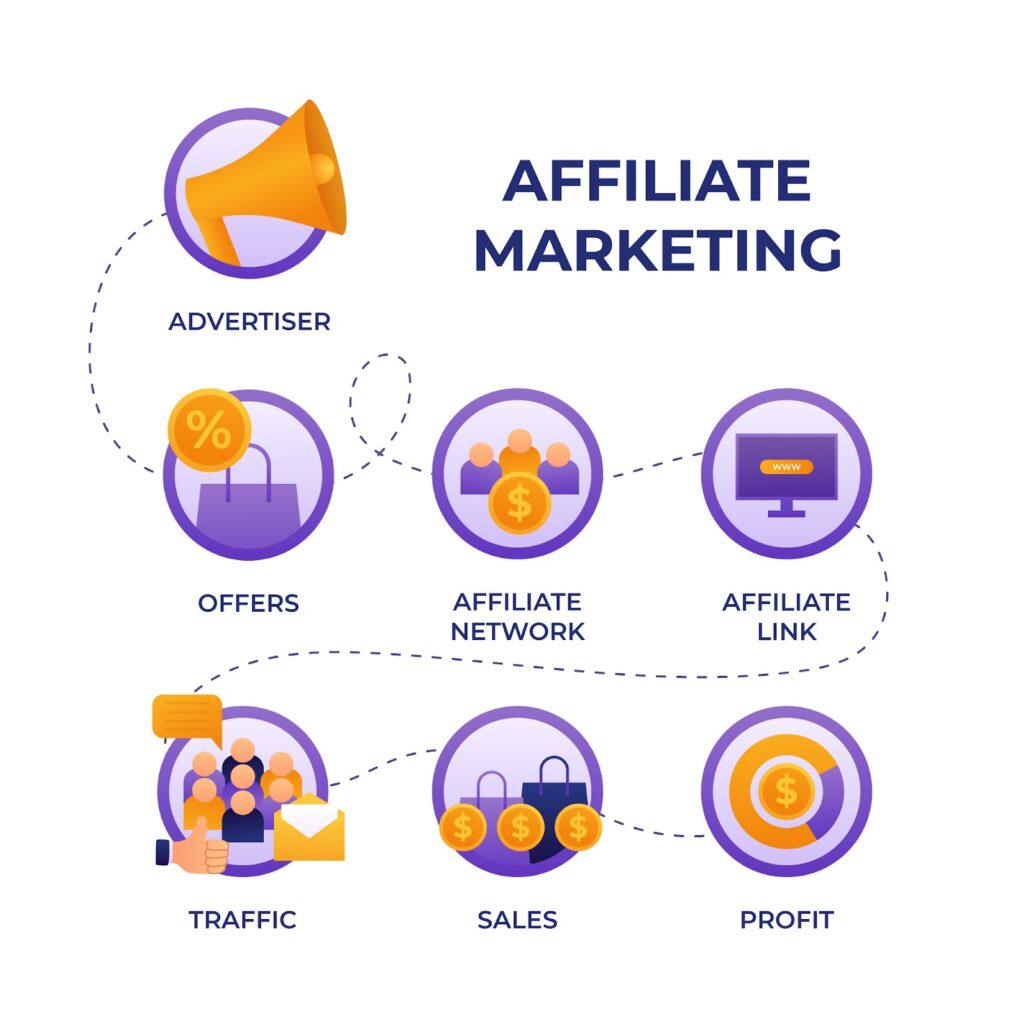
Traffic source → Creative → Offer → Profit.
But behind that short summary, there are usually many hidden variables.
The affiliate may not show:
- campaign settings;
- audience exclusions;
- previous creative tests;
- device targeting;
- placement filters;
- exact landing-page version;
- prelander structure;
- GEO-specific adjustments;
- traffic-volume history;
- budget ramp-up strategy;
- payment-flow specifics;
- campaign age.
That is why copying a case study line by line rarely produces identical results.
The better approach is to understand the logic behind it.
Ask:
- Why did this creative work for that audience?
- Why was that GEO selected?
- Was the traffic cold or warm?
- Was a prelander involved?
- What downstream metrics were used?
- How did the affiliate control quality?
- What conditions were needed before scaling?
Use case studies as a source of hypotheses, not as a guaranteed blueprint.
How to Analyze Affiliate Offer Results Properly
When performance drops, do not replace the offer immediately.
Start by reviewing the full funnel.
Ask these questions:
- Did the traffic source change?
- Did the creative change?
- Did the GEO change?
- Did the device mix change?
- Did approval rate decline?
- Did paid rate decline?
- Did refunds increase?
- Did retention weaken?
- Did payment issues appear?
- Did offer rules or caps change?
- Did the landing page or tracking setup change?
Very often, the problem appears earlier in the funnel than expected.For example, a weaker creative can reduce traffic quality before the decline becomes visible in lead volume. A change in GEO can affect payment conversion before it affects CTR. A broken postback can make a profitable campaign look weak.
That is why you need to analyze the entire funnel, not just the last visible metric.
How to Find the Real Weak Point
The most reliable way to diagnose a campaign is to change one meaningful variable at a time.
Do not simultaneously replace:
- traffic source;
- GEO;
- creative;
- landing page;
- prelander;
- payment model;
- targeting.
When too many variables change at once, you cannot know what caused the result.
Experienced affiliates build their testing around focused hypotheses.
For example:
- Can this prelander improve paid rate for TikTok traffic?
- Does this creative attract better-quality users in one GEO?
- Does Telegram traffic produce stronger retention than native ads?
- Is payment conversion weaker on Android than iOS?
- Does a specific placement create most refunds?
This approach makes analysis faster and prevents repeated budget waste.
Common Reasons Why an Affiliate Offer Does Not Convert
When an affiliate offer does not convert, the issue is often one of these:
- poor traffic-source fit;
- cold audience without enough context;
- creative-to-offer mismatch;
- weak landing page;
- unsuitable GEO;
- poor payment-method fit;
- technical tracking errors;
- slow page speed;
- weak approval rate;
- low paid rate;
- poor retention;
- rising refunds or chargebacks;
- traffic quality decline after scaling.
The offer may still be viable.
The real task is to identify which stage is failing.
Final Takeaway: The Funnel Matters More Than the Offer Alone
There are no adult offers that perform exactly the same way for every affiliate.
The final result depends on the complete setup:
- traffic source;
- audience quality;
- warm-up level;
- creative;
- prelander;
- landing page;
- GEO;
- payment infrastructure;
- device behavior;
- tracking setup;
- retention;
- campaign timing.
So when someone asks, “Why does my competitor’s offer work better than mine?” the answer is usually straightforward:
Their funnel is different.
The earlier you start analyzing the full customer journey instead of blaming the offer alone, the faster you can identify performance issues, stop wasting money on random changes, and build campaigns that can actually scale.
At HUNT ME, we encourage affiliates to treat every case study as a starting point for research, not a shortcut. The strongest campaigns are built through testing, clean tracking, realistic expectations, and a clear understanding of where value is created in the funnel.
FAQ
Why does the same affiliate offer perform differently for different affiliates?
Because traffic source, audience quality, GEO, creatives, landing pages, tracking, payment flow, and user intent are rarely identical between campaigns.
Why does an affiliate offer not convert even when another affiliate has a successful case study?
The other affiliate may use a different traffic source, warmer audience, stronger creative angle, more suitable GEO, better funnel, or more optimized payment flow.
What has the biggest impact on affiliate offer conversion?
Traffic source fit, creative relevance, audience quality, GEO, payment convenience, funnel clarity, and technical reliability all have a major impact.
Should I copy another affiliate’s campaign exactly?
No. Use the case study to understand the testing logic and funnel strategy, but do not assume the same setup will create identical results in your traffic environment.
How do I analyze why an offer stopped being profitable?
Review the full funnel step by step: traffic source, creative, GEO, approval rate, paid rate, refunds, retention, payment flow, and tracking setup. Change one variable at a time to identify the real cause.
Read more:
- Lead Quality in Adult Offers: What Affiliate Programs Consider “Good Traffic” and What Leads to Payout Cuts
- Adult Offer Testing System: Budget, Timelines, Hypotheses, and Stop Criteria
- Adult Offers Across Traffic Sources: How Launch Strategy Changes for Telegram, TikTok, SEO, and Native Ads
From here it's just practice
You already know how it works. Sign-up takes a couple of minutes and costs nothing.
No investment. Candidates 18+ only.