To access the HUNT ME referral program dashboard, enter the email and password you used during registration.
Fill out the form — it takes 2 minutes. A manager will contact you on Telegram, provide free training, and help you get your first result.

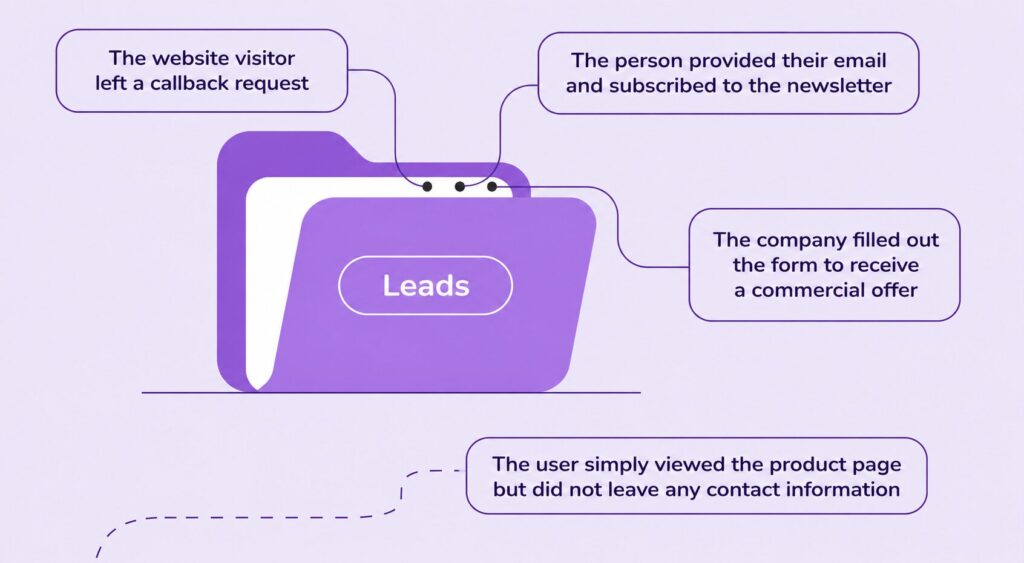
For affiliate programs, a lead is not valuable simply because someone registered or submitted a form.
What matters is what happens after that first action. Does the user pass validation? Do they reach a paid event? Do they stay active? Do they generate refunds, chargebacks, complaints, or anti-fraud concerns?
That is why lead quality in adult offers is one of the main drivers of long-term profitability. High lead volume may look impressive in a tracker, but it does not guarantee stable payouts or a campaign that can scale.
This guide explains what affiliate programs consider good traffic, why affiliate leads get rejected, what causes affiliate payout cuts, and how to monitor traffic quality before issues turn into holds, deductions, or disputes.
Affiliate lead quality is not just about a user completing a registration form.
Earn with HUNT ME — weekly payouts
A quality lead is a user who matches the offer requirements, arrives through an approved source, shows genuine interest, and behaves normally throughout the conversion flow.
For an advertiser or affiliate program, a valuable user is more likely to:
The more likely a user is to create sustainable revenue without compliance risk, the more valuable that lead becomes. That is why adult affiliate traffic quality should always be assessed beyond the first conversion.
Good traffic in affiliate marketing is rarely defined by a single metric.
Affiliate programs usually look at a combination of signals that show whether traffic is compliant, monetizable, and sustainable.
Positive signals often include:
A high approval rate alone does not prove quality.
For example, a campaign may generate many approved leads but later produce a large number of refunds or payment disputes. In that case, the affiliate program may still consider the traffic weak or risky.
Earn with HUNT ME — weekly payouts
On the other hand, a source with lower lead volume can be highly valuable if users have stronger paid conversion, better retention, and fewer refund issues.
Approval rate shows what percentage of submitted leads are accepted and credited by the advertiser.
This is why adult offer approval rate is often one of the first metrics affiliate managers review when assessing a new partner or evaluating campaign quality.
A low approval rate may signal that:
A sudden approval-rate decline can also trigger additional traffic validation or a longer hold period.
A stable approval rate, by contrast, can help affiliates build trust with managers, negotiate higher caps, access better terms, and resolve disputes faster.
Approval should not be evaluated only as one overall number. Break it down by:
This is how you find the source of a quality issue before it affects the entire account.
When affiliates ask why leads are rejected or why affiliate payout cuts happen, the answer is usually connected to risk signals.
Common reasons include:
Affiliate payout cuts are rarely random.
When a program sees traffic patterns that look abnormal, non-compliant, or unprofitable for the advertiser, it may place revenue on hold, reject leads, apply deductions, lower caps, or request additional verification.
The best approach is not to wait until a payout dispute begins. It is to monitor risk signals before they become a problem.

Many affiliates focus on payout, EPC, and conversion rate but overlook allowed traffic rules.
That can be an expensive mistake.
Every offer may have approved and prohibited traffic sources. Some channels may be allowed automatically, while others require pre-approval from an affiliate manager.
Even leads that look valuable can be rejected if the source itself violates the offer terms.
Before launching, confirm:
When a traffic setup is unclear, ask the affiliate manager and get confirmation in writing.
This can prevent a painful situation where leads appear profitable in your tracker but later become rejected because the traffic source was never approved.
Creative quality has a direct impact on lead quality.
Your ad sets expectations before the user ever sees the landing page. A misleading or overly aggressive creative may increase CTR and generate more registrations, but it can also attract users who are not genuinely interested in the offer.
That often leads to:
The problem is expectation mismatch.
When users click because the creative promises one thing but the actual offer delivers something different, they may complete an initial action and then quickly leave, request a refund, or dispute a payment.
A more accurate creative may generate fewer cheap leads, but it often produces stronger long-term traffic quality.
The goal is not to maximize clicks. It is to attract users whose expectations match the real conversion path.
Traffic quality is not fully evaluated at the moment of conversion.
Refunds and chargebacks affiliate programs see after payment can significantly affect whether traffic is considered valuable.
A refund occurs when a customer receives money back.
A chargeback occurs when a customer disputes a transaction through their bank or payment provider.
A high adult offer refund rate may indicate that users were dissatisfied, confused, or did not understand what they were signing up for. High chargeback levels can create even more serious risk for the advertiser because they affect payment-provider relationships and processing stability.
Even if a campaign initially shows good lead volume and approval rate, refund and chargeback patterns can lead to:
This is why you should always evaluate net revenue and downstream performance, not just initial conversions.

Many affiliates focus on finding the lowest possible cost per lead.
But in subscription or recurring-revenue funnels, retention can be more important than acquisition cost alone.
Retention shows how long users remain active after the first payment or conversion.
A source with fewer leads can still be more profitable if users:
This matters especially for RevShare and subscription models.
A cheap lead that cancels quickly may be less valuable than a more expensive lead that stays active and generates recurring revenue. That is why affiliate lead quality should be measured through the entire user lifecycle, not just the first conversion.
Affiliate anti-fraud systems review multiple data points to identify potentially risky traffic.
The goal is not always to accuse an affiliate of fraud. Often, the system detects anomalies that require further validation.
Common affiliate anti-fraud signals include:
Fraud traffic in affiliate marketing may include intentionally manipulated activity, but not every flagged pattern is deliberate fraud.
Sometimes the cause is poor traffic quality, a problematic placement, incorrect targeting, or a technical setup issue.
The more transparent your traffic structure is, the easier it is to explain a suspicious segment and isolate the actual problem.
Improving approval rate usually requires better alignment across the entire funnel.
Start with these steps:
The key is to avoid treating all traffic as one group.
When several sources are mixed into one campaign, it becomes difficult to identify what is driving poor quality. One placement may be responsible for most rejected leads, while another is generating strong paid users.
Segmentation turns vague quality problems into specific optimization tasks.
Sometimes you may need to prove traffic quality during a payout review, lead rejection dispute, or traffic validation process.
Prepare evidence such as:
When you approach an affiliate manager with structured data, it becomes easier to discuss the actual issue.
For example, you may be able to show that a problem came from one placement rather than the entire campaign, or that the traffic source was approved and properly tracked.
Clear evidence will not guarantee an outcome, but it gives the program a much stronger basis for review than a vague complaint about missing payouts.
The most common mistakes include:
Most quality problems are not caused by bad intent from the affiliate program. They are caused by weak tracking, poor segmentation, unclear compliance, or a lack of control over traffic sources.
The best lead is not always the cheapest lead.
Affiliate programs evaluate the full path after the click:
Affiliates who understand this can build stronger relationships with programs, protect their payouts, scale more confidently, and create campaigns that remain profitable after the first conversion.
Focus on quality before volume. Track traffic transparently. Keep creatives aligned with the offer. Separate campaigns into meaningful segments. Then use the data to improve rather than guess.
That is how short-term lead generation becomes sustainable affiliate revenue.
A quality lead matches the offer requirements, comes from an approved traffic source, behaves normally after conversion, and is less likely to create refunds, chargebacks, or anti-fraud concerns.
Common reasons include prohibited traffic sources, GEO mismatch, duplicate activity, suspicious patterns, low-quality user behavior, high refund rates, chargebacks, or offer-rule violations.
Improve targeting, align creatives with the real offer, segment traffic by source and GEO, remove poor placements, and monitor approval rate alongside paid events, refunds, and retention.
Yes. A high refund rate is a negative signal because it may indicate weak audience fit, unclear expectations, or dissatisfaction after conversion. It can lead to payout holds or adjustments.
Provide source-level and sub-ID data, tracker screenshots, paid-event reports, refund data, compliance confirmations, and a clear breakdown of how your traffic is generated.
Registration takes 2 minutes. No experience needed — we'll teach you everything.
Just fill out the form
Registration takes 2 minutes. No experience needed — we'll teach you everything.