To access the HUNT ME referral program dashboard, enter the email and password you used during registration.
Fill out the form — it takes 2 minutes. A manager will contact you on Telegram, provide free training, and help you get your first result.

In 2026, affiliate marketing is no longer a race to offer the highest payout on a landing page. Strong affiliates don’t chase the “top number” — they chase a system where it’s easier and safer to make money consistently. More programs exist, more offers look identical, and affiliates have more options than ever. So the winner is the program that reduces friction, shortens time-to-profit, and feels reliable.
If you’re asking recruit affiliates 2026 questions like “where do we find good affiliates?” the real job is this: build a machine that gets a new partner to their first meaningful commission fast — and keeps them scaling without drama. That’s what this guide covers: how to attract top affiliates, activate them, and build affiliate program retention through a real product experience — not promises.
A common mistake is treating all partners as one group. In reality, you have different partner segments with different motivations:
That’s why “one onboarding for all” doesn’t work. A top partner isn’t looking for a place to “try.” They’re looking for a place to settle, scale, and build processes around. This is where your program becomes a product: segmentation, clear pathways, and flexible terms.
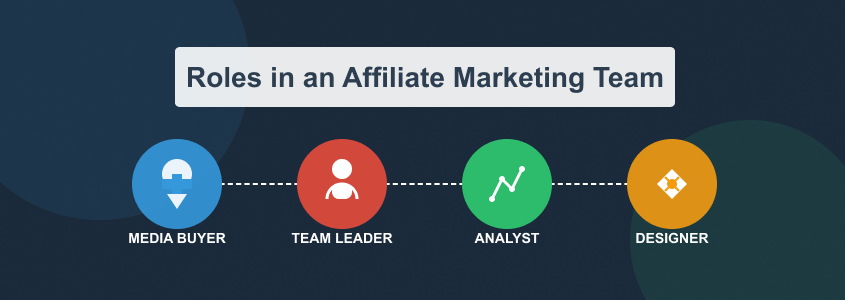
A partner program funnel looks simple on paper:
Earn with HUNT ME — weekly payouts
recruit → activate → first commission → retention → scaling
But in practice it often breaks early:
Every small friction point increases churn. That’s why retention starts before the first payout: if your onboarding and support are slow, you lose strong partners quietly.
The first 1–3 days are where most partner programs win or lose. A good affiliate onboarding process starts with friction removal:
The second critical layer is segmentation: “beginner path” vs “pro path.” Beginners need step-by-step help and guardrails. Experienced buyers need speed: instant access to rules, caps, tracking templates, and an account manager who can approve things quickly.
Your onboarding should include a launch checklist that covers:
The fastest way to shorten time to first commission is to remove “unknowns.” Partners quit when they feel blind.
Top partners evaluate programs like tools. They ask: “Will this help me scale, or will it waste my time?”
Earn with HUNT ME — weekly payouts
What they look for:
Partners need more than “leads.” They want the full chain: approved/declined, paid, refunds, and (for subscriptions) rebills and retention signals. When reporting is delayed or confusing, trust disappears. This is why strong affiliate training resources are not just “education” — they reduce operational friction and prevent churn.
High payout with unreliable payment timing is a dealbreaker. Top partners accept holds if they’re consistent and explained. They don’t accept surprises. If rules change retroactively or payouts become unpredictable, volume leaves fast.
Top partners need negotiation: higher payouts, higher caps, special GEO access, private offers, and fast exceptions. If you can’t increase affiliate caps or offer higher payouts for top affiliates based on quality and scaling plan, you will lose them to programs that can.
In performance marketing, slow answers equal lost money. If a partner waits a day for a traffic source approval or a dispute response, they redirect spend elsewhere. This is where affiliate manager support becomes a growth lever, not a “nice to have.”
Anti-fraud is needed — but it must be explainable. Partners will leave if decisions feel like a black box. Clear rules + clear reasons + consistent validation builds trust.
A good community is not a noisy group chat. A real affiliate community strategy gives partners three things:
What makes community actually useful:
If community is unmoderated, it becomes spam and turns into a liability. With structure, it becomes an asset that directly improves affiliate program retention and reduces support load.
Top affiliates don’t think “how do I make $100 today?” They think “what happens if I 2–3× volume?”
Your incentives should answer that question with a clear growth path.
A strong affiliate incentives program often includes tiering:
And each tier unlocks real operational advantages:
The most effective incentives are performance-based. That’s why performance-based affiliate bonuses tied to quality signals (approval stability, low refunds, stable traffic) work better than bonuses tied only to raw lead volume. Programs want predictable, safe revenue — rewarding quality aligns incentives with business reality.
Non-monetary incentives also matter:

Many of the best partners don’t come from advertising — they come from recommendations. That’s especially true for experienced buyers and teams.
But referrals only work if your product is real. Nobody refers friends into a program with payout problems, poor tracking, or slow support.
A strong affiliate referral program should be:
Community amplifies referrals. When people share wins, processes, and helpful materials, partners naturally bring others in. That’s how programs build a self-sustaining growth loop.
Content is how your program proves competence before a partner ever speaks to a manager. Strong affiliates don’t trust claims — they trust process and clarity.
What performs best:
Practical assets are the highest leverage:
This content doesn’t only recruit. It improves activation and shortens time-to-first-profit because new partners can launch faster with fewer mistakes.
If you want retention and quality growth, track program-level KPIs:
If you measure only signups, you’ll optimize for low-quality recruitment. If you measure time-to-first-profit and retention, you’ll build a better program product.
If you want a short answer to “how do we grow a partner program in 2026,” it’s this: build a system that produces first profit quickly and then makes scaling easy.
That system is:
When affiliates feel your program is predictable and supportive, they stay. And when they stay, volume follows.
1) What’s the fastest way to recruit affiliates in 2026?
Build a program that reduces friction: clear onboarding, fast support, and proof-based content. The easiest way to attract strong partners is to shorten time-to-first-commission and make scaling feel safe.
2) How do you attract top affiliates without offering the highest payout?
Top partners value predictability: stable payouts, clear rules, clean tracking, and fast decisions. Higher payout is a lever, but it’s rarely the only lever that matters.
3) What should an affiliate onboarding process include?
A fast “first launch” path: ready links, tracking templates, compliance rules, postback/event basics, and a clear success checklist. Split the onboarding path for beginners vs experienced buyers.
4) What incentives actually improve affiliate program retention?
Tiered benefits tied to quality: higher payouts, higher caps, faster payouts/shorter holds after proven stability, and priority support. Bonuses for quality outperform bonuses for raw lead volume.
5) Why does community matter for retaining affiliates long term?
A structured community reduces time-to-answer, helps partners learn faster, and builds psychological loyalty. Without moderation, it becomes noise; with structure, it becomes a retention engine.
6) What KPIs should a partner program track to grow sustainably?
Activation rate, time-to-first-commission, 30/60/90-day retention, scale rate, support response time, and churn reasons. These metrics drive the right kind of growth, not just more signups.
Registration takes 2 minutes. No experience needed — we'll teach you everything.
Just fill out the form
Registration takes 2 minutes. No experience needed — we'll teach you everything.