To access the HUNT ME referral program dashboard, enter the email and password you used during registration.
Fill out the form — it takes 2 minutes. A manager will contact you on Telegram, provide free training, and help you get your first result.

Most webmasters make the same early mistake: they find one profitable offer, build the entire funnel around it, and assume it will keep printing as long as the metrics look good. In reality, any offer can break without warning — especially in adult verticals, where caps change, KPI rules tighten, allowed traffic requirements get updated, GEO quality shifts, or billing conditions move under your feet.
When an offer collapses, the damage is bigger than “lost revenue.” Your campaigns stall, ad platform learning resets, traffic quality degrades, and you waste time rebuilding momentum. That’s why experienced teams don’t run one offer — they build an adult offer stack: a pre-planned system of interchangeable offers that lets you reroute traffic fast without destroying CR, EPC, or quality.
This guide explains how to build a 3–5 offer stack, how to rotate offers without chaos, and how to protect approval, retention, and net payout when you switch.
An offer stack is a prepared set of offers designed for the same traffic type, GEO group, and user intent. The key word is “prepared.” A real stack is not random offer swapping in panic mode. It’s a structure where each offer has a role and switching is part of the plan, not a last-minute reaction.
In practice, an affiliate offer stack strategy exists for one reason: continuity. When your primary offer drops — caps hit, KPI shifts, advertiser pauses—you can reroute traffic immediately with minimal rebuild. The stack becomes your redundancy layer: instead of downtime and re-learning, you get controlled migration.
Earn with HUNT ME — weekly payouts
That’s how top teams avoid the “offer died, now what?” spiral. They already know what comes next.

Most affiliates don’t need 10 offers. You need 3–5 that are actually interchangeable.
A clean structure looks like this:
This setup is intentionally small. The bigger your pool, the harder it becomes to read signal. A stack is a control system, not a roulette wheel.
The most common reason switching fails is intent mismatch. Users click one promise and land on a different experience. That’s exactly how you trigger performance cliffs, refund spikes, and quality flags.
To avoid CR/EPC crashes, your backups must match on four layers:
If the ad angle implies one journey and the offer is a different journey, performance drops immediately. Your backups should feel like the same category of decision from the user’s perspective, even if the brand differs.
Don’t mix CPA, RevShare, and subscription flows inside the same traffic stream unless you clearly segment routing. The economics and timing are different, and “good leads” can turn into poor net payout if you switch models blindly.
Earn with HUNT ME — weekly payouts
This is where stacks fail quietly. Your winner might allow your source method; your backup might not. If you don’t verify allowed traffic restrictions across the entire stack, switching can trigger reversals or quality holds.
Backups must be compatible in KPI expectations: approval rate thresholds, refund tolerance, retention behavior, and hold logic. Otherwise you might switch into an offer that looks “better on leads” but punishes you on net payout.
In short: a good backup offer is not just profitable — it’s compatible.
Build one shared infrastructure before you need it
The secret to stack stability is preparation. If you build tracking and routing only after an offer dies, you’re already losing.

You need a consistent subID structure to track which route and offer produced the result. This is the foundation of traffic reroute tracking subID: you should be able to see (at a glance) which offer was served, from which source, on which GEO/device, in which time window.
If you can’t see money events, you can’t compare offers. That’s why stacks should be measured with paid rebill refund tracking — especially in adult subscriptions where the first “conversion” can look great but net payout collapses later.
Keep your campaign naming consistent across offers. Switching should not break reporting. The goal is to compare “offer A vs offer B” cleanly without rebuilding your entire analytics layer.
If your prelander is designed to support multiple offers, switching becomes dramatically faster and less risky. You don’t have to redesign the entire funnel. You update the final handoff and the proof elements.
There are three practical switching methods. Each fits a different level of urgency.
This is the fastest option: replace the offer immediately. Use it when an offer gets paused or terms change overnight. Expect a performance wobble—hot swaps are survival moves, not optimization moves.
This is how you how to rotate offers without losing performance in real life:
This method protects you from full-volume crashes and helps you detect problems before they become expensive.
Smartlink can serve as a controlled distribution layer, but only when you have strong tracking and clear routing logic. Used correctly, it supports:
This is where smartlink offer rotation can add real value—but only if you’re measuring net outcomes, not just leads.
Even with a clean stack, switching can fail. The most common failure points are predictable:
This is why the goal is not just “switch fast.” The goal is to switch safely with planned signal checks.

During migration, don’t watch only leads. Watch the full chain.
Early signals:
Quality signals:
Money signals:
Subscription layer (if relevant):
The best teams predefine stop rules. If approval drops below your threshold or refunds spike, the migration pauses automatically. That’s how you avoid burning budget while “hoping it stabilizes.”
One universal stack across all countries is a common mistake. GEO performance differences are not just CPM—they’re payment success, approval patterns, audience behavior, and compliance risk.
A GEO-based offer stack approach usually looks like:
If you have enough volume, separate stacks per GEO group reduce surprises dramatically. You also prevent “one bad GEO” from poisoning the whole funnel’s net payout metrics.
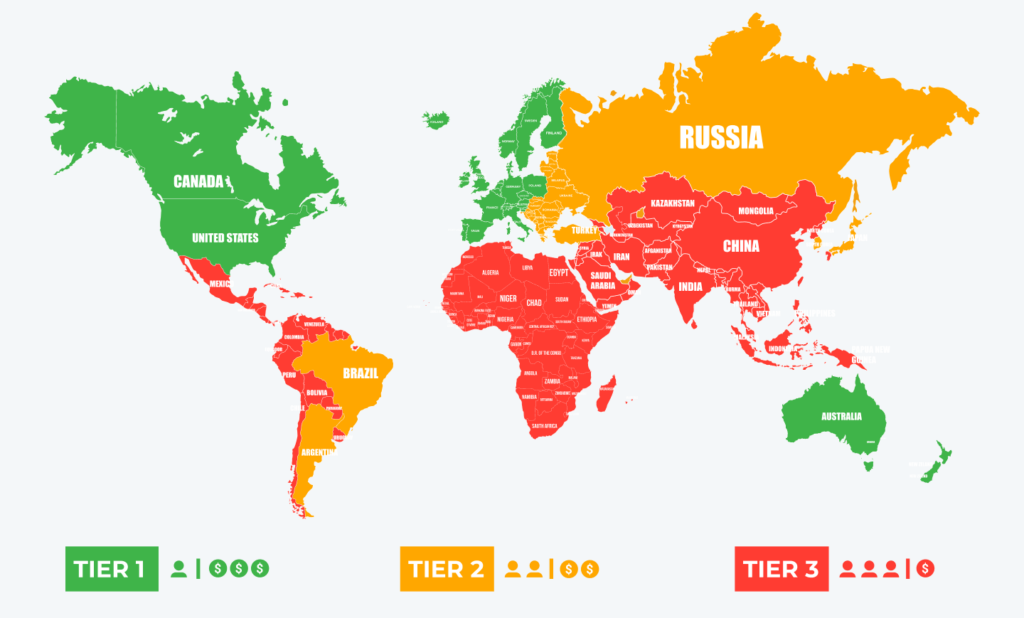
A lot of affiliates lose performance not because the new offer is bad, but because creatives are overly specific to the old offer.
The best approach is to build creatives around user intent and angle:
Then, when you switch offers, you only update the pieces that must match:
That’s how you avoid CR drop when switching offers and avoid EPC drop when switching offers without rebuilding from zero.
Most “stack failures” come from the same patterns:
A stack only works if it’s controlled and measurable.
If you want to get this done quickly:
This isn’t complicated—it’s discipline. The point is to build it while you’re winning, not after the offer dies.
In adult affiliate marketing, traffic rarely “dies” because the audience suddenly changed. More often, revenue drops because you’re dependent on one offer and one set of terms you can’t control.
A well-built adult offer stack protects your profit and your time. It lets you respond fast, keep campaigns alive, avoid long downtime, and preserve learning. The best moment to build your stack isn’t when the offer collapses—it’s while the offer is still profitable. That’s how stable teams scale without getting reset every time the market moves.
1) How many offers should be in an adult offer stack?
For most affiliates, 3–5 is ideal: one winner, 1–2 backups, one fallback, and optionally a GEO/device backup if your traffic is mixed. Bigger stacks often dilute signal and make optimization messy.
2) What’s the safest way to rotate offers without losing performance?
A controlled migration split: start with 30% on the new offer, evaluate quality and money signals, then move to 50/50 and 70/30. This prevents full-volume crashes and catches issues early.
3) Why does CR drop when switching offers even if the offer is “similar”?
Usually because creatives and expectations are tied to the old offer. Users click one implied journey and land on another. Fix the creative-to-offer alignment and update proof/CTA elements.
4) What metrics matter most during a switch?
Early: CTR/LP CTR/CR. Quality: approval rate and reject reasons. Money: EPC/ROI and refunds. For subscriptions: paid, rebill, refund, early retention, and payback movement.
5) When should I use smartlink offer rotation?
When you have clean tracking, clear routing logic, and you can measure net outcomes (paid/rebill/refund), not just leads. Smartlink works best as a fallback and tail monetization layer.
6) How do I prevent caps from killing my scaling when I switch?
Verify cap type (hard vs soft), confirm what happens after the cap, and ensure backups can absorb the volume. Build a fallback path so overflow traffic doesn’t go to waste or turn unprofitable.
Registration takes 2 minutes. No experience needed — we'll teach you everything.
Just fill out the form
Registration takes 2 minutes. No experience needed — we'll teach you everything.