Why Candidates Do Not Show Up for Interviews and How Affiliates Can Reduce Drop-Off
14 min read · 10.11.2026 · 2 views

Contents
- Application-to-Interview Conversion and Interview Show-Up Rate
- Application-to-interview conversion
- Interview show-up rate
- Why Candidates Disappear After Applying
- Interest Does Not Always Mean Interview Readiness
- How Expectations Affect Interview Attendance
- Explain the Next Step Before the Application
- What to Tell Candidates After They Apply
- Why Contact Timing Matters
- A Candidate Reminder Strategy Without Pressure
- After an interview is scheduled
- Before the interview
- After a missed interview
- Which Traffic Sources Bring Interview No-Shows?
- How to Analyse Candidate Drop-Off by Source and SubID
- When the Problem May Be Specific to a Source
- When the Problem May Be After the Application
- What Affiliates Can Improve Directly
- What to Do When a Candidate Changes Their Mind
- Record Reasons for Drop-Off
- Measure Source Efficiency Beyond CPL
- A Practical Workflow to Reduce Drop-Off
- Follow the Candidate Journey Beyond the Form
An application is an intermediate step in a recruiting offer. A candidate may submit a form and then stop responding, change their mind, or miss an interview. When the affiliate’s payment depends on a later event, these losses affect campaign performance.
That makes the journey after application an important part of optimisation. Form conversion rate tells you how many people submitted their details. It does not tell you how many understood the opportunity, responded to contact, or reached the event required for payment.
Want to start without experience?
Start with stream models: you look for people using ready-made scripts, and production companies handle the interview and training.
This guide explains why candidates disappear after applying, how affiliates can reduce avoidable drop-off, and how to evaluate traffic using more than application volume.
Application-to-Interview Conversion and Interview Show-Up Rate
Two related metrics help explain what happens after an application. They measure different parts of the process.
Application-to-interview conversion
Application-to-interview conversion = attended interviews ÷ applications × 100%
Good at finding people? You get paid for it
You find a candidate, production companies and agencies do the rest. Payouts in USDT every Monday.
This measures how many applicants eventually attend an interview. It includes losses before an interview is scheduled, such as invalid contact details, unsuccessful contact, or a decision not to proceed.
Consider this hypothetical example:
| Result | Source A | Source B |
| Applications | 100 | 40 |
| Attended interviews | 10 | 15 |
| Application-to-interview conversion | 10% | 37.5% |
Source A generates more applications. Source B generates more attended interviews from fewer applications.
That is a useful difference, although costs and confirmed payable events are still needed to compare profitability.
Interview show-up rate
Interview show-up rate = attended interviews ÷ scheduled interviews due in the measurement period × 100%
This measures attendance once an interview has been arranged.
Keep the treatment of cancellations and rescheduled interviews consistent. Do not count a future appointment as a missed interview simply because the reporting period has ended.
The first metric shows performance across the application-to-interview funnel. The second helps assess what happens between scheduling and attendance. Improving one does not automatically improve the other.
Not sure what to write first? The script is ready
After sign-up you get ready-made scripts and a personal manager. No recruiting experience needed.

Why Candidates Disappear After Applying
Candidate drop-off after application can have several causes. Some begin with the initial advertisement; others arise during contact or scheduling.
A candidate may:
- Have applied impulsively.
- Be interested but not ready for an interview.
- Misunderstand what happens after the form.
- Know too little about the work.
- Expect conditions the offer does not provide.
- Fail to recognise the person contacting them.
- Miss a message or call.
- Submit incorrect contact details.
- Be unavailable at the proposed time.
- Find another opportunity.
- Decide, after learning more, that the role is unsuitable.
- Encounter a delay or an unclear handover.
These are possible explanations, not conclusions to assign without evidence.
When someone stops replying, record the reason as unknown unless you have information that establishes otherwise. Silence alone does not prove low motivation, poor traffic, or a problem with the company.
Interest Does Not Always Mean Interview Readiness
Someone may click an advertisement, ask a question, and submit a form while still exploring the opportunity.
Questions about pay or responsibilities are normal. They show that the person needs information; they do not establish whether they are ready to attend an interview.
More specific questions can indicate engagement:
- How does the interview work?
- Who will contact me?
- Can we arrange a suitable time?
- Which language will the conversation use?
- Is any preparation required?
- What happens after the interview?
Even then, confirm willingness to proceed. Do not treat a detailed conversation as automatic permission to submit an application.
A short preliminary check should establish that the person understands the basic format, meets the confirmed requirements, and wants the next step.
For HUNT ME campaigns, check the current recruitment offers and their requirements rather than relying on a general description that may not apply to every direction.
How Expectations Affect Interview Attendance
An advertisement centred on “quick money” or guaranteed earnings may attract responses without creating an accurate understanding of the work.
If the candidate learns about important responsibilities or requirements only after applying, they may decide against continuing.
The resulting pattern can look like this:
Broad promise → many responses → mismatched expectations → withdrawals → fewer attended interviews
A clearer creative may generate fewer applications while attracting people who better understand the opportunity. Whether it performs better should be checked through subsequent outcomes and costs.
Explain the important conditions before the form. Separate the candidate’s compensation from the affiliate’s referral reward, and avoid turning potential earnings into a guaranteed result.
Candidate expectation management begins with the first message, not with the reminder before the interview.
Explain the Next Step Before the Application
Uncertainty can make legitimate contact look unexpected.
Imagine someone submitting a form in the evening and receiving a call from an unfamiliar number the following day. If they do not know who will call or why, they may ignore it.
Before the application, explain the confirmed process:
- Who is expected to contact the candidate.
- Which communication channel will be used.
- The purpose of the initial conversation.
- Whether an interview needs to be scheduled separately.
- Any preparation that is actually required.
- The expected response window, if one has been confirmed.
- How the candidate can ask questions or decline further contact.
Do not promise an immediate call, a particular interviewer, or a choice of appointment times unless those arrangements are available.
Where confirmed, explain that attending an interview allows the person to learn more and does not automatically mean accepting the role.
What to Tell Candidates After They Apply
Once submission has been confirmed, a short message can help the candidate understand what comes next.
For example:
“Your application has been submitted. The next step is [confirmed process] with [confirmed team or organisation]. Please check that the contact details you provided are correct and that you can receive messages through [confirmed channel]. Let us know if you need to clarify anything before proceeding.”
Use only the details confirmed for that offer. If the application has not yet been successfully submitted, do not say that it has.
You can also ask about availability where the process supports it. Recording a preferred time is not the same as confirming an interview appointment.
The message should acknowledge the action and explain the next step without introducing pressure or artificial urgency.

Why Contact Timing Matters
A long or unexplained delay can create another opportunity for drop-off. The candidate may forget the application, make other arrangements, or become unsure whether the process is continuing.
The affiliate may not control how quickly the company handles applications. However, they can set accurate expectations and identify recurring delays.
If the response window is unknown, say so. If a confirmed window has passed, follow the agreed escalation process rather than repeatedly assuring the candidate that contact is imminent.
When delays affect several sources or campaigns, bring dated examples to the affiliate manager. Useful information includes application identifiers, submission times, available contact timestamps, and the stage at which progress stopped.
Our guide to preparing for a conversation with an affiliate manager explains how to organise a data-based discussion.
A Candidate Reminder Strategy Without Pressure
A missed call or interview does not necessarily mean the person has withdrawn. They may have overlooked a message, confused the time zone, or experienced a scheduling problem.
A practical candidate follow-up strategy can include:
- Confirmation after the application is successfully submitted.
- Appointment details once an interview is arranged.
- A brief reminder before the appointment.
- A respectful message after a missed interview, offering a way to clarify or reschedule.
This is an example sequence, not a universal contact schedule. Agree who owns communication and coordinate with the company or agency so the candidate does not receive duplicate messages.
After an interview is scheduled
“Your interview is scheduled for [date] at [time and time zone] via [confirmed channel]. Please let [responsible contact] know if you cannot attend or need to ask about rescheduling.”
Before the interview
“A quick reminder about your interview today at [time and time zone] via [channel]. Are you still available?”
After a missed interview
“It looks like the interview did not take place. Would you like to ask about another time, or would you prefer not to continue?”
Only offer rescheduling where the process permits it.
The purpose of reminders is to support an agreed next step. Repeated messages, accusations, and pressure can make communication worse. Respect a request to stop contact.
Which Traffic Sources Bring Interview No-Shows?
No platform should be labelled a poor source in advance. Recruiting traffic quality depends on the audience, targeting, creative, offer, and process after application.
Potential problems include:
- Targeting that is too broad for the offer.
- A creative that leaves the work format unclear.
- An application form that provides little context.
- A message focused almost entirely on earnings.
- Requirements that become visible only after submission.
- A weak connection between the advertisement and the application page.
Cold traffic is not automatically low-quality traffic. It may need a clearer explanation before the application.
Compare the relevant journey:
Application → contact → scheduling → attended interview → confirmed payable event → payout
The payable event depends on the offer. Attendance, a successful hiring decision, completed work, and payment confirmation should not be treated as interchangeable.
How to Analyse Candidate Drop-Off by Source and SubID
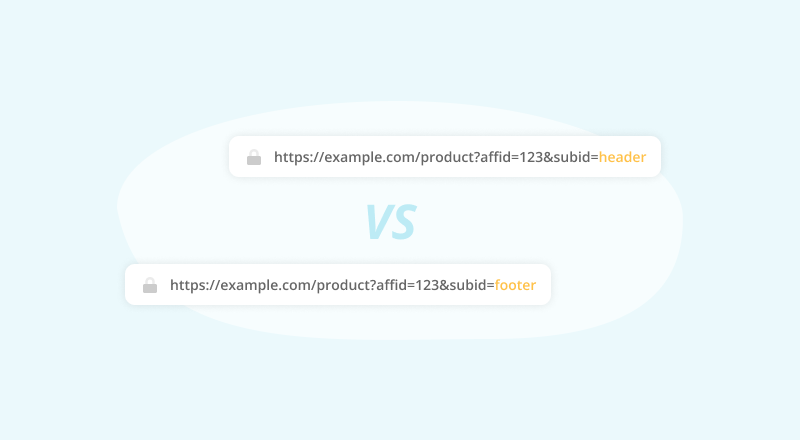
Separate meaningful traffic segments where the tracking setup supports it. These may include source, campaign, placement, creative, market, and content version.
For example:
| Stage | Source A | Source B |
| Applications | 100 | 50 |
| Candidates contacted successfully | 60 | 40 |
| Attended interviews | 20 | 24 |
| Application-to-interview conversion | 20% | 48% |
These hypothetical figures show that Source A generates twice as many applications, while Source B produces more attended interviews.
They do not explain the cause. To investigate, you would also need scheduling data, contact timing, requirements, costs, and confirmed outcomes.
For SubID candidate quality analysis, confirm which identifiers and reports are available. Do not assume that every stage is automatically linked in the CRM.
Use comparable observation windows, remove duplicates consistently, and keep pending outcomes separate from confirmed losses.
When the Problem May Be Specific to a Source
A problem concentrated in one segment gives you a useful starting point.
For example:
- One placement repeatedly produces invalid contact details.
- A particular creative attracts candidates expecting a different role.
- Application-to-interview conversion declines after targeting is broadened.
- One segment performs worse despite comparable handling and observation time.
These patterns support investigation. They do not prove that the entire platform or audience is unsuitable.
Review the message and requirements, check tracking, and consider a controlled change. There may be a specific placement or creative to revise while other parts of the source continue to work.
Avoid making permanent decisions from a very small number of applications.
When the Problem May Be After the Application
A decline across several sources may point to a shared issue later in the process.
Candidates from different campaigns might encounter:
- A longer wait for contact.
- Unclear messages from an unfamiliar sender.
- Scheduling difficulties.
- Inconsistent explanations.
- A technical problem.
- A change in requirements or the offer.
The affiliate does not control the entire recruiting process. Repeatedly changing targeting will not resolve a problem that occurs after candidates have been handed over.
Document when the change began, which segments were affected, and where progression stopped. Then review the evidence with the manager.
If applications are also being rejected, investigate those reasons separately. Our guide to what to do when an affiliate program rejects your traffic provides a broader troubleshooting framework.
What Affiliates Can Improve Directly
Within the agreed workflow, affiliates can improve several points before and immediately after an application:
- Make the advertisement clearer.
- Remove unconfirmed earnings promises.
- Explain the basic work format and requirements.
- Confirm that the candidate wants to proceed.
- Check contact details for obvious errors.
- Explain the next step before submission.
- Confirm successful submission accurately.
- Coordinate reminders with the responsible team.
- Separate traffic segments in reporting.
- Record known reasons for withdrawal or missed appointments.
- Escalate recurring process problems with evidence.
These actions can reduce avoidable confusion. Their effect on interview attendance and campaign economics should still be measured.
What to Do When a Candidate Changes Their Mind
A candidate can decide not to continue even after a clear explanation and a well-managed process.
If they withdraw, acknowledge the decision. You may ask whether they want to share a reason, but they should not have to justify it before communication stops.
Do not:
- Submit an application without permission.
- Conceal important conditions.
- Pretend to be a company employee.
- Invent deadlines or guaranteed outcomes.
- Send repeated unwanted messages.
- Coach false answers to pass an interview.
- Treat a request to stop contact as an objection to overcome.
Candidate no-show prevention should focus on avoidable mistakes and misunderstandings. It should preserve the person’s choice about participating.
Record Reasons for Drop-Off
A simple log can make recurring problems easier to identify.
Useful categories include:
- No response after a recorded contact attempt.
- Candidate explicitly withdrew.
- Work format was misunderstood.
- Appointment time was unsuitable.
- Contact details were incorrect.
- A confirmed requirement was not met.
- Candidate reported finding another opportunity.
- Interview was missed.
- Outcome is still pending.
- Reason is unknown.
Record relevant dates, source identifiers, creative, offer, and current status where available.
Keep observations separate from interpretations. “The candidate said the schedule did not fit” is more useful than “the candidate was not serious.”
Use only the information needed for the workflow, avoid unnecessarily duplicating personal details, and keep access appropriate.
Patterns may emerge as comparable outcomes accumulate, but there is no universal number of applications that guarantees a reliable conclusion.
Measure Source Efficiency Beyond CPL
Cost per lead measures the cost of generating an application. It does not show the cost of obtaining an attended interview or a confirmed payable event.
Useful calculations include:
| Metric | Calculation |
| Cost per application | Relevant acquisition spend ÷ applications |
| Cost per successful contact | Relevant acquisition spend ÷ candidates contacted successfully |
| Cost per attended interview | Relevant acquisition spend ÷ attended interviews |
| Cost per confirmed payable event | Relevant acquisition spend ÷ confirmed payable events |
Use consistent definitions and state which costs are included.
A source with a $2 CPL may be less profitable than one with an $8 CPL if very few candidates from the cheaper source reach the required event. The reverse is also possible: a higher attendance percentage alone does not justify higher costs.
The main performance measure should reflect the actual offer conditions. Some models pay for interview attendance, while others require different results.
For a broader view of campaign economics, see our guide to calculating affiliate profit from traffic costs to net income.
A Practical Workflow to Reduce Drop-Off
- Use a clear advertisement that matches the actual opportunity.
- Check the current requirements and payment conditions.
- Establish basic fit and willingness to continue.
- Explain the next step before the application.
- Confirm contact accuracy.
- Acknowledge submission once it is confirmed.
- Set realistic expectations for further contact.
- Communicate confirmed appointment details, including the time zone.
- Coordinate appropriate reminders with the responsible team.
- Record missed appointments, withdrawals, and unknown outcomes separately.
- Compare sources and creatives using consistent observation windows.
- Escalate recurring issues that occur after the handover.
Improvement may come from several small corrections: a clearer explanation, an accurate appointment time, a corrected contact detail, or a better-coordinated message.
Test changes rather than assuming that one “perfect” follow-up will solve every loss.
Follow the Candidate Journey Beyond the Form
Some candidates will change their minds, miss messages, or decide that the opportunity is unsuitable. Those decisions should remain separate from avoidable process failures.
A useful recruiting funnel makes the work clear, explains what follows the application, and helps interested candidates attend an agreed interview. Reporting then shows where people progress, where they leave, and which reasons are actually known.
Evaluate applications alongside contact, scheduling, attendance, and the payable event defined by the offer. That provides a stronger basis for campaign decisions than form conversion rate alone.
To explore the available directions and check their current conditions, review the HUNT ME recruiting affiliate offers.
From here it's just practice
You already know how it works. Sign-up takes a couple of minutes and costs nothing.
No investment. Candidates 18+ only.