To access the HUNT ME referral program dashboard, enter the email and password you used during registration.
Fill out the form — it takes 2 minutes. A manager will contact you on Telegram, provide free training, and help you get your first result.
One of the most expensive mistakes in affiliate marketing is thinking that creative testing is about finding the “best-looking” ad.
An affiliate prepares a batch of polished banners or videos, uploads them to a traffic source, waits for results, and then wonders why nothing works. The problem is usually not the production quality. The problem is that the test is focused on visuals instead of the idea behind the creative.
Affiliate creative testing is not a design contest.
It is a structured process for testing hypotheses about what attracts the right audience, creates the right expectation, and moves users toward the target action.
A beautiful creative with a weak angle can waste budget quickly. A simple creative with a precise message can outperform expensive production if it matches the user’s intent and the offer’s logic.
Earn with HUNT ME — weekly payouts
This guide explains how to prepare creatives for testing, how to build advertising angles, how to create a creative testing matrix, how to respect platform restrictions, how to adapt creatives by traffic source, and how to recognize signs of creative fatigue before performance drops too far.
An advertising angle is the core idea behind the creative.
It is the way you present the offer to the user.
The same affiliate offer can be promoted through many different angles:
For example, a dating-related offer can be framed through different ideas:
The visual format may look similar, but the reason users click is different.
That is why advertising angles affiliate marketing teams test should be defined before the designer or video editor starts working.
If you only test colors, backgrounds, fonts, or thumbnails, you are changing the packaging while keeping the same idea. Sometimes that helps, but real improvement usually comes from testing a stronger angle, not only a prettier visual.
Earn with HUNT ME — weekly payouts
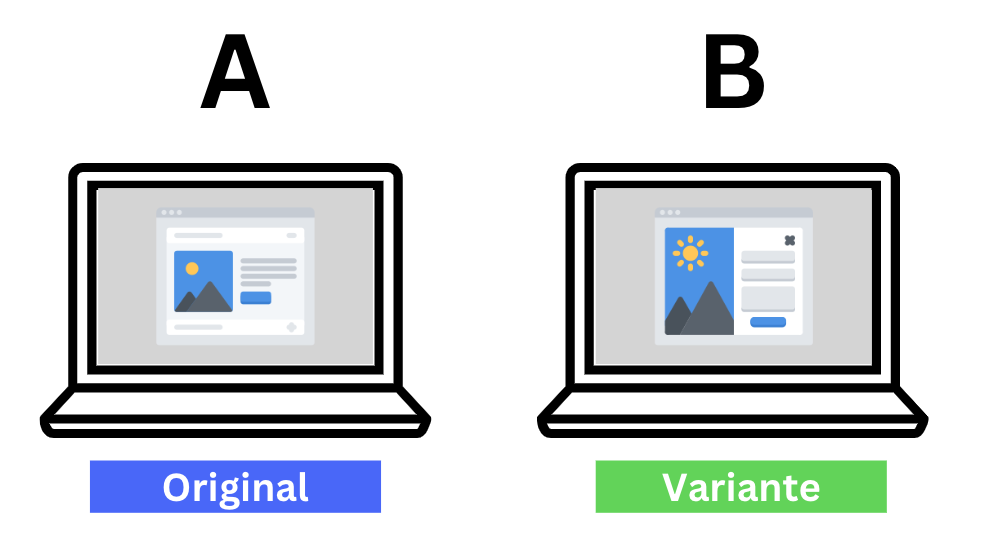
Creative testing hypotheses should be specific and measurable.
A weak hypothesis sounds like:
“Let’s try this video. Maybe it works.”
A useful hypothesis sounds like:
“If we show audience X angle Y through format Z, metric A should improve because of reason B.”
For example:
“If we show mobile users in GEO X a native-style video that explains the offer in a simple way, click-to-registration conversion should improve because the creative will feel less like a direct ad and more like useful guidance.”
This format makes the test much easier to evaluate.
You know:
Good creative hypotheses can come from:
The goal is not to test random ideas. The goal is to build a backlog of reasonable hypotheses and test the strongest ones first.
A creative testing matrix helps turn creative testing into a system.
Instead of uploading random ads, you organize ideas into a structure.
A simple matrix can include:
For example:
5 angles × 3 formats = 15 creative variations.
This is much better than “15 random ads” because each variation has a clear purpose.
A creative testing matrix helps you understand what actually worked:
Without a matrix, you may find a winning ad but fail to understand why it won.
With a matrix, every test creates knowledge that can be reused.
Adult offer creatives require more preparation because platform rules, advertiser rules, and audience expectations are stricter.
Before creating creatives, check:
Compliant ad creatives are not only about passing moderation.
They also protect traffic quality.
A creative that creates false expectations may generate clicks and even first conversions, but it can hurt approval rate, paid rate, retention, refunds, and chargebacks.
Creative quality and paid rate are connected. If the creative attracts users who misunderstand the offer, downstream performance will suffer.
Before launch, the creative should answer three questions:
If the answer to any of these questions is unclear, clarify before spending budget.
Advertising platform restrictions vary by source.
A creative that works in one traffic source may be rejected or restricted in another.
For example:
Adult-related campaigns are especially sensitive. Many platforms restrict explicit claims, direct adult wording, aggressive visuals, misleading promises, or anything that violates their ad policies.
The right approach is not to copy one creative everywhere.
The right approach is to adapt the same hypothesis to each traffic source.
That means changing:
How to adapt creatives by traffic source is one of the most important skills in affiliate ad creative workflow. The same angle may work across several platforms, but it needs different packaging.
The first test does not need hundreds of creatives.
It needs a controlled set.
A practical starting point:
This gives enough variation to learn something without spreading the budget too thin.
The most important rule is experiment cleanliness.
If you want to test angles, keep format and structure similar.
If you want to test video hooks, keep the rest of the video similar.
If you want to test CTA, do not change the whole creative at the same time.
When every element changes at once, you cannot know what caused the result.
This is the difference between random uploading and real affiliate creative testing.
Video creative testing affiliate marketing campaigns should focus heavily on the first seconds.
The first frame, first line, first movement, and first visual cue determine whether the user continues watching or scrolls away.
Useful video variables to test include:
A video does not need to be expensive to perform well.
In many traffic sources, native-looking creatives can outperform polished production because they feel more natural and less like direct advertising.
But the creative still needs to be clear, compliant, and connected to the offer.
A video that creates curiosity but does not prepare the user for the next step can produce high CTR and weak conversion.
Banner testing affiliate marketing campaigns work differently from video.
The message must be understood almost instantly.
Useful banner variables include:
A strong banner does not only attract attention. It attracts the right attention.
Clickbait banners can produce cheap clicks but weak downstream quality.
A more direct banner may produce fewer clicks but stronger conversion, approval, and paid rate.
That is why banner testing should also be evaluated beyond CTR.
CTR and creative quality are not the same thing.
CTR shows whether people click.
It does not show whether those people become valuable users.
A provocative creative may produce strong CTR but weak landing-page conversion, poor approval rate, low paid rate, and high refund risk.
To evaluate affiliate creative performance properly, track the full funnel:
A creative with lower CTR can be more profitable if it attracts users who understand the offer and complete valuable actions.
The best creative is not the one that gets the most clicks.
The best creative is the one that brings the most profitable users.
Creative-to-offer fit is the alignment between what the ad promises and what the user actually sees after clicking.
If the creative creates one expectation and the offer delivers another, performance usually breaks later in the funnel.
Poor creative-to-offer fit can cause:
This is especially important in subscription and adult offers because user expectation affects not only the first conversion but also long-term behavior.
A creative can “win” at the click level and lose at the business level.
Before launching, check the full path:
Strong creative testing is not only about the ad. It is about the entire promise chain.
A winning creative is not the one with one good hour or one lucky day.
A real winner shows stable performance across enough data.
Before calling a creative a winner, check:
Do not declare a winner too early.
Small samples can be misleading. A creative can look strong because of temporary auction conditions or one high-quality placement.
A stronger test looks at consistency.
A creative is ready for scaling when it keeps producing profitable users after a controlled budget increase.
How to scale a winning creative without damaging performance?
Do it gradually.
Scaling too fast can change traffic quality. The traffic source may expand delivery into weaker segments, CPC may rise, and the creative may fatigue faster.
A practical scaling process:
When scaling, do not only ask whether the creative can spend more.
Ask whether it can keep producing the same quality of users at higher volume.
Creative fatigue affiliate marketing campaigns face is natural.
Users see the same ad too often. Attention drops. Costs rise. Performance declines.
Common signs of creative fatigue include:
How to know when a creative is burned out?
Look at trends, not one-day fluctuations.
A single bad day can happen for many reasons. Creative fatigue usually appears as a steady decline over several comparable periods.
If CTR drops for several days, CPC rises, and downstream quality weakens while the offer and traffic source remain stable, the creative is probably burning out.
Not every drop is creative fatigue.
Sometimes the offer changed.
Sometimes tracking is broken.
Sometimes the traffic source changed the auction or placement mix.
To diagnose correctly, isolate the problem.
If one creative declines while other creatives on the same offer and source remain stable, it is likely creative fatigue.
If all creatives on one offer decline across several traffic sources, check the offer, landing page, payout terms, tracking, or payment flow.
If all creatives decline only on one traffic source, check the auction, placements, moderation, or source quality.
If tracking numbers do not match the affiliate dashboard, check postback and SubID transfer before changing creatives.
This prevents unnecessary creative production when the real issue is somewhere else.
When a creative burns out, you do not always need to throw away the whole idea.
Sometimes the angle is still strong, but the packaging is tired.
A creative refresh strategy affiliate marketing teams can use is to preserve the winning hypothesis while changing the visible execution.
You can refresh:
The key is to keep the core angle recognizable while making the creative feel new to the audience.
Do not change everything at once.
Create several iterations around the same winning idea and compare them against the original benchmark.
This helps extend the life of a successful angle and avoid creative fatigue without losing the learning from previous tests.
Creative testing by GEO matters because users in different countries may react differently to the same angle.
A message that works in one market may feel weak, unclear, too direct, or culturally mismatched in another.
When adapting creatives by GEO, consider:
Do not only translate the text.
Adapt the message.
A literal translation can damage performance if the emotional trigger does not fit the local audience.
A GEO-specific creative should feel natural to the user and consistent with the landing page.
Creative testing by traffic source is just as important as GEO testing.
The same creative angle can work in several sources, but the format should change.
For example:
When testing a new source, do not simply reuse the old creative set.
Start from the winning angle, then rebuild the format for that source’s user behavior and rules.
That is how to avoid creative fatigue and moderation issues while keeping the learning from previous campaigns.
The most common creative testing mistakes include:
Most creative testing failures are not caused by lack of ideas.
They are caused by lack of structure.
A simple creative testing workflow can look like this:
This workflow turns creative testing from guessing into a repeatable system.
The real goal of a creative is not to collect the maximum number of clicks.
The goal is to attract users who are likely to complete the target action, get approved, pay, stay, and generate profit.
Clickbait can create volume, but volume is not the same as revenue.
A clear angle, honest expectation, compliant execution, and proper adaptation to the traffic source usually produce fewer wasted clicks and better downstream quality.
That is why affiliate creative testing should follow a system:
Angle → hypothesis → creative matrix → compliant production → clean test → full-funnel analysis → scaling → refresh.
When this process is consistent, creatives stop being a lottery. They become a controlled part of campaign growth.
Start with the offer, audience, GEO, traffic source, and restrictions. Then define creative hypotheses, build a testing matrix, produce controlled variations, set up tracking, and evaluate the full funnel.
An advertising angle is the core idea or emotional trigger behind the creative. It explains why the user should care about the offer.
For an initial test, 6–15 creatives is often enough if they are structured around clear angles and controlled variations. Testing too many random creatives can spread the budget too thin.
CTR only shows how many users clicked. A creative must also be evaluated by landing-page conversion, approval rate, paid rate, EPC, refunds, retention, ROI, and net profit.
A creative may be burned out when frequency rises, CTR falls, CPC or CPM increases, and downstream performance declines over several comparable periods.
Keep the winning angle but change the execution: first frame, headline, visual style, presenter, layout, subtitles, CTA, or format. Test refreshed versions against the original benchmark.
Registration takes 2 minutes. No experience needed — we'll teach you everything.
Just fill out the form
Registration takes 2 minutes. No experience needed — we'll teach you everything.