To access the HUNT ME referral program dashboard, enter the email and password you used during registration.
Fill out the form — it takes 2 minutes. A manager will contact you on Telegram, provide free training, and help you get your first result.
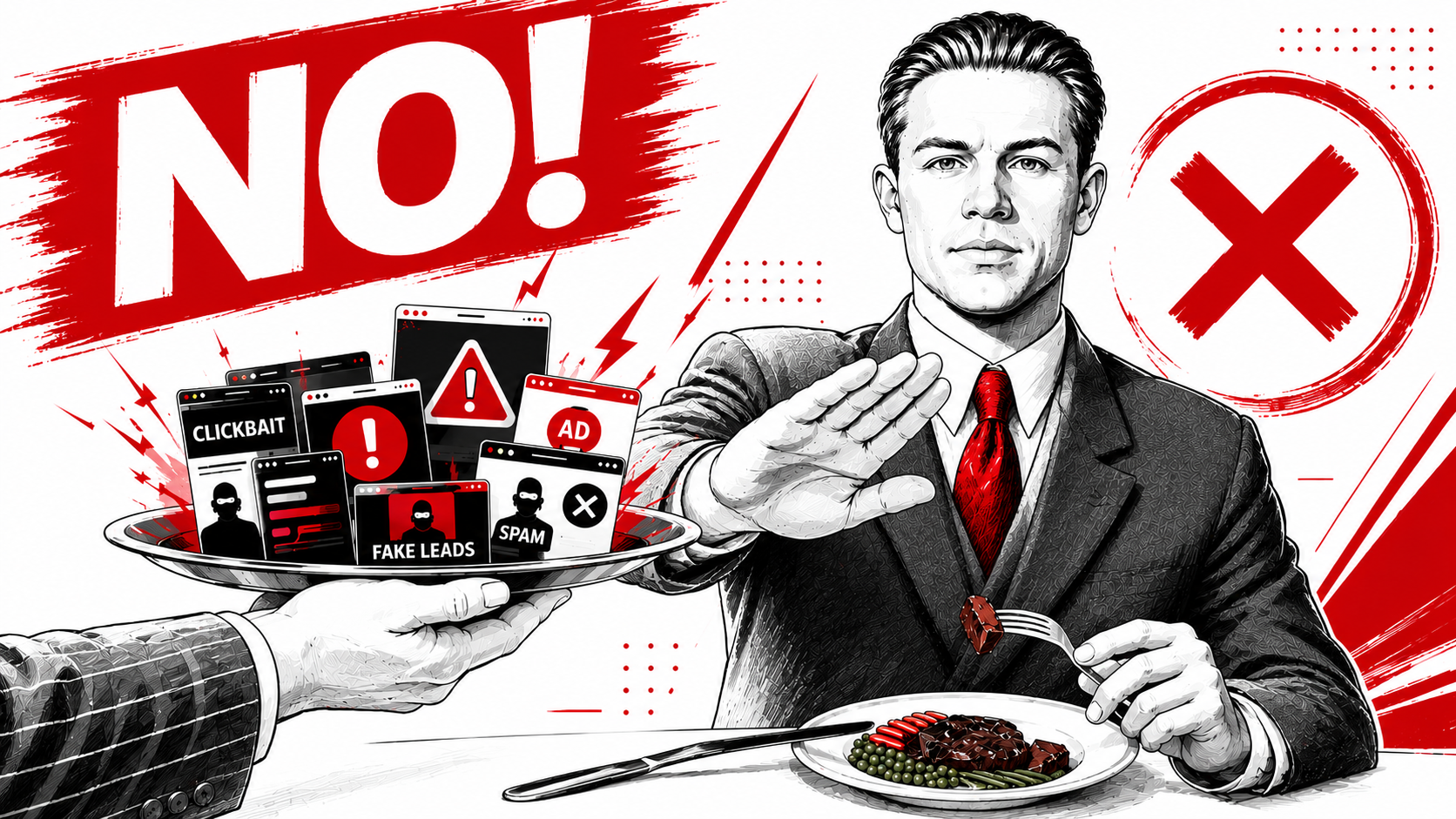
Every affiliate eventually faces a situation where traffic gets rejected.
You open the dashboard and see rejected leads, traffic under review, delayed approval, a sudden payout hold, or unexpected payout cuts. The first reaction is often emotional: the affiliate program is cutting traffic unfairly, the advertiser does not want to pay, or the offer is no longer worth running.
That reaction is understandable, but it can also be expensive.
When an affiliate program rejects traffic, it does not always mean the program is acting unfairly. It also does not always mean the affiliate did something wrong. Rejected affiliate leads are often a signal that something needs to be checked: offer rules, traffic source, targeting, tracking, user quality, anti-fraud signals, or payment behavior.
The worst decision is to panic, stop everything, move the budget blindly to another offer, or start a conflict without data.
Earn with HUNT ME — weekly payouts
The better approach is systematic affiliate lead rejection troubleshooting.
In this guide, we will break down why affiliate traffic gets rejected, how to check affiliate traffic quality, what to do with affiliate payout hold, how to communicate with an affiliate manager, and how to protect affiliate budget while the issue is being reviewed.
“Rejected traffic” can describe several different situations.
Before taking action, clarify what exactly happened.
Rejected lead means the conversion was recorded, but the advertiser or affiliate program did not accept it for payout. This can happen because of invalid user data, duplicate leads, wrong GEO, poor traffic quality, or rule violations.
Payout hold means the lead or revenue is not rejected yet. It is temporarily frozen while the program checks traffic quality, payment status, user behavior, refunds, chargebacks, or advertiser validation.
Traffic validation is a deeper review of your traffic source, campaign setup, creatives, landing pages, SubIDs, and user quality. The affiliate program may ask for screenshots, source data, tracker exports, or additional details.
Payout deductions are adjustments that reduce final revenue. They can be caused by refunds, chargebacks, invalid leads, duplicate users, fraud checks, or advertiser-side corrections.
Earn with HUNT ME — weekly payouts
Disputed leads are leads where you and the affiliate program need to clarify whether rejection was valid.
These situations require different responses.
A payout hold is not the same as rejection.
A refund adjustment is not the same as a tracking error.
A traffic validation request is not automatically an accusation of fraud.
The first step is to classify the problem correctly.
The reasons affiliate leads get rejected usually fall into several groups.
This is one of the most common reasons.
Traffic can be rejected if it does not match the offer terms.
Examples include:
Allowed traffic affiliate offers rules should always be checked before launch.
If the offer allows native traffic but not pop traffic, leads from pop traffic may be rejected even if users are real.
If the offer accepts only specific GEOs, leads from other countries may not be payable.
Offer rules are part of the commercial agreement. If traffic does not match them, the affiliate program usually has a valid reason to reject or review it.
Affiliate traffic quality is one of the biggest factors behind approval rate.
Traffic may be rejected or reviewed when the advertiser sees signals such as:
Adult affiliate traffic quality is especially sensitive because advertisers usually care about real user intent, payment behavior, and long-term value — not just clicks or registrations.
A campaign may generate many leads but still fail validation if those users do not behave like qualified users.
Sometimes the traffic is not the problem.
The data is.
Affiliate tracking problems can create rejected leads, missing conversions, duplicates, or dashboard discrepancies.
Common technical issues include:
Before arguing about traffic quality, verify tracking.
If the affiliate program shows 60 leads and your tracker shows 100, or the same lead appears twice, the first question is not “Why did they reject traffic?”
The first question is “Are we measuring the same events correctly?”
Sometimes affiliate offer validation issues appear because something changed on the advertiser side.
Possible changes include:
This is why affiliates should not assume that every rejection comes from their own campaign.
A direct, data-based conversation with the affiliate manager can quickly clarify whether the offer terms or validation rules changed.
When traffic is rejected, start with the offer card and allowed traffic rules.
This is where many disputes are solved before they begin.
Check:
The question is not only whether your traffic source is generally allowed.
The question is whether your exact traffic scenario is allowed.
For example:
Traffic source approval affiliate marketing workflows matter. When in doubt, confirm the setup with your affiliate manager before spending budget.
Save screenshots of the offer terms at launch. They can be useful if terms change later or if you need to discuss disputed affiliate leads.
Before trying to prove traffic quality, make sure the issue is not technical.
Use this checklist:
Run a test conversion where possible. Follow the full chain from click to landing page, offer, postback, tracker, and affiliate dashboard.
If tracking is broken, traffic analysis becomes unreliable.
A campaign can look rejected, undercounted, or unprofitable simply because the data flow is wrong.
If offer rules are followed and tracking works correctly, the next step is a traffic quality audit.
Do not wait for the affiliate program to tell you everything. Look at your own data first.
Check:
A useful affiliate traffic audit checklist should always include segmentation.
Do not analyze all traffic as one average.
Break it down by:
Very often, most rejected traffic comes from one weak segment.
If one placement, creative, GEO, or SubID is damaging quality, you may be able to remove it without stopping the whole campaign.

Affiliate anti-fraud checks are often automated.
They evaluate many signals at once and flag unusual patterns for review.
Common anti-fraud triggers include:
Being flagged for review does not automatically mean fraud.
Sometimes legitimate traffic triggers anti-fraud rules because of shared mobile networks, corporate networks, VPN usage by real users, or traffic source quirks.
But if the same pattern appears repeatedly, the affiliate program will ask questions.
The goal is to understand the signals early and reduce unnecessary risk before payout is affected.
When approval rate drops, affiliates often assume the offer is dead.
That may be true, but it should not be the first conclusion.
Approval rate can drop because:
Before making decisions, check whether the drop is statistically meaningful.
A small number of leads is not enough to judge approval quality. Approval can also lag behind because of hold periods and delayed validation.
To understand why affiliate approval rate dropped, compare:
How to improve affiliate approval rate usually starts with removing low-quality segments, improving creative-to-offer fit, confirming allowed traffic, and sending users with stronger intent.
Refunds and chargebacks affiliate marketing campaigns experience can reduce revenue after leads were already approved.
This is especially important in subscription and payment-based offers.
A user may convert, get approved, and even generate revenue. Later, the user requests a refund or disputes the transaction. The advertiser then adjusts the payout.
From the affiliate’s perspective, this can look like retroactive rejection or payout cuts.
Refund and chargeback risk is often connected to:
This is why confirmed payout is more important than early approval alone.
If refunds and chargebacks appear later, raw campaign results may be too optimistic.
To protect affiliate budget, track refund and chargeback patterns by source, GEO, creative, and SubID. If one segment produces high delayed loss, reduce or pause it before it damages the whole campaign.
When you see rejected leads or a payout hold, follow a process.
Do not react emotionally.
The goal is to understand the pattern.
Are all leads rejected?
Only one GEO?
Only one traffic source?
Only one SubID?
Only traffic after a certain date?
Only users from one device type?
The answer determines the next step.
How to prove affiliate traffic quality depends on what the affiliate program asks for, but preparation helps.
Useful evidence can include:
The purpose is not to overwhelm the manager with random files.
The purpose is to show a clean, logical chain:
Good documentation makes the affiliate payout dispute process faster and more professional.
How to communicate with affiliate manager during rejection matters more than many affiliates think.
A manager is not the enemy. In most cases, the manager is the person who can help clarify the advertiser’s position, check validation results, request details, and push the dispute forward.
The worst message is emotional and vague:
“You rejected my traffic. This is unfair.”
A better message is specific:
“Hi, I see 42 rejected leads for Offer X in GEO Y from July 12–15. The traffic source was approved before launch. I attached SubID data, tracker export, creatives, and offer terms at launch. Can you please clarify the rejection reason and whether the issue is source quality, validation, or advertiser-side rules?”
Keep the conversation:
Ask direct questions:
A professional dispute gives you a much better chance than an emotional complaint.
While traffic is under review, your goal is to control risk.
Do not keep spending aggressively into an unresolved issue.
At the same time, do not always shut everything down instantly if that prevents diagnosis.
A balanced approach:
This is how to protect affiliate budget without killing the whole operation.
If the issue is isolated, you may preserve profitable traffic while cutting the risky part.
If the issue is systemic, reduce exposure until the affiliate program provides clarity.
Recovery depends on the cause.
If the issue is offer compliance:
If the issue is traffic quality:
If the issue is tracking:
If the issue is refunds or chargebacks:
If the issue is advertiser-side:
Rejected traffic is not always recoverable, but the learning should be.
Every rejection should improve your checklist for the next launch.
The most common mistakes include:
Most of these mistakes are preventable.
The key is discipline: read the rules, track cleanly, document the launch, segment the data, and communicate professionally.
To reduce rejection risk, check the campaign before spending budget.
Use this affiliate traffic compliance checklist:
This does not guarantee that traffic will never be reviewed.
But it gives you a stronger position if questions appear.
When an affiliate program rejects traffic, the right reaction is not panic.
It is diagnosis.
First, identify the type of issue: rejection, hold, validation, deduction, refund, or chargeback. Then check allowed traffic, tracking, traffic quality, anti-fraud signals, GEOs, sources, creatives, and SubIDs.
Prepare evidence before contacting the affiliate manager. Keep the conversation factual. Reduce budget risk while the review is active. Fix the cause instead of guessing.
Traffic rejection will happen in affiliate marketing. It is part of working with performance-based offers.
The affiliates who last are not the ones who never face rejection.
They are the ones who know how to investigate it, protect their budget, communicate professionally, and turn each review into a stronger campaign system.
An affiliate program may reject traffic because of offer rule violations, poor traffic quality, invalid leads, tracking issues, duplicate users, fraud signals, refunds, chargebacks, or advertiser-side validation rules.
Save the data, identify the rejection type, check offer rules, verify tracking, segment rejected leads, review traffic quality, and contact your affiliate manager with a clear report.
No. A payout hold means the traffic or revenue is still under review. Rejected traffic means the lead or conversion was not accepted for payout.
Use tracker exports, SubID data, traffic source screenshots, campaign settings, creatives, offer terms, postback logs, GEO reports, and evidence that the traffic source was approved.
Approval rate may drop because traffic quality declined, weak placements were added, the creative attracted the wrong users, offer rules changed, tracking broke, or anti-fraud checks became stricter.
Affiliates can reduce payout deductions by following offer rules, using approved traffic sources, tracking events correctly, avoiding misleading creatives, monitoring refunds and chargebacks, and removing low-quality traffic segments early.
Registration takes 2 minutes. No experience needed — we'll teach you everything.
Just fill out the form
Registration takes 2 minutes. No experience needed — we'll teach you everything.