Attracting the Wrong Candidates? How to Make Your Recruitment Ads More Specific
17 min read · 19.11.2026 · 8 views

Contents
- Broad Reach Does Not Automatically Mean Poor Candidate Fit
- Six Signs Your Ads May Be Generating Irrelevant Applications
- Why a High CTR Can Coexist With Low Interview Attendance
- Compare the Promise, the Expectation, and the Actual Opportunity
- Five Ways to Make Your Recruitment Message More Specific
- Track Sources and Message Versions Separately
- Why Can the Same Ad Produce Different Candidate Quality Across Countries?
- Rule Out Handling Problems Before Blaming the Audience
- How to Test More Specific Recruitment Ad Targeting
- How to Calculate Interview Show-Up Rate Correctly
- When Fewer Applications Produce a Better Result
- A Checklist Before Your Next Placement
- FAQ: Audience Targeting and Unsuitable Applications
- How can I tell whether my audience is too broad if applications are still coming in?
- What is the difference between a cold audience and an unsuitable audience?
- Do I always need to narrow my ad targeting?
- Why does a high CTR not guarantee qualified candidates?
- What should I change first: the creative, role description, or traffic source?
- How can I reduce irrelevant applications without discouraging suitable candidates?
- Is a candidate unsuitable if they do not reply?
- What should I separate using SubIDs?
- Why does one creative produce different candidate quality across countries?
- How should I measure interview attendance?
- When is a reduction in applications an improvement?
- Does an attended interview qualify for payment under every HUNT ME offer?
Views are increasing, applications are coming in, and the cost per lead may even be falling. Then the first conversation ends with: “I thought this was a different kind of work.” You spend time answering questions and passing on contact details, but few candidates reach the interview.
If your campaign is attracting the wrong candidates, the problem may be the audience. It may also be an ad that leaves too much open to interpretation. Before writing off an entire source, check what people believed they were applying for.
Want to start without experience?
Start with stream models: you look for people using ready-made scripts, and production companies handle the interview and training.
At HUNT ME, we recommend connecting that expectation with the actual opportunity. This guide explains how to identify a mismatch, make your message more specific, and evaluate the result through interview attendance, confirmed payable events, and acquisition costs.
Broad Reach Does Not Automatically Mean Poor Candidate Fit
A large audience includes people with different backgrounds, experience, and interests. Some may be suitable for the opportunity even if they do not match the narrow profile you originally imagined. What matters is whether the message explains the work clearly and reaches people who want to explore that particular role.
There are three different situations to distinguish:
Good at finding people? You get paid for it
You find a candidate, production companies and agencies do the rest. Payouts in USDT every Monday.
- Broad reach: different types of people see the message.
- A cold audience: people are unfamiliar with the opportunity but may be suitable.
- A mismatch: people apply because they expect something different, do not meet a confirmed requirement, or discover that they do not want the actual work.
Those situations call for different responses. Someone asking “What would I be doing?” may simply need information. Repeated comments such as “I thought there would be no interview” suggest that the message needs closer attention.
The term unqualified applicants should refer to people who do not meet a confirmed requirement. A person can meet the requirements and still decide that the work is unsuitable for them. Keep those outcomes separate.
Lack of experience is not a reason to rule someone out when the selected offer does not require it. Our guide to working with cold audiences in recruiting explains how to help unfamiliar candidates understand an opportunity. Here, the focus is on whether your advertising presents the right opportunity in the first place.

Six Signs Your Ads May Be Generating Irrelevant Applications
Irrelevant job applications often become apparent during the first substantive conversation. A person has applied, but an essential condition comes as a surprise.
One example is not enough to judge a campaign. A recurring misunderstanding associated with the same ad version gives you something specific to investigate.
| What you observe | Possible explanation | What to check | What to test |
| Candidates say they expected different work | The title or creative suggests another role | Headline, image, and task description | Name the actual work before the application |
| A language requirement repeatedly comes as a surprise | The requirement is missing or easy to overlook | Confirmed requirements and their placement in the copy | Move the requirement into the main explanation |
| Questions focus entirely on earnings | The ad promotes a financial promise without explaining the work | What the ad says about responsibilities and conditions | Replace an unsupported earnings claim with concrete role information |
| Broader messaging produces more applications but fewer interviews | The audience mix or expectations have changed | Source, message version, observation period, and handling | Compare a more specific version under similar conditions |
| Candidates withdraw after learning the schedule | The copy creates a different expectation about availability | The actual schedule and the original wording | Explain the confirmed schedule before the application |
| People are surprised to receive an interview invitation | The next step was not explained | The message immediately before the form | Describe the interview stage clearly |
For your analysis, record what the candidate actually said, the stage reached, and the publication they responded to. If they did not provide a reason, leave the reason unknown. Do not turn your own interpretation into a confirmed fact or keep requesting an explanation after someone has declined.
HUNT ME partners attract candidates using ready-made scripts. Studios handle interviews, training, and work arrangements; for OnlyFans recruitment, agencies handle those processes. You can explain the opportunity more clearly, but you cannot promise a decision that belongs to the receiving team.
Why a High CTR Can Coexist With Low Interview Attendance
Click-through rate, or CTR, is the number of clicks divided by impressions, expressed as a percentage:
Not sure what to write first? The script is ready
After sign-up you get ready-made scripts and a personal manager. No recruiting experience needed.
CTR = clicks ÷ impressions × 100%.
A high CTR shows that an ad attracts a response. It does not establish that the reader understands the work, meets the requirements, or wants to attend an interview.
A headline built around “easy earnings” may attract considerable interest. That interest may disappear when someone learns what the role involves. The click was real; the expectation behind it was inaccurate.
Follow the full sequence:
Impression → click → application → contact → scheduled interview → attended interview → qualifying event.
If clicks and applications rise while attended interviews fall, identify where the difference appears. If confirmed events also increase and their acquisition cost improves, broad targeting may be working well. There is no reason to restrict a successful campaign simply because it reaches a varied audience.
Recruitment leads are prospective candidates, not customers purchasing a subscription. Measures from other affiliate models should not automatically become recruitment performance criteria. Our broader guide to lead quality in affiliate offers provides context, while the selected recruitment offer determines which event qualifies for payment.
Compare the Promise, the Expectation, and the Actual Opportunity
Take an ad associated with repeated withdrawals and compare three things:
- What the ad promises.
- What the candidate believed it meant.
- What the confirmed opportunity actually provides.
The mismatch may come from one phrase. “Work whenever you want” suggests complete control over hours. “Just chat online” may imply that there are no other responsibilities. “Apply and get started” can sound as though acceptance is already guaranteed.
A useful question is:
“What did you expect the work to involve when you responded to the ad?”
This invites clarification without arguing with the candidate. If several people independently describe the same inaccurate expectation, review the headline, image, and first screen. An explanation placed after the form may arrive too late to help someone decide whether to apply.
Also check the opposite possibility. If the description was accurate and the person simply decides that the format is not for them, that does not automatically mean the campaign failed. The purpose of recruitment advertising is to help suitable, interested people recognize an opportunity and understand what pursuing it involves.
Five Ways to Make Your Recruitment Message More Specific
Useful audience segmentation starts with differences that matter to the offer: the work format, responsibilities, location eligibility, language, and confirmed requirements.
Making those points clear is different from inventing a psychological profile or adding a harsh list of exclusions. Candidates need information that helps them choose.
The following are editorial examples. The broad versions illustrate problems; they are not suggested advertising copy. Any revised message still needs to reflect the particular opportunity.
| Overly broad wording | What a candidate might understand | A more specific alternative |
| “Work for everyone. No complications.” | Any candidate and any working arrangement will be accepted | “Stream model opportunity: review the work format and requirements before applying.” |
| “Leave your number and we’ll explain everything.” | Contact details are required just to learn what the role is | “Read the role description first, then apply if you want to take the next step.” |
| “A schedule built entirely around you.” | Candidates can choose any hours they want | “Check the confirmed schedule requirements for this opportunity before applying.” |
| “Complete the form and join the team.” | Submitting the form guarantees acceptance | “The application is followed by an interview arranged by the receiving team.” |
| “An earning opportunity. Details later.” | The financial promise matters more than the work | “Work in livestreaming: learn about the responsibilities and format before applying.” |
Before publishing, verify every material claim. Do not invent earnings, working hours, experience requirements, or the ability to combine the role with other commitments.
A more specific message may produce fewer forms. Some people will recognize earlier that the opportunity does not suit them. Others may find the clearer description more relevant and decide to continue.
Whether that change improves results is a question for the test. A decline in application volume is neither a success nor a failure on its own.
Track Sources and Message Versions Separately
To understand which message generates unsuitable applications, separate results by at least the placement and ad version.
A source is the origin of the candidate traffic in your own records. A SubID is an additional tracking label that can distinguish parts of that traffic when your tools support it. Do not assume that a particular field, filter, or report is available in the HUNT ME CRM without checking.
A practical record can follow this structure:
Source → placement → message version → offer → country and language → stage reached.
Add the application date, whether contact was established, any voluntarily stated reason for withdrawal, interview scheduling, attendance, confirmed qualifying events, and acquisition costs where applicable. Keep names, phone numbers, and messaging handles out of advertising tracking labels.
This approach to target audience segmentation helps you identify differences without treating every source as one undivided group. It also keeps a statement such as “did not reply” separate from “did not meet the confirmed language requirement.”
Those are different observations and should lead to different decisions.
Why Can the Same Ad Produce Different Candidate Quality Across Countries?
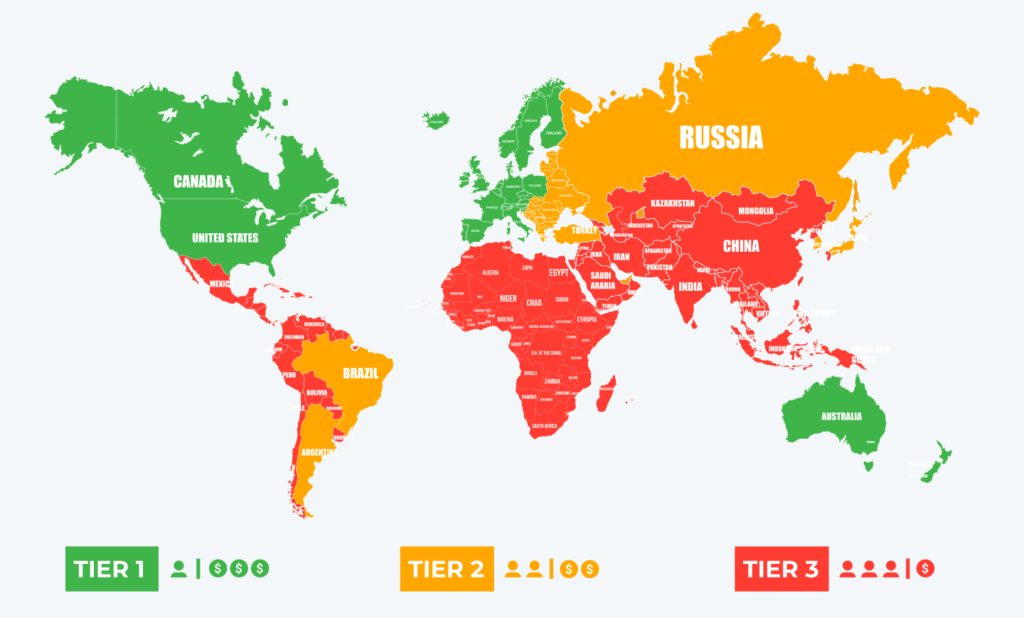
Differences may reflect the language of the ad, offer eligibility, audience composition, contact times, or interview arrangements. Country is a way to organize the analysis, not an explanation by itself.
In affiliate marketing, GEO refers to the geographic market or location associated with a campaign or candidate. Record the geographic information relevant to the offer rather than inferring it from a name, language, or community membership.
Then compare similar groups. For example, one placement may have generated 40 applications and another 20. If most applicants from the first placement are still waiting for their interviews while the second group has completed the process, comparing attendance percentages would be premature.
Source-level reporting becomes useful when the groups also follow consistent timing and measurement rules.
Rule Out Handling Problems Before Blaming the Audience
Imagine that candidates from publication A receive a response on the same day, while candidates from publication B wait considerably longer. Fewer interviews from B would not, by itself, show that its creative attracts less suitable people.
Check response timing, usable contact details, the explanation of the next step, and any changes to offer conditions. Review future appointments, rescheduled meetings, and duplicate applications separately.
Our guide to checking candidate fit before submitting an application covers the preliminary assessment in more detail. Keep a candidate’s decision to withdraw separate from a decision made by the receiving studio or agency.
Organic recruitment requires the same care. You may have no paid-placement costs, but preparing posts and responding to unsuitable inquiries still takes time. Track those hours if useful, without assigning an arbitrary monetary value. Compare the workload with attended interviews and the confirmed results of the selected offer.
How to Test More Specific Recruitment Ad Targeting
Start with one recurring mismatch.
Suppose people respond to “online chatting,” then withdraw when they learn that the opportunity involves livestreaming. A testable hypothesis would be:
“Naming livestreaming at the beginning of the ad will reduce later withdrawals caused by an unexpected work format.”
That tells you what to change and which result to investigate.
- Choose one offer and save the original message.
- Change one material explanation while keeping the actual terms accurate.
- Identify the versions separately in your tracking or records.
- Where practical, run them simultaneously with random allocation to comparable audiences.
- Keep candidate handling consistent and allow the relevant stages to occur.
- Compare applications, known withdrawal reasons, attended interviews, qualifying events, and costs.
- Decide whether to keep, revise, or reverse the change.
If the versions run in different weeks, consider changes in placement activity, country mix, and response times. There is no universal test duration or application count that makes every comparison reliable. With small numbers, one additional interview can substantially change a percentage.
Define the decision criterion before launching. For example, you may want more confirmed events at comparable acquisition costs, with fewer withdrawals linked to misunderstanding the role. That is more useful than choosing whichever metric happens to improve afterward.
How to Calculate Interview Show-Up Rate Correctly
Two measures describe different parts of the process.
Interview show-up rate = attended interviews ÷ scheduled interviews whose times have passed × 100%.
This measures attendance among people who had an interview scheduled.
Application-to-interview conversion rate = unique candidates who attended an interview ÷ unique applications in a comparable group × 100%.
This measures the full route from application to attendance.
Suppose 100 applications lead to 40 scheduled interviews whose times have passed, and 20 candidates attend. The show-up rate is 50%, while application-to-interview conversion is 20%.
After making the message more specific, you might schedule 20 interviews and have 15 people attend. The show-up rate has increased to 75%, but the number of attended interviews has fallen from 20 to 15. You still need qualifying-event and cost data before deciding whether the change is beneficial.
Count consistently by unique candidate. Do not classify future interviews as no-shows or count a rescheduled appointment as two different people. Define how cancellations are handled and apply the same rule to both groups.
Always display the number of attended interviews next to the percentage.

When Fewer Applications Produce a Better Result
Consider this hypothetical calculation, not HUNT ME campaign data, a case study, or a forecast.
Three ad versions have the same acquisition budget, use one CPA offer, and have comparable country mix and handling. All listed interviews were due to take place by the comparison date. Every attended interview has been confirmed as a qualifying event.
Version B represents a useful clarification. Version C illustrates a possible outcome of narrowing the message too far.
| Metric | A: Original message | B: More specific message | C: Overly narrow message |
| Acquisition spend | $300 | $300 | $300 |
| Unique applications | 150 | 90 | 60 |
| Scheduled interviews due by the comparison date | 60 | 50 | 30 |
| Attended interviews | 24 | 30 | 21 |
| Confirmed qualifying events | 24 | 30 | 21 |
| Interview show-up rate | 40% | 60% | 70% |
| Application-to-interview conversion | 16% | 33.3% | 35% |
| Cost per application | $2.00 | $3.33 | $5.00 |
| Cost per confirmed event | $12.50 | $10.00 | $14.29 |
Version B generates fewer applications but more confirmed events at the same spend. Its applications cost more individually, yet each confirmed event costs less.
Version C has the highest show-up rate and application-to-interview conversion. However, it produces fewer confirmed events than the original message, and each one costs more. Better percentages have not delivered a better acquisition result.
Calculate the relevant cost directly:
Cost per confirmed event = acquisition spend ÷ confirmed qualifying events.
If no events have been confirmed, this figure cannot yet be calculated. The spend remains a cost; the result should not be recorded as a zero-cost event.
With the same partner rate P, credited earnings are:
Confirmed qualifying events × P.
When rates differ by country or payment model, calculate the groups separately before combining their credited earnings.
For HUNT ME’s stream model CPA offer, the qualifying event is the candidate’s attendance at the interview, regardless of its outcome. The stated partner rates are $40 for Europe, the United States, Australia, and Russia; $30 for the CIS region; and $20 for Asia.
Under PPD, the base payment is $10 per model’s working day, for up to 12 months with monthly activity. Interview attendance does not replace working days as the basis for that model.
These are partner payment terms, not candidate salaries. Confirm the applicable model and conditions for your candidates. Credited earnings, money actually paid out, and profit are also separate measures: profit requires accounting for the relevant costs.
A Checklist Before Your Next Placement
- Candidates can understand the work format and main responsibilities before applying.
- The copy contains no unconfirmed promises about earnings, schedules, or acceptance.
- Essential requirements match the selected offer.
- The next step is explained clearly.
- Sources and message versions can be distinguished in your records.
- Handling and measurement rules are consistent across comparison groups.
- Future interviews are not counted as no-shows.
- The qualifying payment event and relevant acquisition costs are defined.
- The previous message is saved so that a harmful change can be reversed.
Start with one phrase that repeatedly creates the wrong expectation. Make it more specific, then check how many people reach the relevant stage—not only how many complete the form.
HUNT ME registration, ready-made scripts, and manager support are free. Use the confirmed description of your chosen offer as the foundation for your message, and clarify the payment conditions before evaluating campaign performance.
FAQ: Audience Targeting and Unsuitable Applications
How can I tell whether my audience is too broad if applications are still coming in?
Look for recurring differences between the ad’s promise and candidates’ expectations. If applicants from one creative repeatedly withdraw after learning an essential condition, check whether the original ad explained it. Compare attended interviews and confirmed events with another version under similar conditions.
What is the difference between a cold audience and an unsuitable audience?
A cold audience may be suitable but unfamiliar with the opportunity. An unsuitable applicant may not meet a confirmed requirement, want different work, or have responded to an inaccurate promise. Provide information to help people decide, while respecting a clear decision not to continue.
Do I always need to narrow my ad targeting?
Start with the observed problem. Misleading or overly general copy needs correction even if the targeting is narrow. If a broad placement produces suitable candidates at an acceptable cost per confirmed event, restricting it is not automatically necessary.
Why does a high CTR not guarantee qualified candidates?
Clicks measure the response to an ad, not understanding of the responsibilities or eligibility for the role. If CTR rises while attended interviews fall, investigate the promise and subsequent stages. A high CTR is not itself a negative signal.
What should I change first: the creative, role description, or traffic source?
Change the part connected to the evidence. A phrase that repeatedly creates an inaccurate expectation is a clear starting point. If accurate copy performs differently on one placement despite comparable handling, investigate the source. Changing everything together makes the cause harder to identify.
How can I reduce irrelevant applications without discouraging suitable candidates?
Explain the real work, essential responsibilities, confirmed requirements, and next step. Avoid arbitrary exclusions or dismissive language. Evaluate any reduction in forms alongside attended interviews and confirmed events rather than treating maximum application volume as the objective.
Is a candidate unsuitable if they do not reply?
Silence does not establish the reason. The contact details may be incorrect, the message may not have reached them, or their plans may have changed. Keep non-response separate from confirmed mismatches and do not continue pursuing someone after an explicit refusal.
What should I separate using SubIDs?
Use supported labels to distinguish sources, placements, and message versions. Connect country information and stage outcomes with them in your own records where possible. Keep personal candidate details out of advertising parameters and confirm which tracking options your tools support.
Why does one creative produce different candidate quality across countries?
Language, eligibility, audience composition, and the organization of the next stage may differ. Compare groups using the same offer and equivalent observation periods before attributing a difference to geography. Country stereotypes do not explain individual suitability or replace campaign data.
How should I measure interview attendance?
Distinguish show-up rate among scheduled interviews whose times have passed from application-to-interview conversion among unique applicants. Handle rescheduling and cancellations consistently. Report both the percentages and the actual number of candidates who attended.
When is a reduction in applications an improvement?
A reduction can be useful when comparable spending produces more confirmed events or a lower cost per event without an unacceptable loss of volume. A higher attendance percentage alone does not establish an improvement if the number of useful outcomes falls.
Does an attended interview qualify for payment under every HUNT ME offer?
Each offer has its own payment conditions. Under stream model CPA, attendance qualifies regardless of the interview outcome. PPD payments are tied to the model’s working days. Event confirmation, credited earnings, and the actual payout are separate stages, so evaluate the terms of the selected offer.
From here it's just practice
You already know how it works. Sign-up takes a couple of minutes and costs nothing.
No investment. Candidates 18+ only.