Recruitment Ad Localization: How to Adapt Campaigns for Different Countries and Languages
18 min read · 19.11.2026 · 7 views

Contents
- Translation Carries the Words. Localization Checks the Meaning
- Separate the Candidate’s Country From Their Language
- What to Confirm Before Launching in a New Country
- What Job Ad Localization Actually Includes
- Use Candidate Questions to Decide What Needs Explaining
- When Can One Language Version Serve Several Markets?
- Localize the Call to Action Around the Actual Next Step
- Landing Page Localization Extends Beyond the Headline
- An Example: Adapting a Chat Operator Campaign
- Make Contact Channels and Interview Times Clear
- Measure Candidate Quality Beyond Clicks
- Test the Localized Version Under Comparable Conditions
- When Do You Need a Separate Country Page?
- A Practical Checklist Before Launch
- FAQ: Localizing Recruitment Campaigns
- How is recruitment ad localization different from translation?
- Can I use English recruitment ads in several countries?
- When should I create a local-language version?
- Do the US, UK, Canada, and Australia need separate English versions?
- Should Portuguese campaigns be adapted separately for Brazil and Portugal?
- Can one Spanish-language ad serve Spain and Latin America?
- What if the ad is in a local language but the role requires English?
- How should I choose a contact channel?
- How do I arrange interviews across time zones?
- Why did translation increase applications but reduce candidate quality?
- When is a country-specific landing page worthwhile?
- How do I know whether localization improved the result?
You translate an ad for a new market, launch the page, and start receiving applications. Then the same problems appear in conversations: candidates misunderstand the role, expect support in a different language, or miss an interview because the time was unclear. The wording may be grammatically correct, but the candidate’s understanding of the opportunity is still wrong.
Recruitment ad localization helps you close that gap. It means checking how people understand the work, which requirements they notice, and what they expect to happen next. For HUNT ME partners, the goal is to make the opportunity clear enough for someone to make an informed decision while keeping the actual terms intact.
Want to start without experience?
Start with stream models: you look for people using ready-made scripts, and production companies handle the interview and training.
This guide explains what to adapt, what to confirm before entering a new market, and how to evaluate the result beyond clicks and application volume.
Translation Carries the Words. Localization Checks the Meaning
Imagine that your original ad uses a short, familiar job title. Its translation sounds natural, but candidates in another market associate it with different responsibilities. Someone applies, hears what the work involves, and decides it is not what they wanted. The translation contains no obvious language error. The problem is the expectation it creates.
Effective ad copy localization starts by checking that expectation. What does the reader think the role involves? Which requirements are clear? What do they believe will happen when they click the button? Sometimes the solution is to explain an unfamiliar title through specific tasks. Sometimes an important condition needs to move from the bottom of the page into the main description.
Good at finding people? You get paid for it
You find a candidate, production companies and agencies do the rest. Payouts in USDT every Monday.
At HUNT ME, partners attract candidates using ready-made scripts. Partner studios handle interviews, training, and work arrangements; for OnlyFans recruitment, agencies handle those processes. You can improve how you present an opportunity, but its working hours, requirements, country eligibility, and interview arrangements must come from confirmed information.
Before preparing a local version, review the HUNT ME recruitment offers and clarify any missing details with your manager. In this context, an affiliate offer means the recruitment opportunity and its partner payment terms. It should not be confused with a formal offer of employment.

Separate the Candidate’s Country From Their Language
A candidate might live in one country, read your ad in English, prefer another language for messages, and need a particular language combination for the role. Treating all of those details as one “GEO” makes the process harder to understand.
In affiliate marketing, GEO refers to the geographic market or location associated with a campaign or candidate. For recruitment, record the geographic information that actually matters to the offer, then keep language preferences and role requirements separate.
There are four questions to answer:
- Is the candidate’s country eligible for this particular opportunity?
- Which language helps them understand the ad?
- Which language can they use for further communication?
- Which languages are required for the work and interview?
For example, HUNT ME’s chat operator offer specifies basic English. You may explain the opportunity in another language, but the campaign still needs to make that requirement clear. Interviewer roles require two or more languages; confirm the applicable language combinations rather than assuming that every combination is accepted.
Multilingual recruitment also depends on what happens after the application. A Portuguese-language ad should not imply that the interview will be in Portuguese unless that arrangement has been confirmed.
What to Confirm Before Launching in a New Country
Start with a short brief for one specific opportunity. “An English campaign for international candidates” is too broad to guide the copy: it leaves country eligibility, language requirements, and the next stage unresolved.
Not sure what to write first? The script is ready
After sign-up you get ready-made scripts and a personal manager. No recruiting experience needed.
Your brief should cover:
- The role or recruitment offer.
- The countries currently accepted for that offer.
- Confirmed language requirements.
- The language available for the next stage.
- Who handles the interview and further communication.
- Supported contact channels.
- The information candidates can receive before applying.
Mark unanswered questions as pending and assign a next step. If the interview language has not been confirmed, an ad in Spanish does not give you a basis for promising a Spanish-language interview.
This check also defines the boundaries of your own work. You can edit your post, message, or landing page. Changes to official forms and the studios’ or agencies’ processes need to go through the people responsible for them.
What Job Ad Localization Actually Includes
A local version needs to make the whole opportunity understandable. The headline is only one part of that: a confusing field label or an unclear explanation of the interview can create just as much friction.
| Element | What to check | What you can adapt | What must remain accurate |
| Job title | Does the title suggest the right responsibilities? | Add a plain-language explanation of the tasks | The actual nature of the role |
| Role description | Can the candidate picture the work? | Replace jargon with specific actions | All essential responsibilities |
| Requirements | Are mandatory conditions easy to notice? | Explain them in familiar language | The confirmed eligibility criteria |
| Schedule | Could the wording imply more flexibility than is available? | Use a clear, confirmed description | The actual working arrangements |
| Interview | Does the candidate understand who conducts it and what happens next? | Explain the process in a logical order | The confirmed format and language |
| Contact fields | Is it clear which contact detail is needed and why? | Improve labels and instructions on your own form | Required information and the approved process |
| Call to action | Does the wording match the next screen? | Name the action precisely | What clicking the button actually does |
| FAQ | Are the audience’s recurring questions answered? | Change the order and add confirmed explanations | The underlying terms of the opportunity |
A useful check for job ad localization is to ask a reviewer who understands the intended language variety to describe the role in their own words. Ask what the person would do, which requirements apply, and what happens after submitting an application.
If their explanation differs from the confirmed opportunity, improve the meaning before polishing the style.
Use Candidate Questions to Decide What Needs Explaining
Country-level assumptions are a weak starting point for recruitment marketing. A statement such as “people in this market do not like leaving a phone number” tells you little about the particular group reading your ad.
Candidate questions offer a more practical starting point. One person wants to understand the tasks. Another asks which language the interview uses. Someone else wants to know who will contact them. Each question points to a different information gap.
Record the question alongside the offer, country, language, source, message version, and stage. Useful observations can come from conversations before an application, questions after first contact, voluntarily shared reasons for declining, manager feedback, and language review.
You can use the HUNT ME FAQ to check platform information while building your own audience-specific answers. Keep partner registration and payment questions separate from questions about the candidate’s work. They concern different people and different decisions.
Cultural adaptation works at this practical level: checking whether the tone, terminology, degree of formality, and explanation of the next step make sense to the people you are addressing. A few conversations should lead to a testable improvement, not a conclusion about an entire country.
When Can One Language Version Serve Several Markets?
A shared language version can be a sensible starting point when the intended audience understands it and the process can continue on the stated terms. A separate country label does not automatically require separate copy.
Consider English-language recruitment advertising for audiences in the United States, the United Kingdom, Canada, or Australia. Review terminology, spelling, date formats, and the way working arrangements are described. Then decide whether the differences justify separate versions. Country eligibility still needs its own check: an English-language page does not establish that an offer accepts candidates from every English-speaking market.
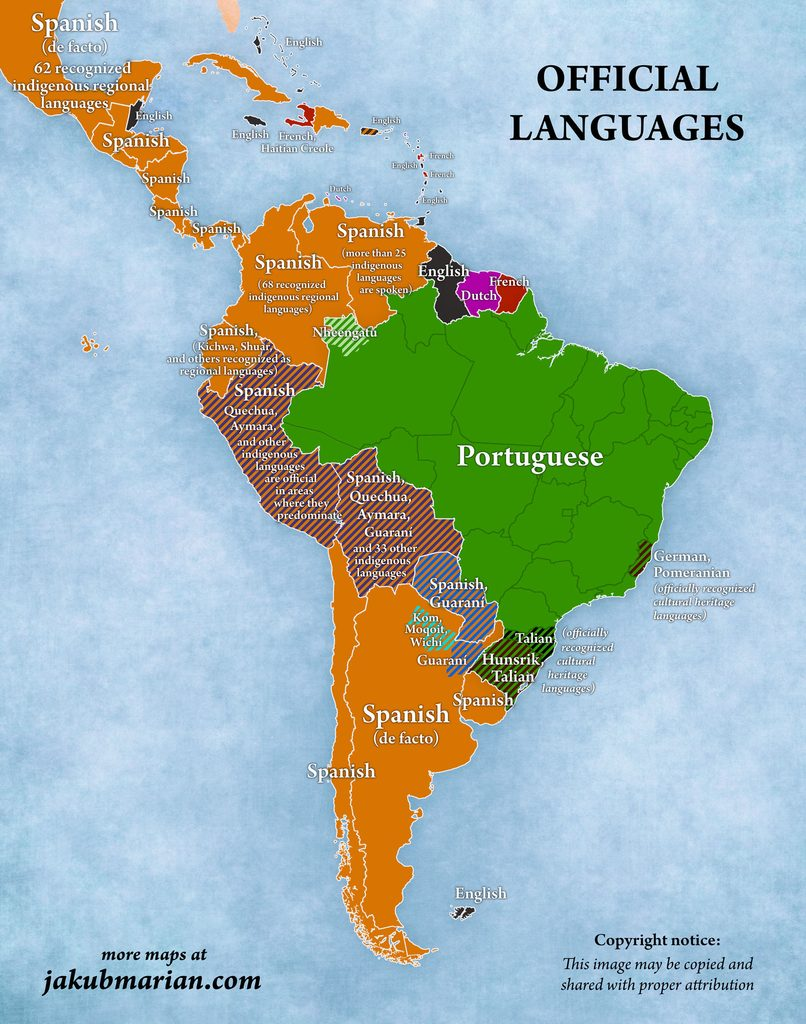
The same principle applies to Portuguese for Brazil and Portugal, or Spanish for Spain and individual Latin American countries. Check the wording for the specific audience rather than treating a shared language as proof that every expression will feel equally familiar.
A local-language version is worth considering when candidates repeatedly misunderstand important terms or the next step. Before launching it, confirm how communication will continue. A translated ad should make an existing language requirement easier to understand, rather than make that requirement disappear from view.
Localize the Call to Action Around the Actual Next Step
A call to action, or CTA, tells the reader what to do next. “Get started” can mean several things: read more, register, submit an application, or begin working. If candidates have to guess which one applies, the wording needs to be more specific.
The right CTA depends on the page or process behind it.
| Wording | What a candidate may expect | Better wording when appropriate |
| “Get started” | An unclear action, possibly starting work | “View role details” when the next page explains the opportunity |
| “Learn more” | Information before sharing contact details | “Submit an application” when the next screen collects an application |
| “See the requirements” | A page describing eligibility | Keep this wording only when the destination provides those details |
A button that says “View details without applying” would be misleading if it opens a form requiring contact information. Content localization should preserve the meaning of the action, even when the words change substantially.
Also consider how much the candidate already knows. Someone encountering the format for the first time may need a role description. Someone who has reviewed the conditions may be ready to apply. The CTA should help each person take an appropriate step through the actual process.
Landing Page Localization Extends Beyond the Headline
Follow the complete route:
Ad → landing page → application form → confirmation → first message → interview.
The opportunity should remain recognizable throughout. A candidate should not encounter one description in the ad, another on the page, and a third in the first message.
Landing page localization includes field labels, input instructions, error messages, confirmation text, and information about further communication. A translated form can still be difficult to complete if its validation messages are in a language the candidate does not understand.
Language changes need particular attention. If the ad and form are in the candidate’s local language but the first message will arrive in English, explain that transition before the application. State who will contact them and which language the next stage uses once those details are confirmed.
An extra page between the ad and application is useful only when it performs a clear task, such as explaining the format or helping candidates review requirements. Our guide to building a prelander for an affiliate offer explains how to assess that additional step.
An Example: Adapting a Chat Operator Campaign
Consider this illustrative draft:
Chat work. Flexible hours. We’ll explain everything after you apply. Get started.
The wording is short, but several important questions remain unanswered. What kind of chat work? What does “flexible” mean? Which language is required? Does the button open an explanation, an application, or something else?
Translating this draft would carry those problems into another language.
For HUNT ME’s chat operator offer, the confirmed role involves moderating a model’s livestream and chat, and basic English is required. In this example, the schedule and interview language have not been confirmed. Those details need clarification rather than a convenient assumption.
A clearer English source draft for further localization could be:
Chat operator role: moderating a model’s livestream and chat. Basic English is required. Review the tasks and requirements before applying, and ask about the schedule and interview language.
Button leading to the role description: View role details and requirements.
This is an illustrative copy example, not an ad approved for every market. Before publishing, confirm country eligibility, the role description, and the next-stage arrangements. Then review the version intended for that audience.
The useful changes are specific: the work is named, the English requirement is visible, the unconfirmed scheduling promise is removed, and the button describes a real destination.
Make Contact Channels and Interview Times Clear
A messaging app’s popularity in a country does not tell you whether a particular candidate wants to use it for recruitment. Ask which of the supported channels works for them and explain who will get in touch.
Interview scheduling needs the same precision. “Tomorrow at three” leaves too much to interpretation across time zones. A clearer illustrative message would be:
Your interview is scheduled for November 18, 2026, at 3:00 p.m. UTC+02:00. Please confirm what time that is in your location.
Use an unambiguous date, a time, and an explicit time zone or UTC offset. If the meeting is moved, reconfirm the updated details with the organizer and candidate.
Also state whether the next stage is a text conversation, phone call, or video interview once that information is confirmed. Avoid assigning a duration or promising rescheduling options that the receiving team has not provided.
These details are part of the candidate experience: they help someone understand what they are agreeing to and how to participate.

Measure Candidate Quality Beyond Clicks
A localized campaign can attract more clicks while producing fewer candidates who meet the requirements. Click-through rate, or CTR, measures the share of impressions that generate a click. It tells you about the response to the ad, not whether the candidate understands the opportunity or will attend an interview.
For your own analysis, record the offer, candidate’s country, ad and page language, traffic source, message version, application date, known outcome, and any confirmed difficulty.
If your tools support SubIDs, use them to distinguish sources or versions. A SubID is a tracking label that helps connect a part of the incoming traffic with its results. The proposed records can be maintained in your own analysis; they should not be assumed to describe specific HUNT ME CRM features.
Always state the denominator. For example:
- Twelve completed interviews from 40 applications represent a 30% application-to-interview rate.
- Twelve completed interviews from 15 scheduled interviews whose times have passed represent an 80% interview attendance rate.
Those percentages answer different questions. Exclude future interviews from the current attendance calculation, avoid counting the same candidate twice, and use consistent rules for cancellations and rescheduling.
Finally, define the event that qualifies for payment under the selected offer. For HUNT ME stream models on CPA, it is attendance at the interview regardless of the outcome. Under PPD, payments are tied to the model’s working days. Application volume alone cannot evaluate both arrangements.
Test the Localized Version Under Comparable Conditions
Comparing two countries does not isolate the effect of localization. Their campaigns may use different sources, budgets, requirements, creatives, or response times. A change after launching a Spanish-language version is not enough to establish that language caused it.
A more useful test compares one change within a comparable group. For example, in the same market and source, compare two accurate ad versions: one states the next-stage language near the end, while the other states it before the application button.
Keep the other relevant conditions consistent. Where practical, run the versions at the same time with random allocation. Give applications an equal opportunity to reach the measured stages.
Here is an illustrative calculation, not HUNT ME campaign data or a performance forecast:
| Metric | Version A | Version B |
| Visits | 100 | 100 |
| Applications | 30 | 24 |
| Applicants meeting the stated requirements | 12 | 15 |
| Share meeting the requirements | 40% | 62.5% |
| Completed interviews | 8 | 11 |
Version B produces fewer applications but more applicants meeting the requirements and more completed interviews. That makes it worth investigating further. The small sample does not establish a reliable effect: the difference could reflect chance or other factors.
Before making a decision, check comparable observation periods, consistent handling, qualifying events, and costs. A higher CTR or a lower cost per click is not enough.
For broader planning across markets, see our guide to GEO strategy and country testing. The question here is more specific: does the localized message help the candidate understand this opportunity and continue through the process?
When Do You Need a Separate Country Page?
A language version lets someone read the opportunity in a language they understand. A country-specific page needs an additional reason to exist.
That reason might be confirmed differences in eligibility, contact arrangements, or recurring audience questions that a general page cannot answer well. Replacing one country name with another in otherwise identical copy does not create useful local information.
Before adding a page, ask:
- What will it explain better than the existing language version?
- Who has confirmed the information?
- Who will update it when the terms or process change?
The technical setup should support that editorial decision. Google distinguishes multilingual sites from sites targeting different countries and recommends separate URLs for language versions, with hreflang annotations to help identify the appropriate version. Candidates should also be able to choose their language. Google Search Central
Have an SEO specialist check the implementation. Correct technical markup helps identify the page; the content still needs to explain the opportunity accurately.
A Practical Checklist Before Launch
- The offer accepts candidates from the intended market.
- Country eligibility and language requirements are recorded separately.
- The role and essential responsibilities are clear.
- The copy contains no unconfirmed schedule, income, or language promises.
- Someone familiar with the intended language variety has reviewed the wording.
- The CTA matches the destination and action.
- The page, form, confirmation, and first contact have been checked together.
- Any language change is explained before the application.
- Contact channels and interview arrangements are confirmed.
- Interview times include a clear date and time zone.
- The source and message version can be identified in your records.
- Success measures, observation periods, and an update owner are defined.
Start with one offer and one confirmed market. Check the message, verify the next stage, and evaluate what happens after the application before expanding the campaign.
That gives international recruitment a practical basis: candidates understand the work they are considering, and partners can assess results against the right requirements and payment conditions.
Explore the available opportunities and confirm the terms of your chosen direction before preparing a local campaign.
FAQ: Localizing Recruitment Campaigns
How is recruitment ad localization different from translation?
Translation expresses the source text in another language. Recruitment ad localization also checks whether the audience understands the role, requirements, application process, and next step. It can change terminology and the order of explanation while preserving the actual terms of the opportunity.
Can I use English recruitment ads in several countries?
An English version can work for an audience that understands it and can continue through the required stages on the confirmed language terms. Check country eligibility separately. A shared language does not establish that the same offer is available in every country.
When should I create a local-language version?
Consider one when candidates repeatedly misunderstand important terminology, requirements, or the next action. First confirm how communication will continue after the application. The local version should make the process clearer without implying language support that is unavailable later.
Do the US, UK, Canada, and Australia need separate English versions?
Review the terminology, spelling, date formats, and confirmed market-specific information before deciding. Separate versions are useful when they solve a real communication problem or provide relevant local details. A different country name alone does not require a different page.
Should Portuguese campaigns be adapted separately for Brazil and Portugal?
Have the wording checked for the intended variety of Portuguese. Differences in familiar terms may justify copy changes. Separate country pages need additional value, such as confirmed local conditions or audience questions that the general version cannot adequately address.
Can one Spanish-language ad serve Spain and Latin America?
A shared version can be a starting point if the intended audiences understand it. Review it for the specific countries and groups you plan to reach. Latin America should not be treated as one uniform audience with identical terminology, requirements, and communication arrangements.
What if the ad is in a local language but the role requires English?
State the English requirement before the application and explain when it will be needed. Confirm the language of the next stage with the receiving team. The language used to explain a role does not change the language skills required to do it.
How should I choose a contact channel?
Ask candidates which of the genuinely supported options works for them. Explain who will contact them and why. A service’s popularity in a country does not establish either an individual’s preference or the receiving team’s ability to use it.
How do I arrange interviews across time zones?
Provide the full date, time, and time zone or UTC offset, then ask the candidate to confirm the corresponding time in their location. Reconfirm the details after a change. Scheduling and rescheduling arrangements need to be agreed with the interview organizer.
Why did translation increase applications but reduce candidate quality?
The new version may have attracted a different audience or created an inaccurate expectation. Other explanations include the traffic source, offer requirements, and application handling. Compare the same stages under comparable conditions and use known candidate feedback before attributing the difference to translation.
When is a country-specific landing page worthwhile?
Create one when you have confirmed, useful information that the shared language page cannot explain well and a way to keep it current. Start by defining the page’s informational purpose. Repeating the same content with another country name adds little value.
How do I know whether localization improved the result?
Compare versions using consistent requirements, handling, and observation periods. Look at applicants meeting the requirements, successful contact, completed interviews, qualifying events, and costs. Click performance helps evaluate the ad; the later stages show whether the campaign is delivering the intended result.
From here it's just practice
You already know how it works. Sign-up takes a couple of minutes and costs nothing.
No investment. Candidates 18+ only.