To access the HUNT ME referral program dashboard, enter the email and password you used during registration.
Fill out the form — it takes 2 minutes. A manager will contact you on Telegram, provide free training, and help you get your first result.

A familiar situation for many affiliates looks like this:
You launch traffic to a subscription offer. The first payments appear in the dashboard. Early ROI looks promising. The campaign seems ready to scale.
Then, two or three weeks later, the picture changes.
Some users do not renew. Some payments are refunded. A few transactions turn into chargebacks. The users who looked valuable after the first conversion never produce another billing event. What looked profitable at the beginning becomes much weaker when measured over time.
The problem is simple: the first conversion is not the full value of a user.
Earn with HUNT ME — weekly payouts
In subscription affiliate offers, one initial payment only shows that a user was willing to pay once. It does not show whether that user will stay, rebill, generate long-term revenue, or cancel immediately.
That is why experienced affiliates look beyond the first payment. They analyze recurring payments in affiliate offers, rebill revenue, retention, churn, refund behavior, and subscription LTV.
This guide explains why recurring payments matter more than the first conversion, how to calculate rebill rate, how to analyze cohort performance, and how to choose subscription affiliate offers based on long-term profit rather than early dashboard excitement.
Recurring payments are repeat charges made after a user starts a subscription.
In affiliate marketing, these payments are often called rebills.
A user may join a dating platform, content platform, streaming service, community, or another subscription-based product. After the first payment, the system charges the user again according to the billing cycle: weekly, monthly, or another interval depending on the offer.
The first payment is usually called the initial billing, first billing, or initial conversion.
Everything after that is rebill revenue.
Earn with HUNT ME — weekly payouts
In subscription rebills affiliate offers, one user can generate:
From the first conversion alone, these users may look similar.
From a revenue perspective, they are completely different.
This is why rebill revenue affiliate marketing analysis is so important. It shows whether users only convert once or continue generating income over time.
The first payment tells you that a user entered the monetization stage.
Recurring payments tell you whether the user was actually valuable.
Imagine two users in a RevShare offer.
Both make the first payment.
User A cancels immediately and never rebills.
User B stays active for four billing cycles.
At the first conversion stage, they look equal.
In long-term affiliate profit, User B may be worth several times more.
This is the difference between first conversion vs long-term profit.
If you optimize only for the first payment, you may attract users who are easy to convert but hard to retain. They click, pay once, cancel, refund, or never rebill.
If you optimize for recurring revenue, you focus on users who understand the offer, match the product, and are more likely to stay.
That is why recurring revenue affiliate marketing requires a different mindset. The goal is not only to generate paid users. The goal is to generate users whose lifetime value exceeds acquisition cost after refunds, chargebacks, and deductions.
Paid rate and rebill rate measure different parts of the subscription funnel.
Paid rate shows how many users reach the first successful payment.
Rebill rate shows how many of those users continue into repeat payments.
Both metrics are important, but they answer different questions.
Paid rate answers:
“Can this traffic produce first payments?”
Rebill rate answers:
“Does this traffic produce users who stay and pay again?”
A campaign can have a strong paid rate and weak rebill rate.
That usually means the offer or creative is good at pushing users into the first payment, but the audience is not strong enough for long-term retention.
A campaign can also have a lower paid rate but better retention. In many subscription models, this can be more profitable over time because fewer users enter the funnel, but the ones who do are more qualified.
Paid rate vs rebill rate should always be analyzed together.
Paid rate without retention can create a beautiful dashboard and weak revenue.
Rebill rate without enough paid users may indicate quality but limited volume.
The best subscription campaigns balance both: enough first payments and enough users who rebill.
The basic formula for how to calculate rebill rate is:
Rebill Rate = Users With at Least One Rebill / Users With Initial Payment × 100%
For example, if 100 users made an initial payment and 35 of them produced at least one rebill, the first rebill rate is 35%.
But one number is not enough.
Subscription rebill analysis should be deeper:
A strong rebill curve shows that users do not disappear immediately after the first payment. A weak rebill curve shows that the campaign may be driven by impulse conversions rather than real retention.
The timing also matters.
You cannot evaluate rebill rate from users who paid yesterday if the next billing cycle happens seven or thirty days later. Rebill data needs mature cohorts.
Fresh users have not had enough time to rebill yet.
This is why early campaign analysis can be misleading in subscription affiliate offers.
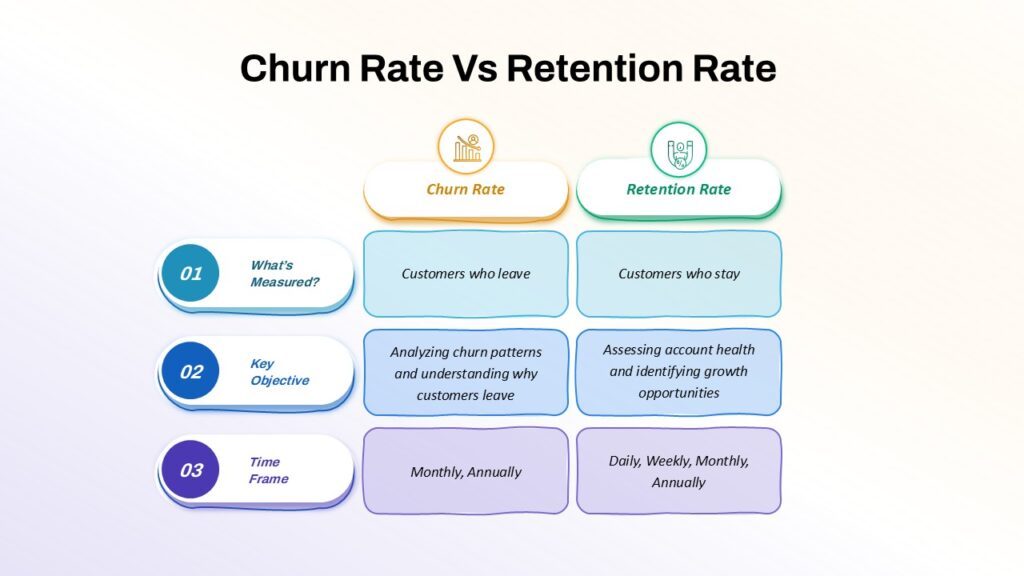
Retention in affiliate marketing shows how many users remain active after the initial conversion.
Subscription churn affiliate marketing analysis shows the opposite: how many users cancel, stop paying, or fail to continue.
Retention and churn are two sides of the same problem.
Users cancel subscriptions for several reasons:
Some reasons are on the offer side.
Some are on the affiliate side.
For example, if the creative promises one thing but the product delivers something else, the first payment may still happen — but churn will be high. Users may cancel quickly or request refunds.
This is why traffic quality and retention affiliate marketing are connected. Good traffic is not only traffic that converts. Good traffic is traffic that stays.
Subscription LTV affiliate marketing analysis shows how much revenue one user generates over their lifetime.
LTV includes:
The goal is simple:
If your average cost per paid user is $20 and your mature cohort LTV is $60, the campaign has room to scale.
If the first payment is $15 and most users never rebill, the campaign may look active but fail economically.
Subscription LTV helps answer the most important question:
“How much can we afford to spend to acquire one user?”
Without LTV, affiliates often underpay for good traffic or overpay for weak traffic.
A higher click cost can be acceptable if the users stay longer and rebill more.
A lower click cost can be dangerous if users cancel immediately or create refund risk.
The same subscription offer can produce completely different retention across traffic sources.
This happens because traffic sources deliver different levels of intent.
Search-based traffic often has stronger intent because users are actively looking for something specific.
Native ads can work well when the prelander educates users and sets expectations.
Push and pop traffic can generate volume and initial conversions, but retention may be weaker if the user intent is low.
Social and community traffic can perform well when there is trust, warm-up, and audience fit, but results depend heavily on targeting and creative angle.
The key is to compare traffic sources by mature cohort performance, not only by first-day paid rate.
One source may produce cheaper first payments but weak rebills.
Another source may produce fewer initial payments but stronger LTV.
When choosing where to scale, the second source may be more profitable even if the first one looks better in early CPA-style reporting.
Rebill rate adult offers can vary strongly by GEO.
This is not only about purchasing power. Payment infrastructure matters too.
Different countries have different banking systems, subscription habits, card acceptance levels, 3DS requirements, and recurring billing rules.
In some GEOs, recurring card payments process smoothly.
In others, banks decline subscription rebills more often. Some users may need additional verification. Some local payment methods may not support recurring payments well. Some processors may have higher decline rates for specific countries.
This means two GEOs can produce similar first-payment numbers but very different rebill revenue.
When evaluating a subscription offer by country, check:
Do not mix all countries into one average number.
A strong GEO can be hidden by weak countries, and a weak GEO can damage the overall campaign result.
Net revenue from recurring payments is not equal to total billed revenue.
You need to subtract refunds and chargebacks.
Refunds and chargebacks subscription offers experience can appear after the first conversion or after later billing cycles. This means early revenue can be reduced weeks later.
A high subscription refund rate affiliate marketing campaign may still look good in the first few days, then become much weaker after adjustments.
Refunds and chargebacks can increase because of:
In subscription offers, delayed risk is especially important.
If users pay once and later dispute or refund, the campaign may lose money even though the initial paid rate looked strong.
For accurate analysis, always calculate:
Only net revenue from recurring payments shows the real value of the campaign.
Cohort analysis subscription affiliate marketing teams use is the best way to understand real user value.
A cohort is a group of users who started in the same period, for example on the same day or during the same week.
Instead of mixing all users together, cohort analysis tracks what happens to each group over time.
For each cohort, you can measure:
This is much more useful than a general dashboard because subscription revenue arrives over time.
Fresh cohorts have not had time to rebill yet.
Older cohorts show what the traffic really becomes after enough billing cycles.
For example, a cohort may look unprofitable on day 3, break even on day 12, and become strongly profitable by day 30.
Without cohort analysis, you may pause the campaign too early.
The opposite is also possible. A campaign may look profitable on day 1 but become weak by day 14 after cancellations and refunds appear.
Cohort tracking protects affiliates from both mistakes.
How to increase affiliate LTV is not only an offer-side question.
Affiliates can influence LTV by improving the quality and expectations of the users they send.
Ways to improve LTV include:
LTV improves when users understand what they are buying and have a real reason to stay.
A campaign optimized only for the first payment may increase short-term revenue while damaging long-term profit.
To choose subscription affiliate offers properly, evaluate more than the first payout.
Ask the affiliate program or manager about:
An offer with a high initial conversion rate but weak retention can be a trap.
An offer with lower first-payment volume but strong rebill depth can be much more profitable over time.
For RevShare and hybrid models, always ask how revenue is calculated. Is your share based on gross revenue or net revenue after refunds, chargebacks, taxes, and payment fees?
That difference can strongly affect real earnings.
The most common mistakes include:
Most of these mistakes come from treating subscription offers like simple CPA offers.
But recurring revenue has a different logic.
You need time, cohort data, and downstream metrics to understand the real value of traffic.
Once you have mature cohort data, campaign decisions become much clearer.
Scale when mature cohorts consistently pay back traffic cost and continue generating net revenue. The first few days may be negative, but the cumulative LTV should pass acquisition cost with enough margin after refunds and chargebacks.
Improve when the offer has potential, but some traffic sources, creatives, prelanders, or GEOs produce weak retention. In this case, the task is to remove low-quality segments, improve expectation setting, and focus on users who are more likely to stay.
Stop when rebill rate is weak across several quality sources, refund and chargeback rates are high, and cumulative net revenue never catches up with acquisition cost.
The decision should not be based on the first conversion alone.
It should be based on mature net revenue.
The first payment is only the beginning.
Recurring payments show whether the traffic, offer, product, billing, and audience truly fit together.
Rebill rate, retention, churn, subscription LTV, refunds, chargebacks, and cohort analysis are not abstract reporting metrics. They are the numbers that show whether a campaign can generate long-term affiliate profit.
Affiliates who look only at the first conversion often scale campaigns that cannot retain users.
Affiliates who understand recurring revenue can identify traffic that keeps paying, protect budget from weak segments, and choose offers with stronger long-term economics.
In subscription affiliate marketing, the real question is not:
“How many users paid once?”
The real question is:
“How much net revenue do those users generate over time?”
That is the number that separates a one-day campaign from a profitable subscription business.
Recurring payments are repeat charges made after a user starts a subscription. In affiliate marketing, these repeat payments are often called rebills.
The first conversion shows that a user paid once. Recurring payments show whether the user continues paying and creates long-term affiliate profit.
Rebill rate is usually calculated by dividing the number of users with at least one rebill by the number of users with an initial payment, then multiplying by 100%.
Subscription LTV is the total net revenue a user generates over their lifetime, including initial payment, rebills, refunds, chargebacks, and deductions.
Users may cancel because the product does not match expectations, billing terms are unclear, the offer is not valuable enough, payment fails, or the creative attracted low-intent users.
Affiliates can increase LTV by improving traffic quality, using honest creatives, localizing funnels, choosing better GEOs, removing weak placements, tracking cohort retention, and selecting offers with strong billing and retention.
Registration takes 2 minutes. No experience needed — we'll teach you everything.
Just fill out the form
Registration takes 2 minutes. No experience needed — we'll teach you everything.