To access the HUNT ME referral program dashboard, enter the email and password you used during registration.
Fill out the form — it takes 2 minutes. A manager will contact you on Telegram, provide free training, and help you get your first result.

At some point, almost every affiliate runs into the same situation. You see another affiliate sharing a strong case study. Same offer. Similar GEO. Similar traffic source. The numbers look convincing.
You launch the offer yourself — and the result is completely different. Lower approval rate. Weak paid conversion. Poor retention. Maybe the leads are there, but the money is not. The first reaction is usually predictable: something must be wrong with the offer, the affiliate program, or the tracking. In reality, this is usually normal.
The same offer can perform very differently for different affiliates because an offer never works in isolation. It works inside a specific funnel, with a specific audience, creative, GEO, traffic source, payment flow, and campaign setup. In this guide, we will explain why the same affiliate offer performs differently, what causes adult offer performance differences, why leads do not convert to paid users, and how to analyze affiliate offer results without making emotional decisions.
One of the biggest mistakes newer affiliates make is treating an offer as if it is already a finished source of profit.
It is not.
Earn with HUNT ME — weekly payouts
When someone says, “This offer converts well,” the statement is incomplete. A more accurate version would be:
“This offer converts well for a specific affiliate, with a specific traffic source, audience, GEO, creative, landing page, and funnel.”
Even when two affiliates run the same offer, they rarely operate under identical conditions.
Their campaigns may differ in:
That is why adult offer performance differences are not unusual. They are expected.
The real question is not, “Why does this offer work for someone else?”
The right question is, “What is different in my funnel?”
Traffic source and offer fit are directly connected.
Earn with HUNT ME — weekly payouts
Telegram, TikTok, SEO, native ads, push traffic, and ad networks all produce users with different levels of trust, intent, and readiness to convert.
A user coming from Google search may already know what they are looking for.
A TikTok user may have seen your message for the first time a few seconds earlier.
A Telegram user may have followed a channel, read several posts, interacted with a bot, and built trust before clicking.
Those are very different starting points.
A content-led source may generate fewer leads but produce stronger paid rate by traffic source and better subscription retention affiliate traffic.
A fast paid source may create a large number of registrations but weaker downstream performance.
This is why a source that looks weak based on lead volume may actually be more profitable in the long run.
Before replacing an offer, check whether the traffic source matches the offer mechanics.
An offer that needs trust, explanation, or recurring engagement may perform better in Telegram, SEO, or content funnels than in cold interruption-based traffic.
Cold vs warm traffic affiliate marketing is one of the biggest reasons why the same offer performs differently.
Cold traffic has little or no previous connection with your content, product category, or brand message.
Warm traffic has already received some context. The user may know the topic, trust the content source, or understand what will happen after the click.
Cold traffic is not necessarily bad traffic.
It simply needs a different funnel.
A cold audience may need:
A warm audience can often move through the funnel more easily because the user already understands the category and has fewer doubts.
Audience warm-up affiliate funnel strategy can affect:
When users understand the offer before they click, they are more likely to complete the funnel with realistic expectations.
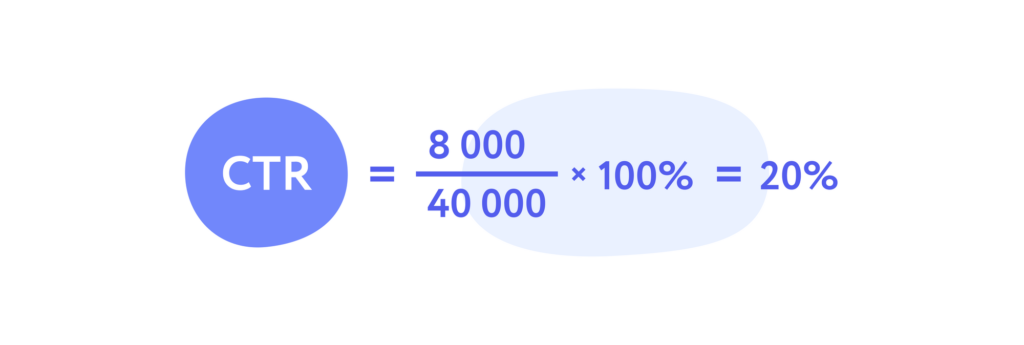
Many affiliates judge creatives only by CTR.
That is not enough.
CTR tells you whether people are curious enough to click. It does not tell you whether they are the right users for the offer.
A loud, aggressive, or overly broad creative can generate cheap traffic and high click volume. But it may attract users who have little real interest in the offer.
Those users may:
A more accurate creative may get fewer clicks but attract users who are more likely to convert and remain valuable.
This is why creative to offer mismatch is such an important issue.
The creative acts as the first filter in your funnel.
It decides who enters. Different creative angles can attract completely different segments, even when the offer is the same.
One affiliate may attract a large volume of low-intent users. Another may generate fewer leads but significantly better paid conversion and long-term profit.
After the click, the user should see a natural continuation of what was promised in the ad.
When the creative says one thing, the prelander says something else, and the offer page presents a third message, users become confused.
This is a classic creative-to-offer mismatch.
The results are predictable:
The best funnels feel consistent from the first impression to the final payment step.
The user should understand:
The clearer this journey is, the easier it is to build stable affiliate funnel performance.
GEO impact on affiliate performance is often underestimated.
Affiliates may run the same offer in different countries and assume that the main difference is CPC.
In reality, GEO changes much more than traffic cost.
Different markets may vary by:
In one country, users may comfortably pay by card.
In another, local payment options may be essential.
In one GEO, a user may complete additional payment verification without hesitation. In another, the same step may significantly reduce paid conversion.
That means an offer may not be “bad.” It may simply be a poor fit for a specific GEO, payment flow, or localization setup.
Always separate GEO data before making conclusions.
A profitable country can be hidden inside a weak overall campaign if several GEOs are mixed together.
Not every performance issue is a marketing issue.
Sometimes the difference between two affiliates comes from technical details.
Common technical factors include:
For example, iOS and Android users may show different payment conversion behavior. Desktop users may behave differently from mobile users during a multi-step payment flow. A slow landing page can reduce conversion before the user even sees the offer. A broken redirect can make your tracking look worse than reality.
Before blaming the affiliate program or the offer, verify that your technical chain is working correctly.
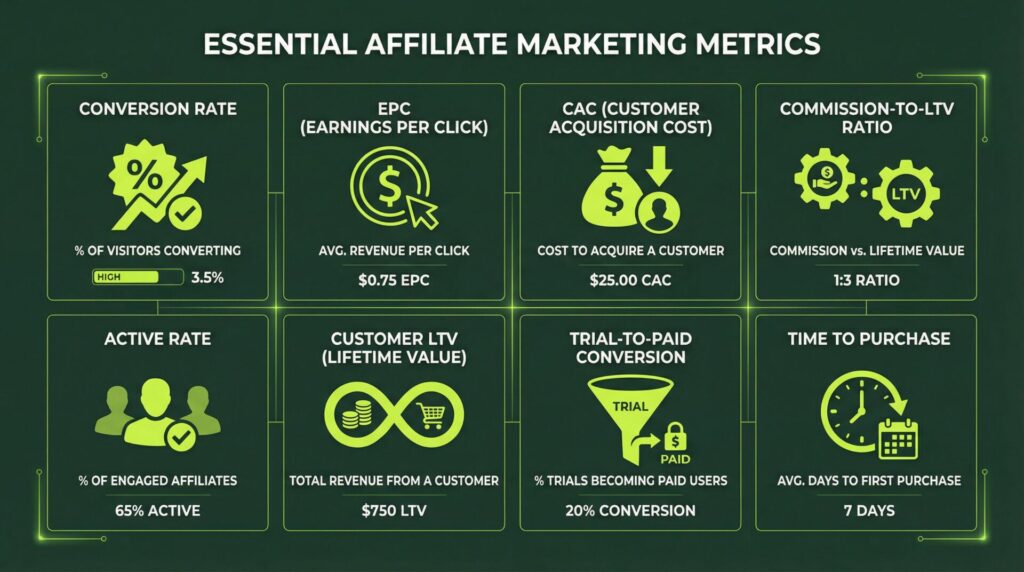
Paid rate by traffic source is one of the most sensitive indicators in affiliate marketing.
Two affiliates can generate similar lead volume but earn very different amounts because their users behave differently after registration.
Paid rate can be affected by:
This is why lead volume alone is not a useful comparison.
The real question is: how many users move from lead to payment, and what happens after payment?
If a campaign has strong lead volume but weak paid conversion, do not assume the offer is broken.
Check where the funnel loses users.
For subscription offers, the first payment is only part of the story.
The real value often comes from retention and recurring payments.
A source that generates fewer registrations may still be more profitable if users:
This is especially important for RevShare and subscription funnels.
A cheap lead that leaves immediately may be far less valuable than a more expensive user who stays active for several billing cycles.
That is why subscription retention affiliate traffic should be monitored alongside paid rate, refund rate, and net revenue.
The goal is not to buy the cheapest lead.
The goal is to acquire users who remain profitable after the first conversion.
Most affiliate case studies look simple on the surface.
Traffic source → Creative → Offer → Profit.
But behind that short summary, there are usually many hidden variables.
The affiliate may not show:
That is why copying a case study line by line rarely produces identical results.
The better approach is to understand the logic behind it.
Ask:
Use case studies as a source of hypotheses, not as a guaranteed blueprint.
When performance drops, do not replace the offer immediately.
Start by reviewing the full funnel.
Ask these questions:
Very often, the problem appears earlier in the funnel than expected.For example, a weaker creative can reduce traffic quality before the decline becomes visible in lead volume. A change in GEO can affect payment conversion before it affects CTR. A broken postback can make a profitable campaign look weak.
That is why you need to analyze the entire funnel, not just the last visible metric.
The most reliable way to diagnose a campaign is to change one meaningful variable at a time.
Do not simultaneously replace:
When too many variables change at once, you cannot know what caused the result.
Experienced affiliates build their testing around focused hypotheses.
For example:
This approach makes analysis faster and prevents repeated budget waste.
When an affiliate offer does not convert, the issue is often one of these:
The offer may still be viable.
The real task is to identify which stage is failing.
There are no adult offers that perform exactly the same way for every affiliate.
The final result depends on the complete setup:
So when someone asks, “Why does my competitor’s offer work better than mine?” the answer is usually straightforward:
Their funnel is different.
The earlier you start analyzing the full customer journey instead of blaming the offer alone, the faster you can identify performance issues, stop wasting money on random changes, and build campaigns that can actually scale.
At HUNT ME, we encourage affiliates to treat every case study as a starting point for research, not a shortcut. The strongest campaigns are built through testing, clean tracking, realistic expectations, and a clear understanding of where value is created in the funnel.
Because traffic source, audience quality, GEO, creatives, landing pages, tracking, payment flow, and user intent are rarely identical between campaigns.
The other affiliate may use a different traffic source, warmer audience, stronger creative angle, more suitable GEO, better funnel, or more optimized payment flow.
Traffic source fit, creative relevance, audience quality, GEO, payment convenience, funnel clarity, and technical reliability all have a major impact.
No. Use the case study to understand the testing logic and funnel strategy, but do not assume the same setup will create identical results in your traffic environment.
Review the full funnel step by step: traffic source, creative, GEO, approval rate, paid rate, refunds, retention, payment flow, and tracking setup. Change one variable at a time to identify the real cause.
Registration takes 2 minutes. No experience needed — we'll teach you everything.
Just fill out the form
Registration takes 2 minutes. No experience needed — we'll teach you everything.