To access the HUNTME referral program dashboard, enter the email and password you used during registration.
Fill out the form — it takes 2 minutes. A manager will contact you on Telegram, provide free training, and help you get your first result.
When an affiliate campaign becomes unprofitable, the easiest reaction is to blame the offer.
Sometimes that reaction is correct. The advertiser may have changed the terms, paid rate may have dropped, payment flow may have become weaker, or the economics may no longer work after refunds and chargebacks.
But very often the problem is somewhere else.
It may be in the creative, prelander, traffic source, GEO, tracking, landing page, payment journey, or one specific traffic segment.
This is why affiliates often fall into one of two expensive mistakes.
Earn with HUNT ME — weekly payouts
The first mistake is changing the offer too quickly after a few bad days and constantly jumping from one product to another. The second mistake is spending too much time improving the funnel when the offer itself is already weak and continues to burn budget.
The right question is not simply whether the offer is good or bad.
The right question is: where exactly does the economics of the funnel start to break?
To answer that, you need to diagnose the whole chain:
traffic → creative → prelander → landing page → registration → approval → paid event → refunds and chargebacks → net profit.
Only after that does it make sense to decide whether to improve the funnel or replace the offer.
To diagnose the problem correctly, first separate the two sides.
The affiliate offer usually includes:
Earn with HUNT ME — weekly payouts
The affiliate funnel includes:
This separation sounds obvious, but many wrong decisions happen exactly here.
If CTR drops before the user even reaches the landing page, blaming the payment flow makes no sense.
If paid rate is weak across several quality sources, endlessly changing creatives may not fix the problem.
That is why affiliate offer analysis and affiliate funnel analysis should always be done together.
One without the other gives too little information for a serious decision.
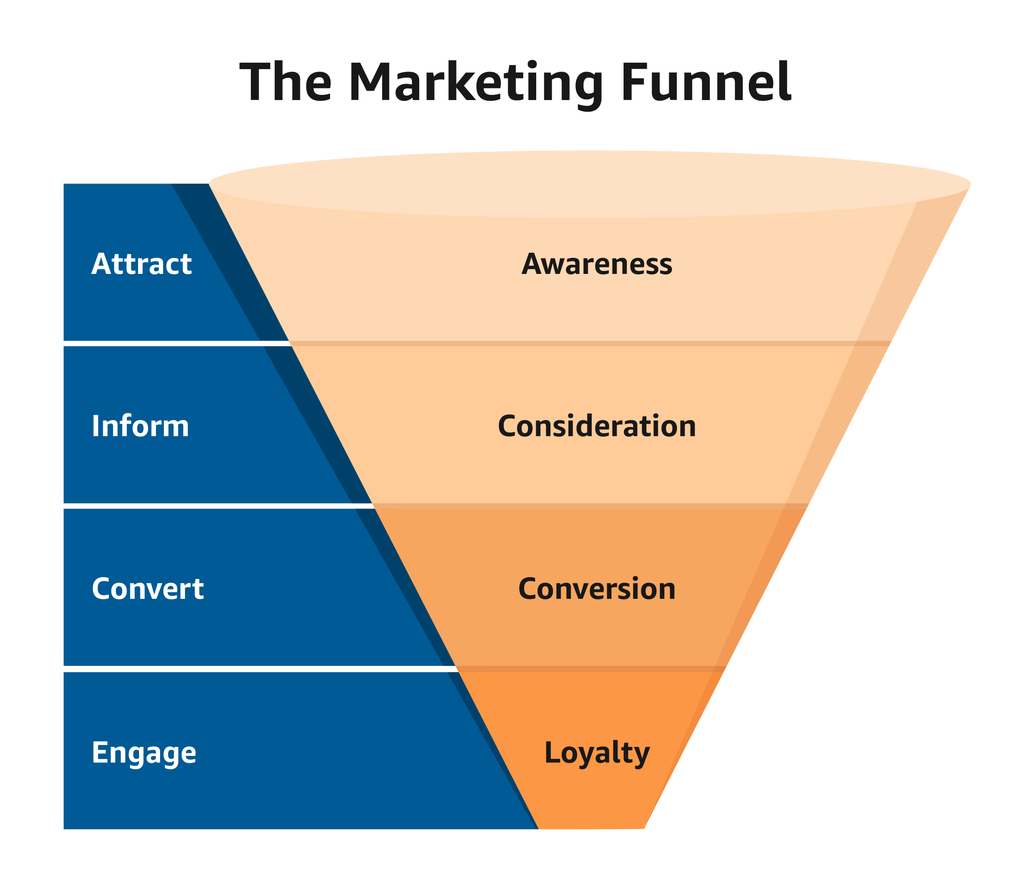
Every affiliate funnel should be analyzed as a sequence of stages.
First, there are impressions and CTR. Then the user reaches a prelander or the offer page. After that comes registration or lead, approval, paid event, possible rebills, refunds, chargebacks, and finally net revenue and net profit.
If the problem starts at the top of the funnel, the offer may not be responsible at all.
Low CTR usually points to a weak creative, wrong angle, poor audience fit, or creative fatigue.
If clicks happen but users do not register, the issue may be the prelander, landing page, loading speed, mobile experience, or message match.
But if registrations are stable, approval rate is acceptable, and paid rate remains low across several quality traffic sources, the suspicion shifts toward the offer itself or the payment flow.
This is why looking only at overall ROI is not enough.
You need to see where the drop begins.
Affiliate offer troubleshooting starts with the funnel path, not with emotions.
Several signals usually point to a local funnel-side issue.
The problem is more likely in the funnel when:
If the problem depends on the source, creative, placement, or one GEO, it is usually too early to change the affiliate offer.
First, isolate the weak element.
For example, the same offer may produce a good paid rate from search traffic and fail on push traffic. That does not automatically make the offer weak. The second source may bring colder users, weaker intent, or traffic that does not match the offer well.
In that case, replacing the offer may hide the real problem instead of solving it.
A weak offer does not always look like a product that cannot convert at all.
Sometimes leads and even first payments appear, but the final economics still do not work.
Warning signs include:
Do not evaluate the offer only by the first conversion.
An offer can show a strong lead conversion rate and still fail later when refunds, chargebacks, deductions, and payout holds are included.
That is why the question “why an affiliate offer is not profitable” cannot be answered by one conversion rate.
You need to see the full economics.
Before replacing an offer completely, run a short control diagnosis.
First, separate results by GEO and traffic source. Then review SubIDs and placements. Check tracking and postback. Compare current performance with a previous stable period.
After that, talk to the affiliate manager and ask whether anything changed.
Clarify:
You should not expect the manager to share every internal number, but they can often confirm whether the offer is generally stable or whether it is really underperforming.
If the situation is still unclear, run a small control test.
You can test:
The goal is not to save the offer at any cost.
The goal is to avoid a wrong decision.
Sometimes a control test shows that the offer is fine and one traffic segment was the problem. Sometimes it confirms that the offer has become too weak to continue.
If the problem is at the very beginning of the funnel, the offer may not need to be changed.
A typical situation: CTR falls, CPC rises, old creatives become tired, and a new creative starts bringing better-quality users to the same offer page.
In this case, do not just test “new images” or random variations.
Test new creative hypotheses:
The key signal is downstream performance.
If some creatives still bring users with good approval rate and paid rate while others do not, the offer is probably capable of working.
The problem is not the product.
The problem is who you attract and what expectation you create before the click.
Creative-to-offer mismatch can make a decent offer look weak.
If CTR is acceptable but the drop begins after the click, check the transition between the ad and the offer.
Prelander problems affiliate marketing campaigns face usually come in two forms.
The prelander may fail to explain the offer clearly, so the user does not understand what to do next.
Or the prelander may promise too much, while the advertiser landing page shows something different.
Both create a message match problem.
Signs of a weak prelander include:
A good prelander does not always maximize lead volume.
Sometimes it filters out random users and improves approval rate, paid rate, and net profit.
If downstream metrics improve after changing the prelander, there is no reason to replace the offer.
The same offer can behave very differently across traffic sources.
Native traffic may bring lower volume but stronger paid rate. Push traffic may generate many cheap leads that do not pay. Search traffic may have expensive clicks but better downstream quality. Warm community traffic may convert differently again.
Do not mix all of this into one average.
If the issue appears only in one source, clean that source first.
Check:
Often the problem is not that the affiliate offer stopped working.
The problem is that a new traffic source or expanded audience brought weaker users.
Traffic quality and affiliate offers must be evaluated together. A good offer can fail with the wrong source, and an average offer can perform well with the right audience.
A weak GEO is not the same as a weak offer.
The same offer may perform well in Spain and poorly in Italy. The reason may be payment methods, language, traffic cost, audience expectations, local competition, or card approval behavior.
That is why net profit should be calculated separately by country.
If paid rate is weak only in one GEO, check:
Sometimes the best decision is to turn off one unprofitable GEO and keep the others.
Sometimes the same GEO needs a different offer with a better payment flow.
Replacing the entire campaign because one country performs poorly is often too aggressive.
Some parts of the funnel can be improved by the affiliate.
Payment flow is usually not one of them.
If users register normally, reach the payment stage, and then fail to pay, the issue may be inside the offer’s payment process.
Affiliate payment flow problems may include:
The strongest signal is when the same payment problem appears across several quality traffic sources.
In that case, one more creative is unlikely to fix the economics.
If the advertiser cannot improve the payment flow, affiliate offer replacement becomes a logical decision.
Before making any serious decision, exclude technical problems.
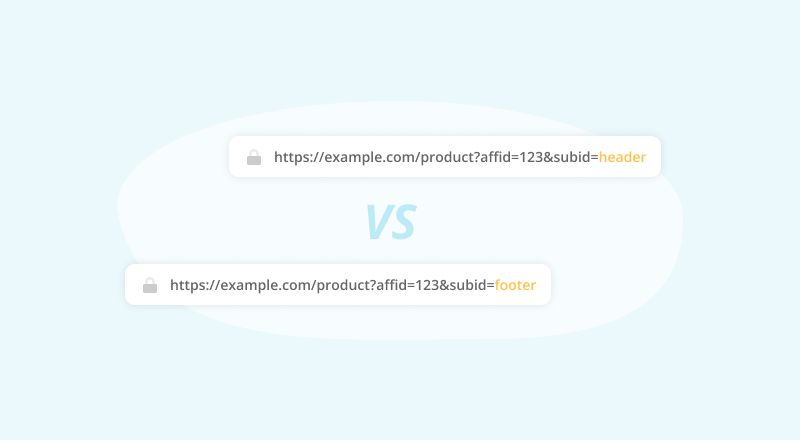
Tracking issues can make a profitable offer look weak or make a losing segment look stronger than it is.
Common warning signs:
In this state, you cannot compare offers or traffic sources reliably.
You may pause a profitable campaign simply because Paid events are not returned to the tracker.
Or you may keep a losing source because broken attribution sends revenue to the wrong SubID.
First restore clean tracking.
Then decide whether the problem is the offer, the funnel, or the traffic.
The biggest mistake when looking for a replacement is focusing only on payout.
Offer A may pay $40. Offer B may pay $55.
On paper, Offer B looks better.
But if Offer B has lower paid rate, higher refunds, longer hold, weaker approval, or less transparent reporting, it may produce worse net profit.
Compare offers by the full set of economics:
Transparency matters too.
An offer with a slightly lower payout but clear event reporting, stable terms, fast dispute resolution, and predictable payments can be more valuable than an offer with a higher visible rate.
Net profit affiliate offer comparison is more useful than payout comparison.
If you are unsure whether to change the offer, do not always switch everything at once.
A safer approach is to keep the working part of the current offer and test an alternative in parallel.
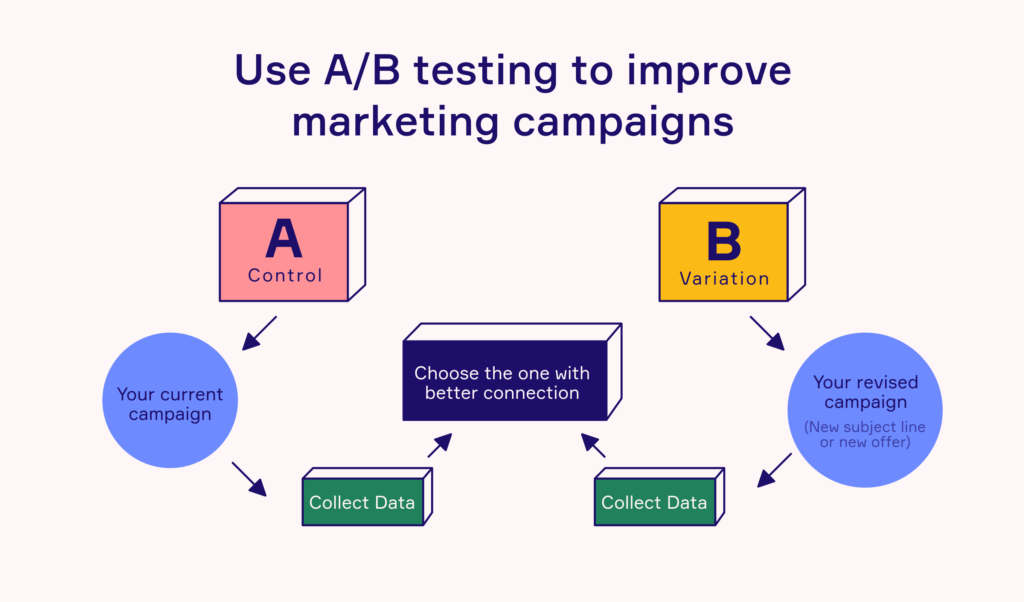
Use comparable traffic conditions:
Then compare not only early leads, but:
An affiliate offer split test often shows a surprising result.
The new offer may generate more registrations but monetize users worse. Or it may generate fewer leads but produce much better paid rate.
The important thing is to let the data mature.
Comparing offers after the first few clicks or leads usually leads to bad decisions.
There are situations where improving the funnel will not solve the problem.
It is time to seriously consider changing the offer when:
At this point, replacing the offer is not an emotional reaction.
It is a business decision based on data.
The opposite situation is when there is not enough data to decide.
It is too early to replace the offer when:
Affiliate marketing naturally has volatility, especially at low volume.
Constantly replacing offers too early turns campaign management into random movement.
The affiliate changes the product but never understands what was wrong with the previous funnel. Then the same problem appears again with the next offer.
A practical decision framework can look like this:
The decision does not have to be binary.
Sometimes the best option is to keep the current offer for the working GEOs and sources, while moving only the weak segment to another product.
Most wrong decisions come from extremes.
Common mistakes include:
The goal is not to defend the offer or blame the funnel.
The goal is to make the correct diagnosis.
The purpose of diagnosis is not to prove that the advertiser is wrong or that the affiliate made a mistake.
The purpose is to find the element that limits profit.
Sometimes it is the creative.
Sometimes it is the prelander.
Sometimes it is the traffic source, GEO, tracking, or payment flow.
And sometimes the offer itself has reached a point where further optimization no longer makes sense.
A good offer does not have to work with every funnel. A strong funnel cannot save an offer with poor payment flow, consistently weak paid rate, or refund levels that destroy margin.
That is why the decision should be based on mature data and net profit, not on the feeling created by a few days of statistics.
If the weakness is local, fix the specific element and keep the working part of the campaign.
If the weakness repeats across quality segments, appears in downstream metrics, and an alternative offer shows better economics, it is time to move the traffic.
This approach protects the budget from two equally expensive mistakes: replacing a working offer too early and trying too long to save an offer that no longer pays.
You should consider changing an affiliate offer when paid rate is weak across several quality sources, refunds and chargebacks destroy profit, payment flow does not fit the GEO, payout no longer covers acquisition cost, or an alternative offer shows better net profit in a comparable test.
The problem is more likely in the funnel if performance drops only on one source, one creative, one prelander, one SubID, or one GEO while other segments of the same offer still perform well.
Check traffic source quality, SubID data, GEO performance, creatives, prelander, tracking, postback, approval rate, paid rate, refunds, chargebacks, caps, hold, and manager feedback.
Many leads do not guarantee profit. The offer may have low approval rate, weak paid rate, high refunds, long hold, poor payment flow, or low retention.
No. A higher payout can still produce lower net profit if approval rate, paid rate, refund rate, hold, payment flow, or reporting quality are worse.
Usually no. One bad day is not enough data. First check whether the issue is temporary, whether tracking works, whether the drop is isolated by source or GEO, and whether downstream data has matured.
Registration takes 2 minutes. No experience needed — we'll teach you everything.
Just fill out the form
Registration takes 2 minutes. No experience needed — we'll teach you everything.