To access the HUNT ME referral program dashboard, enter the email and password you used during registration.
Fill out the form — it takes 2 minutes. A manager will contact you on Telegram, provide free training, and help you get your first result.
The same creative + offer combo can print profit in one market and burn budget in another. The reason is simple: every country comes with its own CPM/CPC reality, platform enforcement, audience behavior, payment methods, and willingness to pay — especially for subscriptions.
Yet many teams still “wing it”: they pick a couple of popular GEOs, run the same creatives everywhere, and hope for the best. The outcome is predictable — wasted tests and frustration. A real GEO strategy 2026 looks different. In this guide, you’ll learn how to test regions systematically, run clean geo split testing, and avoid the mistakes that keep costing teams money.
Tier classification used to be simplistic: Tier 1 = rich countries, Tier 3 = everything else. Today it’s a bundle of variables:
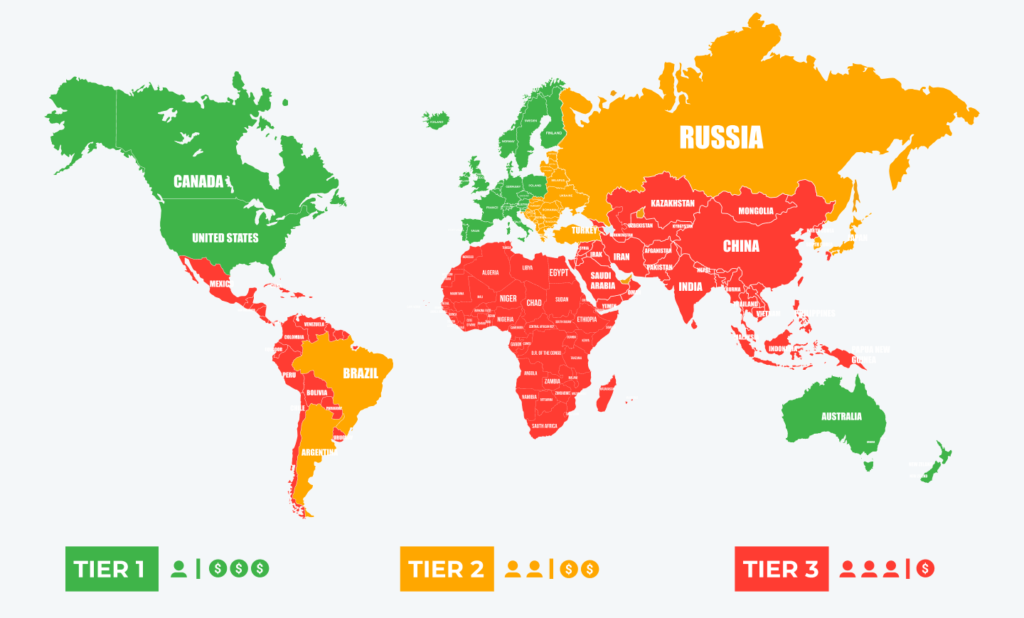
US, Canada, Australia, UK, Germany, France, Japan, and similar markets. Payout potential is high — but so is the cost to enter. Tier 1 often means expensive auctions and stricter enforcement (especially in regulated verticals). The upside is usually stronger quality signals: higher approval rates and, for subscriptions, significantly higher LTV.
Brazil, Mexico, Turkey, Thailand, Indonesia, Poland, South Africa, and more. Many experienced teams find their best ROI here: costs are lower than Tier 1, competition is lighter, and payment infrastructure has improved dramatically in recent years. Tier 2 is often the “sweet spot” where volume and profitability meet.
Earn with HUNT ME — weekly payouts
India, Vietnam, Pakistan, Nigeria, Kenya, Bangladesh, etc. Traffic is cheap and volume can be massive — but payment power and traffic quality are often weaker. Refunds, chargebacks, and fraud risk can be higher, especially when the offer isn’t localized or the funnel isn’t built for the market. The classic newbie trap is thinking “cheap = profitable.” Without tight controls, Tier 3 can become a budget black hole.
This is why Tier is not just geography — it’s economics, enforcement, and behavior combined.
The GEO metrics that actually matter
To judge a market, you can’t look at CR alone. A solid evaluation includes:
For subscription funnels, you need extra layers:
Refunds/chargebacks are a hidden landmine. Some GEOs can show “good” top-funnel numbers but destroy profit with high reversal rates if the funnel and messaging aren’t localized.
The right starting GEO depends on how you get paid.
Also consider platform limits. Some GEOs have stricter enforcement depending on vertical, and policies can vary by region. Language, currency, and cultural behavior matter too: without adaptation, performance can drop even with a strong base creative.
Earn with HUNT ME — weekly payouts
A clean country split testing strategy is usually a three-stage process.
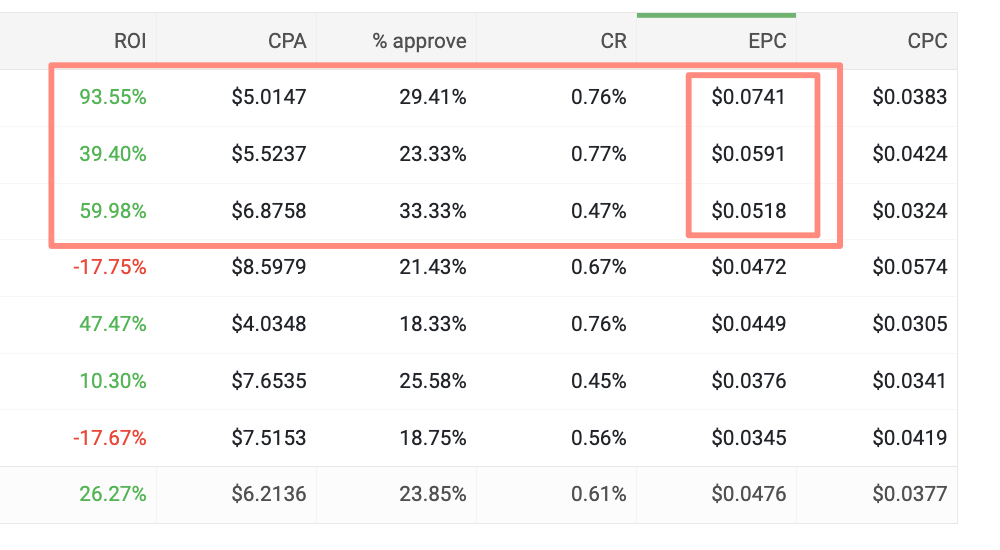
Launch a package of 6–10 GEOs at once:
Use small budgets per GEO for 2–3 days. Creatives can be similar only when language and context allow it. The goal is to quickly eliminate obvious losers.
Typical stop signals:
Keep the top 2–3 GEOs. Create separate campaigns per market, add real localization, test new angles, and start watching quality metrics like approval rates, early retention, and early refunds.
Only markets with stable ROI and acceptable refund levels get increased spend, broader segments, and larger creative pools. In practice, Tier 2 often becomes the stability leader at this stage.
This is how budget allocation by GEO becomes systematic instead of guesswork.
The #1 rule during testing: one GEO = one campaign.
That’s the only way to keep attribution and metrics clean. Multi-country campaigns can work later, but only after you already know which GEOs are proven. Even then, avoid mixing Tier groups in the same ad set — delivery gets averaged and your data becomes unreadable.
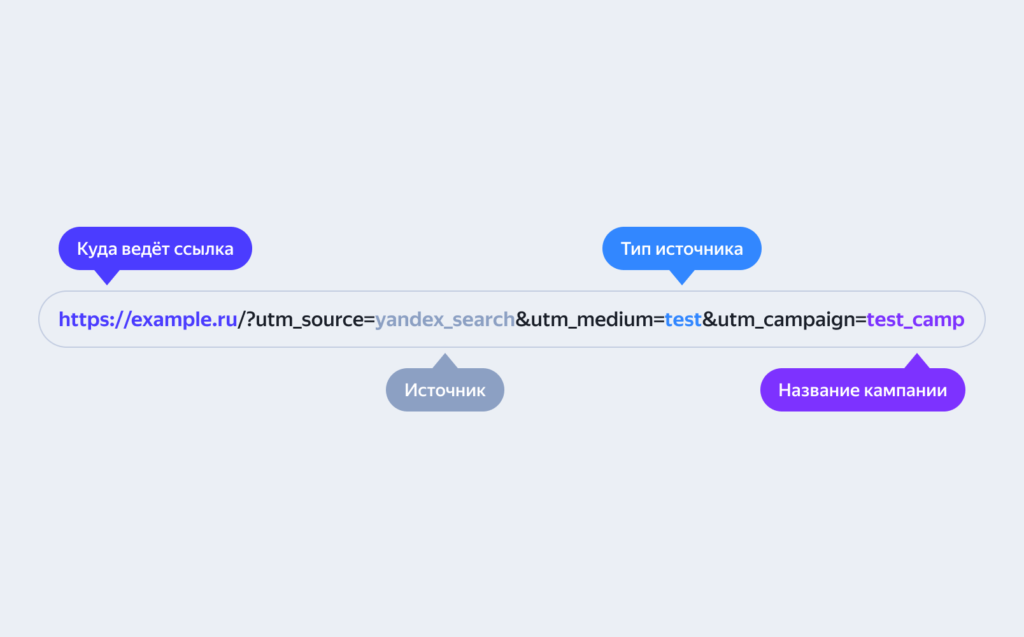
Tracking hygiene matters:
Without that, you can’t make confident decisions.
Localization is not translation. It’s adapting the funnel to local expectations and habits.
Examples of what changes by market:
Teams that skip this often label GEOs as “dead,” when the real issue is the lack of localization.
If you want consistent results, you must localize creatives by country — messaging, proof, and the “trust layer,” not just language.
Tier groups behave differently:
This is why serious teams maintain separate creative matrices per Tier group. What prints in Brazil may flop in the US — and the reverse is equally true.
A practical 14-day GEO test plan
Days 1–3: screening pack (6–10 GEOs), small budgets, baseline creatives
Days 4–7: shortlist GEOs, separate campaigns, real localization + new angles
Days 8–14: scale winners, expand segments, refresh creatives, run retests
Stop criteria: high CPM, CR below baseline, refunds above threshold
Continue criteria: stable ROI + improving retention trend
This is the simplest way to run a controlled multi-GEO campaign setup over time — test first, then consolidate.
The most common failures:
These mistakes lead to the same result: wasted spend and lost time.
In 2026, profitable teams aren’t the ones spending the most — they’re the ones testing GEOs systematically, cutting losers fast, and building winners deeply. When you treat Tier testing, localization, and metrics as a process, GEO stops being a lottery and becomes a controlled growth system.
That’s also how you unlock real scaling: scaling winners across GEOs becomes repeatable once you know what works, why it works, and how to adapt it market by market.
If you’re just starting out in affiliate marketing, join HUNT ME! We’ll provide you with your first offers, scripts, guides, and ready-made tools—everything you need to get started. How much you earn depends on your traffic, and payouts arrive every week in USDT.
Registration takes 2 minutes. No experience needed — we'll teach you everything.
Just fill out the form
Registration takes 2 minutes. No experience needed — we'll teach you everything.