To access the HUNTME referral program dashboard, enter the email and password you used during registration.
Fill out the form — it takes 2 minutes. A manager will contact you on Telegram, provide free training, and help you get your first result.

You launch a campaign. The traffic source shows 1,000 clicks. Your tracker shows 980. The affiliate network shows fewer conversions than you expected. Nothing “mystical” happened—attribution just leaked.
In 2026, cookie limits and third-party cookie deprecation make leaks more common, especially when you still rely on browser pixels.
Below we’ll break down practical steps for server-side tracking 2026 and first-party data tracking, so cookieless tracking doesn’t turn your reporting into guesswork.
User privacy is the main reason this changed. For years, a lot of affiliate tracking depended on third-party cookies—set by ad platforms or external analytics tools—to follow users across sites.
That approach is being phased out. Safari and Firefox restrict cross-site tracking by default, and Chrome is continuing its third-party cookie phaseout. The result is simple: cookies last for less time and attribution breaks more often. With cookie restrictions 2026, attribution gaps are no longer rare—clicks get logged, but conversions don’t always tie back to the original session.
Earn with HUNT ME — weekly payouts
In real life it looks like this:
That’s “signal loss” — and it’s a big reason your traffic source, tracker, and affiliate network often show different numbers.
To compensate for browser limits, marketing is moving to a new baseline:
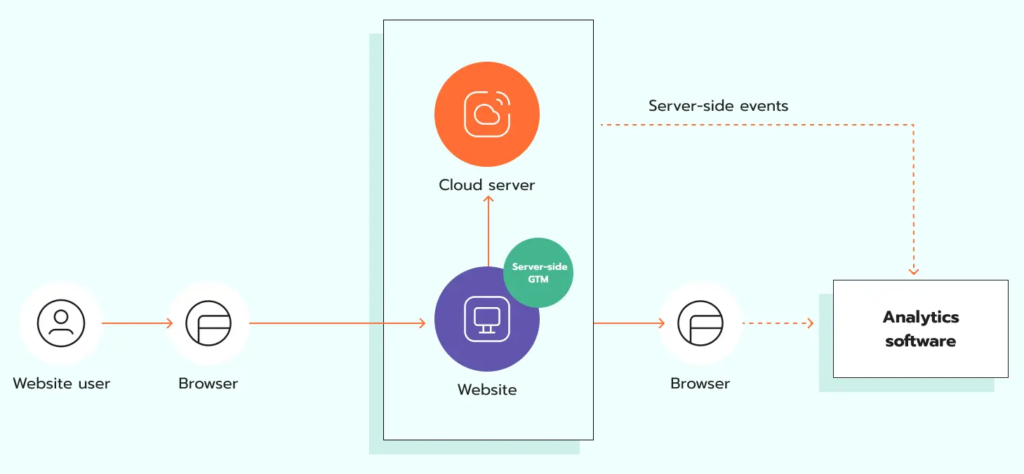
In a server-side model, the conversion event is recorded and transmitted from the backend. That makes measurement far more resilient under modern privacy constraints. Proper server-side tracking 2026 helps you:
It’s important to be clear: server-side is not magic. If a user fully opts out of certain tracking, you can’t “recover” what you don’t have consent to process. But it can dramatically reduce tracking gaps and improve stability.
A typical setup looks like:
Traffic source → tracker → landing page → offer → affiliate network → S2S postback → analytics
The critical piece is a unique click identifier (often clickid, subid, or transaction_id). That identifier is passed with the click and then returned via S2S postback tracking when an event occurs.
Earn with HUNT ME — weekly payouts
To keep attribution intact, that identifier must be preserved on your side. Common methods include:
This structure is the foundation of affiliate tracking without cookies in 2026—because you’re no longer relying on a third-party cookie to stitch sessions together.
As privacy requirements increase, consent becomes a central part of tracking. In Europe and many other regions, GDPR and similar frameworks require a lawful basis for processing certain data. Many sites use a consent layer or consent management (CMP) system to capture user choices.
A practical rule of thumb for GDPR compliant tracking is: minimize what you collect. Only capture what you actually need for analysis—click identifiers, technical metadata, and conversion events—without unnecessary personal data.
Avoid storing personal user data unless it’s strictly required for the business process and covered by proper policies. Beyond legal exposure, mishandling data can create platform policy issues and long-term operational risk.
When marketers talk about server-side tracking, they typically mean moving key conversion events to the server:
These events are commonly passed through S2S postbacks. That’s why S2S postback tracking is a core component: it ties a click to an event server-to-server, and it’s far less dependent on browser behavior.
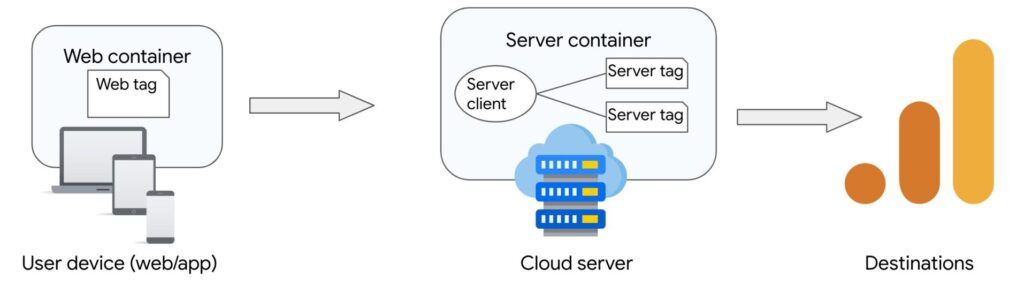
You also need deduplication. Sometimes the same event fires via multiple channels (a pixel and a server event). Without dedupe, you may record double conversions—one of the most common causes of inflated metrics and broken optimization.
If you want a deeper explanation of postbacks and event mapping, see our dedicated guide on S2S postback tracking.
When part of your data is missing, attribution becomes less precise. Classic models like last-click can become misleading—often over-crediting the last touchpoint while undercounting earlier influence.
Under conversion attribution without cookies, affiliates increasingly use a more conservative decision model:
In this environment, the most reliable metrics are not “leads,” but business outcomes: payback, LTV, and retention. These can still guide scaling even when tracking is imperfect.
You’ll also want to monitor “attribution gaps” directly—this is the practical side of tracking loss attribution: measuring when, where, and how often attribution breaks so you can reduce the leakage.
In subscription offers, the real profit rarely comes from the first payment alone. The first charge may only cover acquisition costs, while the real margin is created through renewals.
That’s why subscription rebill tracking is essential. Your analytics should capture:
If you only track the first payment, you can misjudge the long-term economics. A campaign may look strong on day one, but underperform over time if renewals are weak.
This is why cohort analysis is standard in subscription funnels. Group users by the date of first payment and measure what happens over time:
If renewals happen early and consistently, it’s a strong signal of traffic quality. If users cancel quickly or refunds spike, it often indicates a mismatch between audience intent and the promise made in creatives.

When you move to server-side, it’s normal for reporting to behave differently at first. A new architecture requires that every link in the chain is correctly configured.
Most often, they didn’t disappear—your click identifier got lost:
The event happens, but the system can’t attribute it.
This happens when the same event is sent via pixel and server postback. Without deduplication, one action can be counted twice.
This is one of the biggest drivers of confusion in affiliate tracking without cookies setups. Common causes include:
Some portion of traffic may remain unattributed due to short cookie lifetimes, lost URL parameters, or broken redirect logic. That’s why ongoing monitoring and reconciliation are required.
You don’t need an enterprise-grade data warehouse to adapt to cookie restrictions. A basic setup can preserve a large share of your signal.
A strong minimum includes:
Even a simple reconciliation sheet can quickly show where attribution breaks and how to fix it.
Cookie restrictions are not temporary. Cookie restrictions 2026 reflect a broader shift in web privacy, and platforms will continue moving in this direction.
The smart play is to transition toward first-party data tracking and server-side conversion tracking as your baseline. This approach helps you:
But the technical stack is only half the equation. The bigger change is analytical thinking: affiliates who win in 2026 focus on profit, LTV, retention, and renewals—not just lead volume.
Start with a simple pipeline that tracks the key events and keeps click-to-payment attribution intact. Then evolve it step by step: add more events, improve attribution quality, and deepen retention analysis.
That’s how you keep scaling in a privacy-first world—without losing your numbers to invisible tracking gaps.
If you’re just getting into affiliate marketing, join HUNT ME. We’ll help you launch with a solid foundation: curated offers, scripts, guides, and ready-to-use tools—so you can aim for stable results instead of trial-and-error chaos.
Registration takes 2 minutes. No experience needed — we'll teach you everything.
You just need to fill out the form
Registration takes 2 minutes. No experience needed — we'll teach you everything.