To access the HUNTME referral program dashboard, enter the email and password you used during registration.
Fill out the form — it takes 2 minutes. A manager will contact you on Telegram, provide free training, and help you get your first result.

In 2026, ad text has become one of the most fragile parts of performance marketing. A few years ago, most people worried mainly about visuals. Now automated review systems often “flag” the message first: your wording, tone, promises, and even the implied context.
Modern platforms don’t just scan for banned words. They evaluate the overall intent and risk of an ad:
Is the offer realistic? Does the copy feel manipulative? Does it match what happens after the click? Is the CTA pushing too hard?
That’s why one bad headline can kill an entire ad set before it even starts delivering. The goal isn’t to “game” the system—it’s ad copy compliance: writing policy-safe ad copy that survives review and still performs.
This guide breaks down why ads get rejected, the most common ad rejection reasons, and the practical rules for copywriting for paid social that help you reduce ad disapprovals, avoid ad account bans, and keep conversions strong.
In affiliate and performance campaigns, many rejections come down to copy. Text gives review systems a clear, literal signal of meaning. A visual can be interpreted multiple ways; a sentence is much harder to “misread.” So any risky phrasing gets picked up faster.
Earn with HUNT ME — weekly payouts
A common mistake is thinking in terms of “banned words.” In reality, platforms react to combinations: wording + tone + context. The same word might pass in neutral language and get flagged in aggressive language.
Example:
“You’ll make $100 today” is risky (hard promise, unrealistic expectation).
A safer approach is: “You can start learning how people earn from…” or “Here’s a simple way to get started from zero.”
That’s the core idea behind ad copy that passes review: you keep the message compelling, but you remove anything that reads like pressure, deception, or guaranteed outcomes.
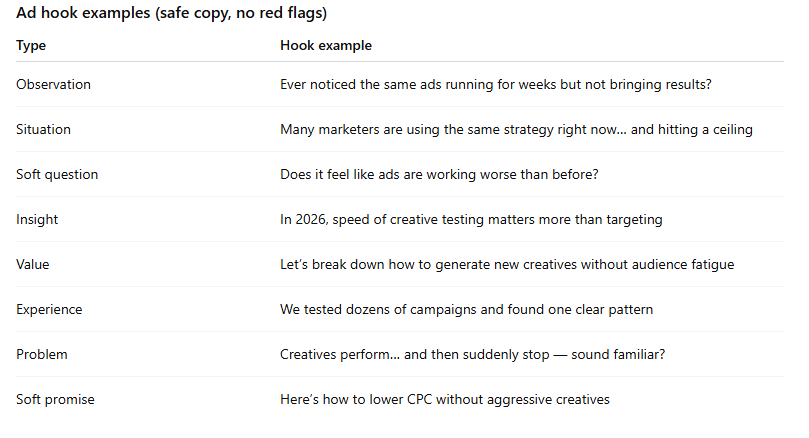
Headlines are often the rejection point because they contain the most “trigger” language in the smallest space. Many advertisers try to hit emotions with sharp, extreme lines—and that’s where review systems usually push back.
In 2026, the safer pattern is calm, observational headlines that feel like content, not a pitch. Examples:
These don’t sound like pressure. They still pull attention because the reader recognizes a situation or problem.
The difference matters:
But “trigger words” are only the surface. What matters more is the meaning behind your copy.
Earn with HUNT ME — weekly payouts
“Red flags” are the signals that tell the system your ad is risky. Review isn’t looking for perfection—it’s risk scoring. If your ad looks like it could cause complaints or deception, it’s easier to disapprove.
Your job is to remove anything that looks like manipulation while keeping the ad interesting.
Here are the biggest red flags:
Absolute claims like “guaranteed,” “100%,” “no effort,” “works for everyone” increase risk. Replace hype with specifics:
If the user clicks expecting one thing and lands on something else, complaints go up. Review systems anticipate that. Use wording that sets realistic expectations:
Ultimatums, hard FOMO, or “pushy” messaging reads as coercive.
Copy that frames the user as defective (“you’re failing,” “you can’t,” “you’re doing it wrong”) gets flagged more often.
It can spike CTR—but it’s unstable, gets disapproved more often, and burns audiences faster.
If it’s not clear what’s being promoted and what happens next, platforms treat it as higher risk.
For adult-adjacent areas, how you frame content matters as much as what you say. It’s not only “what,” but “how.”
The winning approach is straightforward: copy that reads like normal communication—not “selling at any cost.”
A strong conversion-focused ad copy structure is simple:
This works for banners, short videos, and longer captions. If you’re wondering how to pass ad review, the answer is usually: remove pressure, reduce exaggeration, be clear about what happens after the click.
The same core idea can feel like spam or like content depending on how you package it.
Keep it short and instantly readable. People process it in a split second, so avoid complex structures. One clear idea, one clear next step.
The first seconds decide everything. Don’t start with abstract hype. Start with a moment that stops the scroll: a relatable situation, a specific observation, or a clear “here’s the point.”
UGC performs because it doesn’t feel like an ad. UGC copy should sound like a personal note or quick experience, not “marketing language.” This is where hooks and CTAs that convert often work best in a calm tone.
Story formats are softer and reduce resistance. You don’t “push” anything—just show a familiar scenario and guide toward the next step. Storytelling often brings higher-quality traffic even if it’s not the fastest click driver.
The key: you’re not changing the offer, you’re changing the delivery. That’s how you reduce ad complaints and extend the life of your creatives.
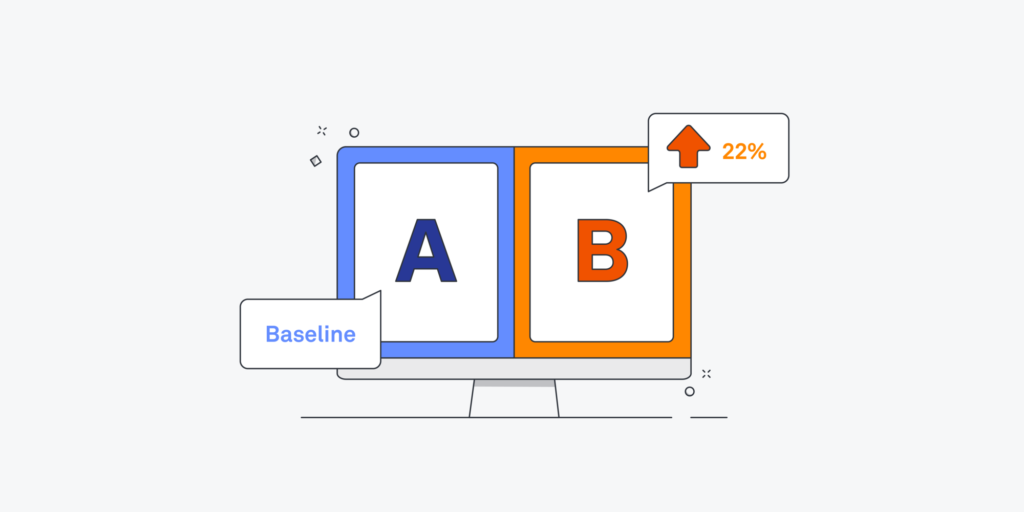
You can’t write a perfect ad on the first try. Testing is normal. But test the right thing.
A common mistake is micro-testing single words (“earn” vs “make money”). That usually doesn’t teach you much and can add risk. Instead, test angles and meanings, not “edgy phrasing.”
For one concept, create multiple safe “openers”:
Keep the rest of the structure stable. This lets you learn what framing performs better while staying inside policy-safe ad copy boundaries.
Also don’t judge by CTR alone. Sometimes a more aggressive line gets clicks but:
In 2026, ad copy best practices 2026 are about balance: approval stability + quality signals + conversion, not just headline CTR.
When you have several safe angles ready, you can scale without guessing a new risky phrase every time.
Before launch, ask:
If you fail one question, fix it before spending money. This checklist alone will reduce ad disapprovals for most teams.
“Red-flag-free” copy isn’t a limitation—it’s a system. Clean ad copy compliance brings:
In 2026, the winners aren’t the ones trying to outsmart policies. They’re the ones who build reliable workflows: safe angles, clear value, honest delivery, and consistent testing.
Build a library of safe hooks, test meanings, and keep your messaging aligned. That will beat chasing one “perfect” line every time.
If you’re new to affiliate marketing, join HUNT ME. We’ll provide your first offers, scripts, guides, and ready-to-use tools—everything you need to build stable results fast.
Registration takes 2 minutes. No experience needed — we'll teach you everything.
You just need to fill out the form
Registration takes 2 minutes. No experience needed — we'll teach you everything.