Why You Have Candidate Applications but Few Payouts: How to Analyze the Candidate Journey Step by Step
10 min read · 11.11.2026 · 5 views

Contents
- Start With the Offer’s Actual Payment Conditions
- Build a Funnel With Clear Definitions
- Compare Cohorts With Enough Time to Progress
- Many Clicks but Few Applications
- Applications Arrive but Candidates Do Not Respond
- Check the Copy Before the Application
- Check Whether the Form Is Part of the Problem
- Contact Happens but Interviews Are Not Scheduled
- Separate Interview Conversion From Show-Up Rate
- Interviews Happen but Few Payable Events Are Confirmed
- Confirmed Rewards Exist but Cash Payouts Are Low
- Compare Sources Using Consistent Arithmetic
- Break Results Down by Source, Creative, Market, and SubID
- Is the Problem Local or Shared Across the Process?
- What Data to Bring to the Affiliate Manager
- Fix the Diagnosed Stage and Recheck the Whole Funnel
- Keep a Small Funnel Log
A campaign can generate many applications without producing much affiliate revenue. Between a form submission and a payout, candidates may need to respond, attend an interview, complete work, or reach another event defined by the offer.
Losses can occur at different stages. Reporting delays and payment timing can also make recent results look weaker than they eventually become.
Want to start without experience?
Start with stream models: you look for people using ready-made scripts, and production companies handle the interview and training.
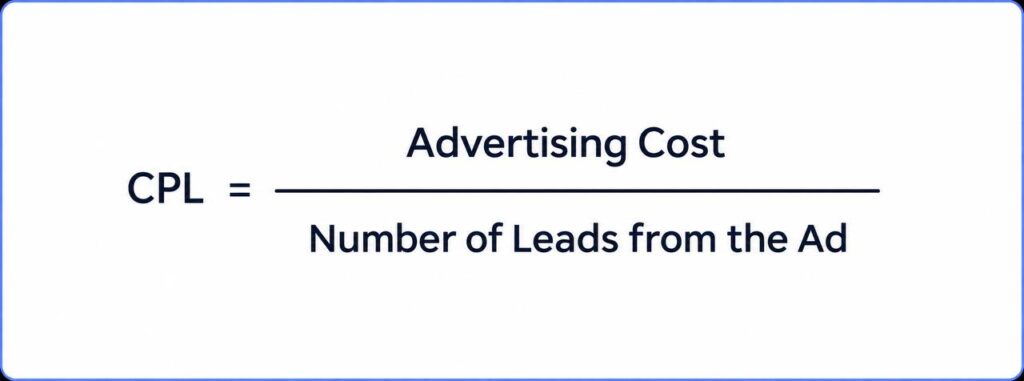
Cost per lead alone cannot explain the situation. A useful recruiting funnel analysis follows the relevant journey, separates confirmed outcomes from pending ones, and identifies the specific stage that needs attention.
This guide explains how to analyse the candidate journey, compare traffic sources, and investigate why applications do not turn into payouts.
Start With the Offer’s Actual Payment Conditions
A possible journey is:
Good at finding people? You get paid for it
You find a candidate, production companies and agencies do the rest. Payouts in USDT every Monday.
Click → application → contact → scheduled interview → attended interview → qualifying event confirmed → reward recorded → payout
This is an example, not a universal sequence.
Some offers pay for interview attendance. Others require completed work or another result. A hiring decision, confirmation of a payable event, and actual payment are separate events.
Before diagnosing the campaign, establish:
- What exactly qualifies for an affiliate reward.
- Which payment model applies.
- What confirms the event.
- Which statuses are available.
- How reporting and settlement work.
Review the current HUNT ME offers and their qualifying events. Do not assume an unsuccessful interview always means a non-payable referral, or that every application follows the same path.
Build a Funnel With Clear Definitions
Record the stages your process actually uses.
| Stage | What to establish |
| Application | Was a submission successfully recorded? |
| Contact validity | Are the required details usable? |
| Contact attempted | Was an attempt made, when, and through which channel? |
| Contact established | Did the candidate actually respond or converse? |
| Interview scheduled | Was an appointment agreed? |
| Interview attended | Did the relevant interview take place? |
| Qualifying event confirmed | Were the payment conditions met? |
| Reward recorded | Was the affiliate amount credited or otherwise confirmed? |
| Payout | Was the money actually paid? |
Use the programme’s definitions where available and document differences between systems.
A status labelled “approved” is not sufficiently precise by itself. Clarify whether it means an accepted application, a hiring decision, a validated event, or an approved reward.
Not sure what to write first? The script is ready
After sign-up you get ready-made scripts and a personal manager. No recruiting experience needed.
Compare Cohorts With Enough Time to Progress
Applications acquired yesterday have had less time to produce outcomes than applications acquired several weeks ago.
Group results by submission period and allow a suitable observation window for the offer. Keep future appointments, incomplete work periods, and pending confirmations separate from failures.
Also distinguish:
- Confirmed rewards earned by a cohort.
- Payouts made during a calendar period.
This week’s cash payment may relate to earlier applications. Dividing it by this week’s new applications can create a misleading “application-to-payout” figure.
For recurring rewards, a candidate may generate several events over time. Count unique candidates and event totals separately.
Many Clicks but Few Applications
If people reach the page but rarely apply, investigate the experience before submission.
Check:
- Whether the advertisement matches the page.
- Whether the role and requirements are clear.
- Whether essential conditions appear before the form.
- Whether the CTA describes the action accurately.
- Mobile usability and loading.
- Form errors.
- Unnecessary fields.
- Tracking of successful submissions.
A low application rate may also reflect genuine lack of fit. Removing requirements to increase volume can move the problem further down the funnel.
At this stage, interview reminders will not address a broken form or a mismatch between the advertisement and the page.
Applications Arrive but Candidates Do Not Respond
Possible explanations include incorrect details, missed messages, an unfamiliar sender, a long delay, or a misunderstanding about what follows the application.
Start by checking whether contact was attempted and whether the information is valid. “No response” and “invalid contact” are different outcomes.
Then review expectations. Did the person know someone would contact them? Did they understand the actual role?
Repeated statements such as “I thought this was something else” are useful evidence of a message problem. Silence alone does not establish the reason.
Do not automatically attribute every unsuccessful contact to poor motivation or weak traffic.
Check the Copy Before the Application
The person should understand the basic work, relevant requirements, and next step before submitting details.
Look for unsupported promises:
- Guaranteed income.
- Automatic acceptance.
- No requirements.
- Immediate results.
- A schedule or work format that has not been confirmed.
An attractive claim may increase forms while producing unsuitable expectations later.
Correcting it can reduce applications and still improve meaningful outcomes. Measure the effect rather than assuming that either a higher or lower form conversion rate is inherently better.
Check Whether the Form Is Part of the Problem
A form can introduce friction, errors, or ambiguity.
Investigate duplicates, failed submissions, incorrect field formats, missing instructions, and whether candidates understand what they are requesting.
Each field should support the approved next step. Do not collect unnecessary sensitive information, but do not remove essential requirements simply to make completion easier.
A short form does not automatically produce “empty applications.” The explanation, audience, technical setup, and follow-up process all matter.
Contact Happens but Interviews Are Not Scheduled
Once contact is established, separate the reasons the process does not progress.
Examples include:
- Candidate availability.
- A confirmed requirement mismatch.
- A decision not to continue.
- Unresolved questions.
- Difficulty arranging an appointment.
- Changes in the receiving organisation’s process.
Some issues can be addressed through better information before the application. Others require coordination with the company or agency.
Use specific statuses instead of combining everything under “did not reach interview.”

Separate Interview Conversion From Show-Up Rate
These metrics answer different questions.
Application-to-interview conversion = attended interviews ÷ applications × 100%
Interview show-up rate = attended interviews ÷ scheduled interviews due in the measurement period × 100%
The first includes losses before scheduling. The second focuses on attendance after an appointment exists.
Define how cancellations and rescheduling are handled. Do not classify an interview scheduled for next week as a no-show today.
If scheduling is strong but attendance is weak, check confirmed times, time zones, communication channels, reminders, and known withdrawal reasons.
Coordinate candidate contact with the responsible team rather than sending duplicate messages.
Interviews Happen but Few Payable Events Are Confirmed
First check whether the interview itself is the payable event.
If payment requires later work or another result, attendance is only part of the journey. Confirm whether the necessary time has passed and whether the event has been reported.
If candidates fail a confirmed requirement, investigate the specific mismatch: location, language, availability, role understanding, or another relevant condition.
Keep categories separate. A duplicate, candidate withdrawal, interview outcome, and missing event confirmation require different responses.
Do not assume that every low confirmation rate proves poor candidate quality.
Confirmed Rewards Exist but Cash Payouts Are Low
This is a different problem from candidates dropping out.
Check the applicable payment process, reporting period, minimum threshold where relevant, verification requirements, and any unresolved event or account questions.
Compare credited amounts with payment records using consistent dates and identifiers. Ask the manager to explain discrepancies rather than assuming that money has been lost.
A pending settlement is not the same as a rejected event. Equally, do not treat an unverified dashboard amount as money already received.
Compare Sources Using Consistent Arithmetic
Consider this hypothetical example. Both sources promote the same offer under the same $50 reward for each confirmed payable event, with comparable observation time.
| Metric | Source A | Source B |
| Acquisition spend | $300 | $440 |
| Applications | 100 | 55 |
| Contact established | 60 | 45 |
| Scheduled interviews due | 40 | 36 |
| Attended interviews | 25 | 30 |
| Confirmed payable events | 10 | 18 |
| Cost per application | $3.00 | $8.00 |
| Application-to-interview conversion | 25.0% | 54.5% |
| Interview show-up rate | 62.5% | 83.3% |
| Cost per attended interview | $12.00 | $14.67 |
| Cost per confirmed event | $30.00 | $24.44 |
| Confirmed reward value | $500 | $900 |
| Reward value minus acquisition spend | $200 | $460 |
Source A has cheaper applications and cheaper attended interviews. Source B has a lower cost per confirmed payable event and a larger contribution after acquisition spend.
The last row is not full net profit: other relevant costs still need to be deducted. Confirmed rewards are also not necessarily cash already paid.
The example shows why one metric cannot describe the whole campaign. For a broader explanation, see the guide to calculating affiliate profit from traffic costs to net income.
Break Results Down by Source, Creative, Market, and SubID
Campaign averages can conceal a local problem.
A weak placement might generate inexpensive applications while other placements provide most of the confirmed events. Without segmentation, the low average CPL can make the weak placement appear useful.
Where supported, distinguish:
- Source and campaign.
- Placement.
- Creative.
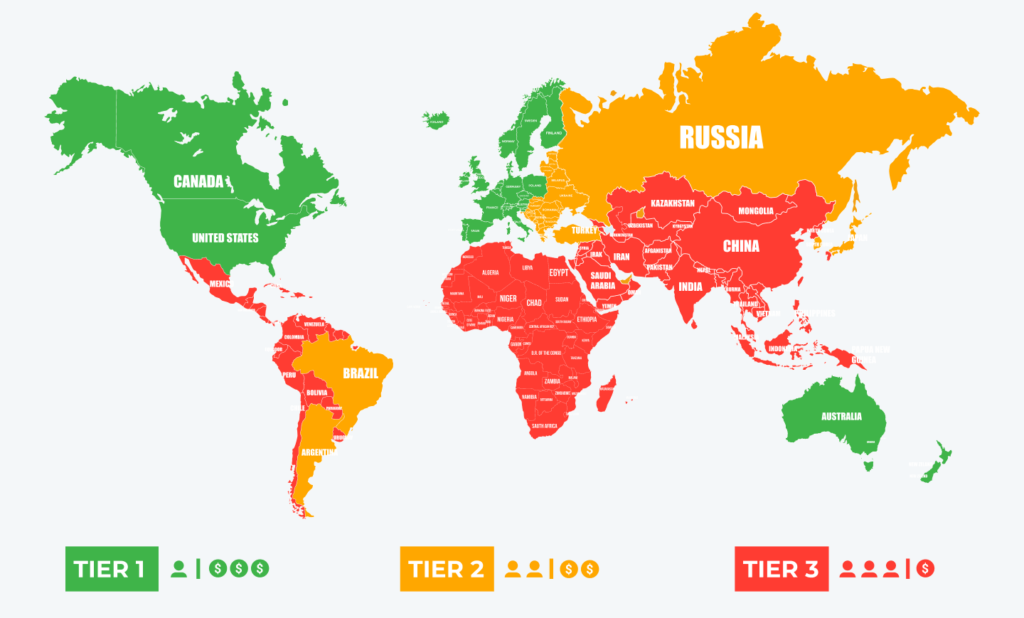
- Relevant market or location segment.
- Landing page.
- Offer and payment model.
- Submission date.
- SubID or another supported identifier.
Confirm what the tracking system actually records. Do not assume every downstream status is available or automatically linked.
Use enough comparable observations before changing budgets. Small samples and incomplete outcomes can exaggerate differences.
Is the Problem Local or Shared Across the Process?
A problem concentrated in one creative or placement suggests a local investigation. It may involve the message, audience, page, or tracking.
A similar decline across several sources may indicate a shared issue, such as contact timing, scheduling, technical changes, or revised requirements.
These are clues, not proof.
Record when the change began, which segments were affected, and which stage changed. Avoid blaming the traffic source or receiving organisation before checking the evidence.
A candidate can also be suitable in general but poorly matched to a specific direction. Sometimes the route or explanation needs changing rather than the whole source.
What Data to Bring to the Affiliate Manager
A useful question identifies the stage rather than asking only, “Why are payouts low?”
Prepare:
- Offer and applicable payment model.
- Submission cohort and observation period.
- Source and supported identifiers.
- Applications and contact outcomes.
- Scheduled and attended interviews.
- Confirmed events, pending events, and known rejections.
- Reward and payment records.
- Relevant examples and dates.
For example:
“For this 14-day application cohort, we recorded 120 applications and contact with 86 candidates. Of 41 interviews due by the cut-off, 19 took place. Eight payable events are confirmed; the others have the attached statuses. The largest unresolved loss is between scheduling and attendance, especially in segments 3 and 5. Can we compare the appointment and contact records?”
Use the guide to preparing for a conversation with an affiliate manager to organise a focused discussion.
Fix the Diagnosed Stage and Recheck the Whole Funnel
Choose an intervention that matches the evidence.
- Unclear role: revise the message and page.
- Form failures: correct the technical or usability issue.
- Invalid contacts: inspect entry and validation problems.
- Scheduling losses: coordinate availability and appointments.
- Missed interviews: review confirmed details and appropriate reminders.
- Requirement mismatch: correct targeting, information, or offer selection.
- Missing confirmation: reconcile event records.
- Payment discrepancy: review settlement records and applicable conditions.
Prioritise by likely impact, controllability, and cost. The stage with the largest numerical drop is not automatically the best place to intervene.
Change one main factor when possible and keep a record of what changed.
Keep a Small Funnel Log
Record the identifiers, relevant dates, observed stages, known reasons, and financial outcomes needed for analysis.
Keep assumptions separate from facts. “Candidate said the schedule did not fit” is evidence; “candidate was not serious” is an interpretation.
Avoid duplicating personal details unnecessarily. Use the approved systems and appropriate access.
A campaign improves when relevant outcomes and economics improve under comparable conditions—not simply when one percentage rises.
When applications are plentiful but payouts are low, follow the journey to the event that actually earns the reward, then reconcile that reward with payment. Explore the current HUNT ME offer conditions before choosing the metric your campaign should optimise.
From here it's just practice
You already know how it works. Sign-up takes a couple of minutes and costs nothing.
No investment. Candidates 18+ only.